News india United Against BJP, Divided Over Rahul: INDIA Bloc's 2029 Contradiction And Its Biggest Test YetUnited Against BJP, Divided Over Rahul: INDIA Bloc's 2029 Contradiction And Its Biggest Test YetWritten By :,Last Updated: September 08, 2026, 12:58 ISTThe INDIA bloc has not yet answered the most basic question of any coalition.
“Rahul Gandhi will be the face of the INDIA alliance in 2029."
For Congress, Rahul is the obvious national face.
That may ultimately be Rahul Gandhi’s real 2029 problem and the biggest test yet for the INDIA bloc since its formation.
Baby stated that projecting Rahul Gandhi as the INDIA bloc's prime ministerial candidate for 2029 is "premature and unwarranted".
News india United Against BJP, Divided Over Rahul: INDIA Bloc's 2029 Contradiction And Its Biggest Test Yet
United Against BJP, Divided Over Rahul: INDIA Bloc's 2029 Contradiction And Its Biggest Test Yet
Written By :
,
Last Updated: September 08, 2026, 12:58 IST
The INDIA bloc has not yet answered the most basic question of any coalition. Is it united merely by whom it opposes, or also by whom it wants to put in power?
Rapid Read
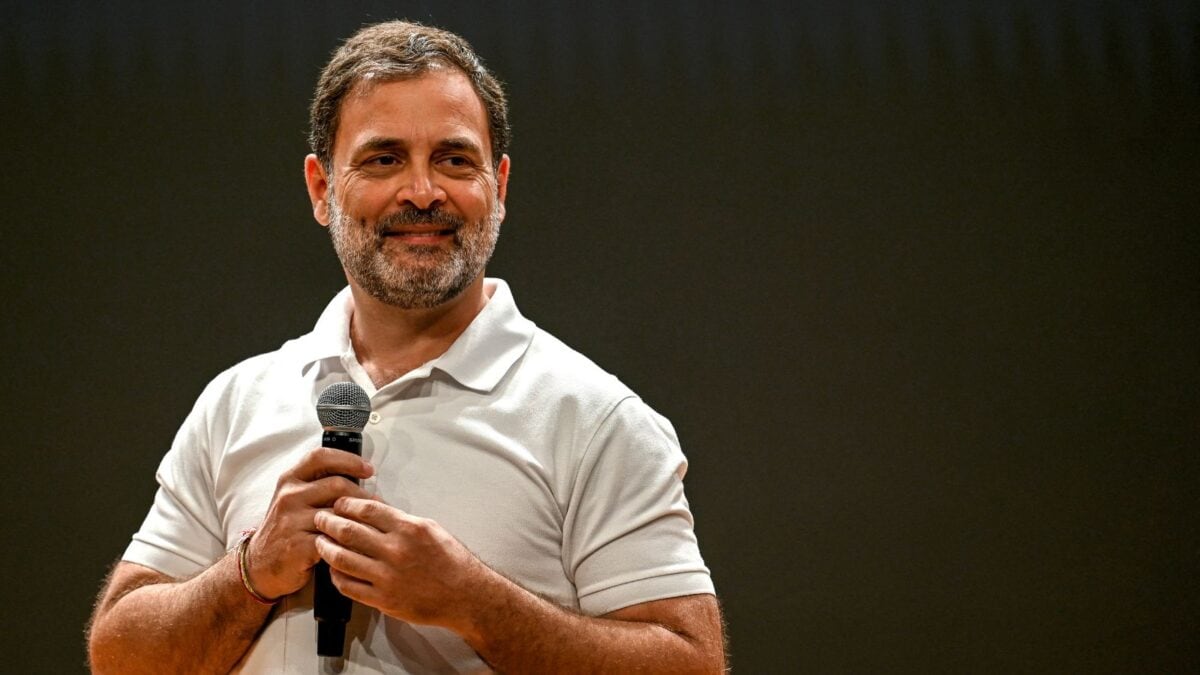
Leader of Opposition (LoP) in Lok Sabha and Congress MP Rahul Gandhi | File photo
Congress MP and Leader of Opposition in Lok Sabha Rahul Gandhi’s claim to the 2029 prime ministerial race is beginning to run into a problem that Congress cannot solve by simply declaring him the face of the Opposition. The problem is not Rahul’s ambition, but the unfinished nature of the INDIA bloc itself.
The latest reminder came from CPI(M) general secretary M.A. Baby in an interview published in the Economic Times on Tuesday. Rahul Gandhi, as Leader of the Opposition, has every right to stake a claim to the prime minister’s post, but who should become PM should be decided after the election, if the Opposition wins, he said. Baby even invoked the CPI(M)’s own 1996 experience with Jyoti Basu to argue against getting ahead of the numbers.
That position sits awkwardly with Congress’s increasingly categorical messaging. On Sunday, AICC general secretary K.C. Venugopal said there should be no confusion. “Rahul Gandhi will be the face of the INDIA alliance in 2029."
The timing of this unilateral declaration by the Congress party is telling. For, it has come not with the backing of an INDIA bloc resolution, but amid a fresh dispute with one of its own allies in Tamil Nadu over another potential prime ministerial face, Chief Minister and TVK leader Vijay.
This is precisely where the larger contradiction begins.
The INDIA bloc was born out of a simple political proposition that if enough Opposition parties combine, they can prevent the BJP from converting a fragmented anti-incumbency vote into another dominant Lok Sabha majority. In 2024, that proposition worked to an extent. The BJP, on its own, fell to 240 seats, while INDIA constituents collectively won 234.
In Uttar Pradesh, the SP-Congress alliance helped produce one of the Opposition’s biggest reversals. SP won 37 seats and Congress six, with the alliance leading in 67 of the state’s 80 Assembly segments.
But 2024 also exposed the limits of the formula. INDIA was never one seamless national electoral machine. It was a patchwork of state-level arrangements, some of which worked brilliantly, some of which barely existed, and some in which alliance partners remained direct competitors.
That distinction matters enormously for Rahul Gandhi.
The Congress cannot simply add up the seats won by SP, TMC, DMK, Shiv Sena (UBT), NCP(SP), Left parties and others and treat them as a common political resource. Those parties brought their own leaders, caste equations, regional identities and voter bases to the alliance. In several places, Congress was the junior partner benefiting from the strength of a regional ally. In others, INDIA constituents continued to fight one another.
Even in 2024, the mechanics of the alliance were telling. In Uttar Pradesh, Congress sharply reduced the number of seats it contested against the BJP, from 65 in 2019 to 17 in 2024, while the SP took the fight to the BJP across 63 constituencies and won 37. Congress’s own strike rate improved dramatically, but much of that improvement came within a carefully negotiated alliance structure rather than through a nationwide Congress revival.
While saying that INDIA’s vote transfer failed would be too simplistic — alliance arithmetic clearly worked in Uttar Pradesh — the real question is whether that arithmetic can be reproduced nationally, especially behind a single leader.
Because the INDIA bloc’s greatest strength and its biggest weakness may be the same thing. It is a coalition of parties that know how to win in their own states. And that creates a very different conversation around Rahul Gandhi.
For Congress, Rahul is the obvious national face. He is Leader of the Opposition, has spent years positioning himself as the principal challenger to PM Narendra Modi, and now has a national political campaign that the party believes can be expanded further. For regional allies, however, the calculation is different. They have spent decades building political brands precisely because Congress ceased to be the dominant national force. Why would they automatically hand their accumulated political capital to Rahul?
Tamil Nadu is an unusually vivid illustration. Congress is part of the coalition supporting Vijay’s government, yet the relationship is already encountering the awkwardness of two parties with very different political ambitions. Some TVK leaders have publicly projected Vijay for the prime minister’s post in 2029. One TVK MLA, Kanimozhi Santhosh, went further, saying Rahul Gandhi would help Vijay reach the PM’s chair in 2029.
Congress, unsurprisingly, has pushed back. Venugopal has now declared Rahul the INDIA face. Tamil Nadu Congress leaders have been even more explicit, with one minister threatening that Congress ministers could quit the state cabinet if TVK did not back Rahul.
The irony is hard to miss. Congress needs regional parties to build the broadest possible anti-BJP coalition. But the more successful those regional parties become, the less obvious it is that they will accept Congress deciding who gets to lead the coalition.
And this is not merely a Tamil Nadu problem. This fundamental contradiction has existed since INDIA was conceived. Parties that are allies in Delhi can be rivals in the states. Congress and the Left compete in Kerala. Congress and TMC have historically fought each other in West Bengal. AAP and Congress have competed in Delhi and Punjab. The alliance can therefore be united at the level of arithmetic without necessarily becoming united at the level of political identity.
That distinction was manageable in 2024 because the immediate objective was straightforward to stop the BJP from winning another majority. But 2029 poses a harder question. Stop the BJP and then what?
Who leads? Who gets the first claim to the prime minister’s post? How are seats divided? Whose voters move behind whom? What happens when a regional leader has a stronger political proposition in his or her own state than the Congress leader seeking national primacy?
Baby’s formulation cuts straight into this problem. He is not rejecting Rahul. On the contrary, he even says Rahul has a legitimate claim. But a claim cannot be assumed to be a consensus.
There is also a strategic question for Congress. If Rahul is to become the INDIA bloc’s undisputed face, Congress needs to demonstrate that it can do more than benefit from Opposition unity and become a rallying force capable of expanding the coalition.
The 2024 numbers offer a mixed picture. Congress returned to the 99-seat mark, a major improvement over 2019, but it remained vulnerable in several direct contests with the BJP. Its strongest recoveries often came where seat-sharing allowed regional allies to take on the BJP with their established social coalitions.
That is not necessarily a weakness. It can be the essence of coalition politics. But it does mean that Congress cannot assume that a larger INDIA tally automatically translates into a larger Rahul Gandhi mandate.
This distinction is crucial. The INDIA bloc may have demonstrated that Opposition parties can transfer votes under the right state-specific circumstances but failed to show that there is an Opposition voter who sees the alliance as a single political entity and Rahul Gandhi as its natural leader.
That voter may yet emerge. But three years before the election, Congress is asking its allies to accept the leadership question before the electoral question has been settled. And that is where the 2029 paradox lies.
The BJP has spent a decade building a political proposition around a recognisable national leader. The Opposition spent 2024 proving that it could be stronger when its parties pooled their strengths. But pooling strengths is not the same as pooling ambitions.
Rahul Gandhi may well emerge as the INDIA bloc’s prime ministerial candidate, even its strongest claimant. But getting the alliance to defeat the BJP and getting the alliance to agree that he should lead the government are two different political tasks.
The first was the 2024 experiment. The second is the 2029 test. And M.A. Baby’s intervention, coming just as Congress tries to settle the question from the top, suggests that INDIA has not yet answered the most basic question of any coalition. Is it united merely by whom it opposes, or also by whom it wants to put in power?
That may ultimately be Rahul Gandhi’s real 2029 problem and the biggest test yet for the INDIA bloc since its formation.
News18 Newsletter Handpicked stories, in your inbox A newsletter with the best of our journalism submit
Quick Answers Powered by Ask News18 Why is the INDIA bloc facing internal conflict regarding its 2029 prime ministerial candidate? The INDIA bloc faces internal conflict over its 2029 prime ministerial candidate because while Congress projects Rahul Gandhi, regional allies like TVK have their own leaders, such as Tamil Nadu Chief Minister Vijay, whom they are also promoting for the top post. This creates a contradiction between the alliance's goal of defeating the BJP and the individual ambitions of its constituent parties. What is the CPI(M)'s stance on Rahul Gandhi being projected as the INDIA bloc's PM candidate for 2029? CPI(M) general secretary M.A. Baby stated that projecting Rahul Gandhi as the INDIA bloc's prime ministerial candidate for 2029 is "premature and unwarranted". He emphasized that the alliance has not yet discussed or decided on a prime ministerial candidate, and the immediate priority should be strengthening the alliance to defeat the Modi government. What was the outcome of the INDIA bloc's performance in the 2024 Lok Sabha elections? In the 2024 Lok Sabha elections, the INDIA bloc's strategy worked to an extent, with the BJP falling to 240 seats and INDIA constituents collectively winning 234. The alliance arithmetic was particularly effective in Uttar Pradesh, where the SP-Congress alliance secured 37 seats for SP and six for Congress. Powered by Ask News18
First Published: September 08, 2026, 12:58 IST
Disclaimer: Comments reflect users’ views, not News18’s. Please keep discussions respectful and constructive. Abusive, defamatory, or illegal comments will be removed. News18 may disable any comment at its discretion. By posting, you agree to our Terms of Use and Privacy Policy Loading comments...