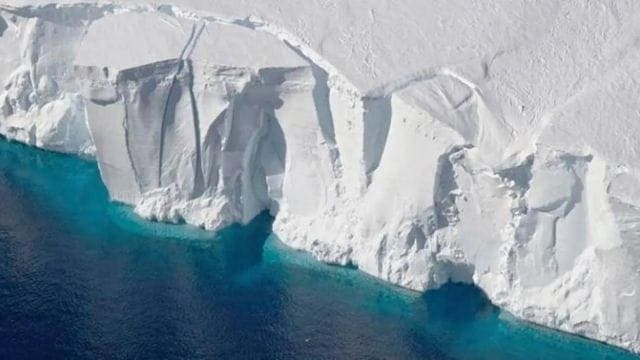
A newly identified fan-shaped geological structure beneath the East Antarctic Ice Sheet could help scientists better understand subglacial lakes, ancient tectonic activity, and climate-driven ice loss.
(source: File Photo)Geoscientists have found a vast fan-shaped geological feature hidden below the East Antarctic Ice Sheet, which could have a bearing on some of the regions of the continent that are vulnerable to climate change.
The fan-shaped structure is a web of basins lying concealed under ice, which is more than three kilometres thick in certain places.
It includes subglacial features like that of the Wilkes and Aurora basins, as well as the basin containing Lake Vostok, which is the largest known subglacial lake on the Earth.
The Italian National Antarctic Research Program supported it.
A newly identified fan-shaped geological structure beneath the East Antarctic Ice Sheet could help scientists better understand subglacial lakes, ancient tectonic activity, and climate-driven ice loss. (source: File Photo)
Geoscientists have found a vast fan-shaped geological feature hidden below the East Antarctic Ice Sheet, which could have a bearing on some of the regions of the continent that are vulnerable to climate change.
The fan-shaped structure is a web of basins lying concealed under ice, which is more than three kilometres thick in certain places. It includes subglacial features like that of the Wilkes and Aurora basins, as well as the basin containing Lake Vostok, which is the largest known subglacial lake on the Earth.
Dr. Egidio Armadillo of the University of Genoa headed the research. The Italian National Antarctic Research Program supported it. Dr Guy Paxman from the Department of Geography contributed to the international study.