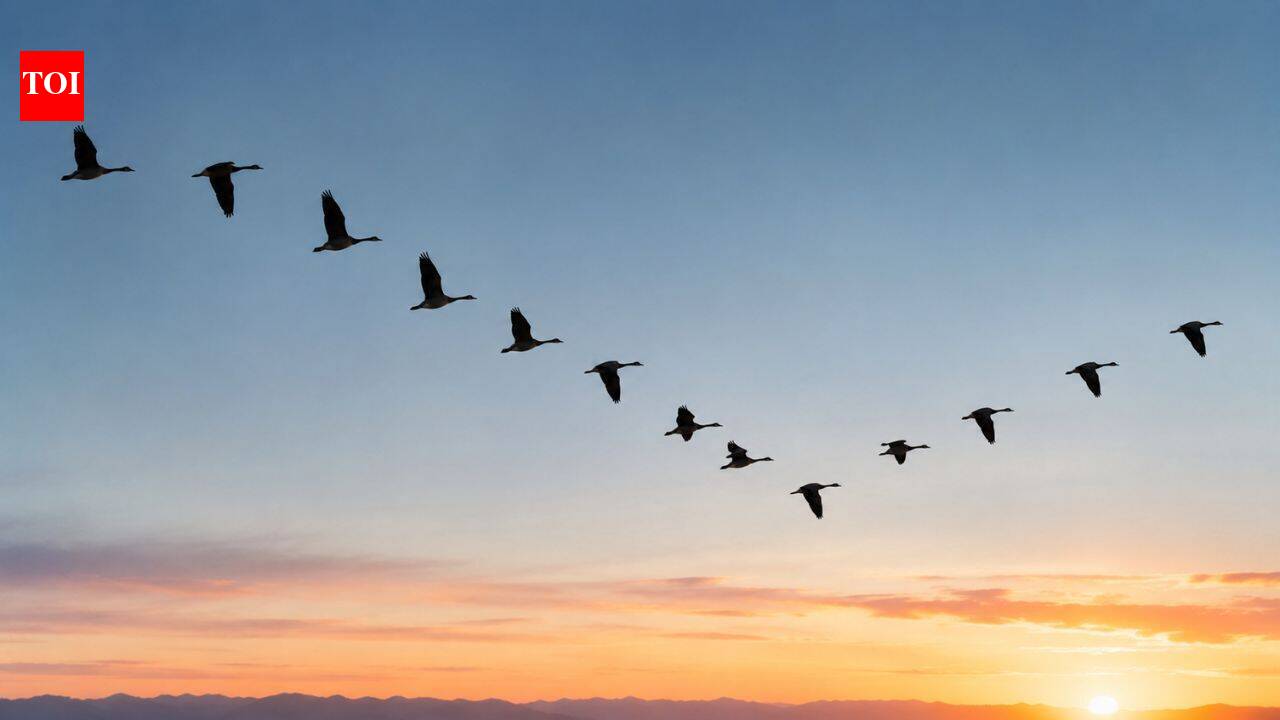
image AI generatedHow birds use airflow in V-shaped formation to save energyHow birds in V-shaped formation save 11% more energy during flightWhy wingbeat timing is essential for birds flying in V-shaped formationScientists extend their V-shaped formation model to larger bird flocksThe science behind birds flying in V-shaped formationWhy birds flap their wings less in V-shaped formationHow birds synchronise wingbeats to maximise energy savingsHow the new bird flight model explains V-shaped formation energy savingsFor generations, the sight of birds travelling in a neat V-shaped formation has been treated as one of nature's familiar images.
The arrangement has long been associated with energy savings, but exactly how those savings are achieved has remained less certain.
Rather than recreating every detail of turbulent airflow, the model represented the wake using a simplified system that still preserved the changing nature of flapping flight.
According to the researchers, aerodynamic assistance from the leader allows the follower to flap differently instead of simply working less.
The first ignored the reality of flapping flight, while the second captured enormous amounts of information without clearly revealing the underlying mechanisms.
image AI generated
How birds use airflow in V-shaped formation to save energy
How birds in V-shaped formation save 11% more energy during flight
Why wingbeat timing is essential for birds flying in V-shaped formation
Scientists extend their V-shaped formation model to larger bird flocks
The science behind birds flying in V-shaped formation
Why birds flap their wings less in V-shaped formation
How birds synchronise wingbeats to maximise energy savings
How the new bird flight model explains V-shaped formation energy savings
For generations, the sight of birds travelling in a neat V-shaped formation has been treated as one of nature's familiar images. The arrangement has long been associated with energy savings, but exactly how those savings are achieved has remained less certain. Scientists have understood that birds positioned behind a leader benefit from the airflow created by the bird ahead, yet the finer details of that interaction have been difficult to untangle because flapping wings generate constantly changing wake patterns. According to the new study published in Proceedings of the National Academy of Sciences of the United States of America, titled “ A minimal wake–vortex model explains formation flight of flapping birds ”, the answer involves more than simply finding the right place in the formation. Birds also appear able to adjust the way they flap their wings, reducing the effort required to stay aloft while maintaining formation.According to the study, a bird flying at the front of a formation leaves behind a wake made up of rotating air vortices produced by its wingbeats. A following bird can position itself so that it encounters regions of upward-moving air created by those vortices, lowering the amount of force it has to generate on its own.Scientists have recognised this broad principle for decades, but previous explanations often relied on simplified fixed-wing models or highly detailed computer simulations that made it difficult to identify the essential mechanisms involved.To bridge that gap, the researchers developed a theoretical model focusing on a leader and a single follower. Rather than recreating every detail of turbulent airflow, the model represented the wake using a simplified system that still preserved the changing nature of flapping flight. It allowed the team to examine how the follower's position, wing movements and timing interacted with the wake produced by the leader without requiring full-scale fluid simulations.The model examined six factors at once: the follower's position behind, beside and above or below the leader, together with three aspects of its wing motion. Those included flapping amplitude, the amount the wings folded during the upstroke, and the timing of wingbeats relative to the bird ahead. The researchers then searched for the combination that required the least mechanical effort while still allowing the follower to support its own weight and maintain the same flight speed as the leader.Using measurements based on northern bald ibises, the model predicted that a follower flying in an optimal position would require about 11% less total mechanical power than a bird flying alone. According to the study, this reduction closely matches estimates reported from observations of large birds flying in formation.The researchers found that the savings did not come from a single source. The follower reduced both induced power, which is linked to producing lift, and profile power, which is associated with overcoming aerodynamic resistance generated by the wings. The larger contribution came from lower profile power rather than reduced lift production.That finding led to one of the study's central observations. According to the researchers, aerodynamic assistance from the leader allows the follower to flap differently instead of simply working less. The model predicted that the bird could reduce its flapping amplitude by about 28%, while making a smaller reduction in how much the wings flex during the upstroke. The flatter, less pronounced wingbeats became the main route through which aerodynamic benefits translated into lower energy use.The study therefore links the airflow surrounding a flock with specific changes in wing motion. Earlier explanations often described followers as taking advantage of "upwash", but the new model suggests that this aerodynamic support is reflected in measurable changes to the birds' own wing movements, particularly through reduced flapping amplitude.Finding the right place behind another bird is only part of the picture. The follower also benefits by synchronising its wingbeats with the structures left behind in the leader's wake. The model predicted that the most efficient arrangement involved flying slightly less than half a wingbeat wavelength behind the leader while flapping almost exactly out of phase with it.This behaviour, known as wingtip path coherence, keeps the follower's wingtips aligned with favourable parts of the leader's wake. Within the model, that timing effectively removed wake interactions that would otherwise increase drag, leaving only the interactions that provided aerodynamic assistance. The researchers suggest that this offers a physical explanation for behaviour previously observed in live birds.The analysis also showed that beneficial airflow is not spread evenly throughout the wake. Some regions increased lift but not thrust, while others did the opposite. As a result, simply flying in an area of upward-moving air does not necessarily produce the greatest overall advantage. According to the study, the optimal position represents a compromise where both vertical and horizontal aerodynamic benefits overlap.The researchers found that these highly favourable regions occupy only a relatively small part of the wake. Outside them, the follower's reduced wing movements would no longer generate enough force for steady flight, meaning accurate positioning remains important throughout formation flying.Although the model examined only a leader and one follower, the researchers extended the approach to larger groups by repeatedly applying the same optimisation process. In an example involving six birds, followers continued to obtain aerodynamic benefits from the bird directly ahead, and the advantages stabilised rather than steadily declining through the flock. Each bird adjusted its own wing movements while positioning itself to take advantage of the immediate leader's wake.The study also identifies several limits. The model deliberately simplifies many aspects of real bird flight, including body aerodynamics, changing body weight during migration, wing flexibility, wake decay and the social factors that influence flock behaviour. Birds also change positions within real flocks, something the model does not attempt to capture. According to the researchers, these omissions mean the framework should be viewed as an aerodynamic baseline rather than a complete description of how birds organise themselves during migration.Even with those limitations, the researchers argue that the model fills a gap between simplified fixed-wing theories and computationally demanding simulations. By connecting wake structure, aerodynamic forces, power requirements and changes in wing motion within a single framework, the study provides a clearer explanation of why V-shaped formations work and why followers appear to save energy by flapping with smaller, flatter wingbeats rather than simply relying on favourable airflow alone.For decades, scientists have linked V-shaped formations with lower energy use, but explaining exactly why has proved more complicated than it first appears. The broad idea is straightforward: a bird flying at the front sheds rotating vortices from its wingtips, creating zones of rising and sinking air behind it. A follower that stays in the right part of that wake can take advantage of the upward-moving airflow, reducing the amount of force it needs to generate itself.What has remained uncertain is how birds turn that aerodynamic opportunity into practical savings while their wings are constantly moving. Earlier approaches either treated birds as if they had fixed wings or relied on highly detailed computer simulations. The first ignored the reality of flapping flight, while the second captured enormous amounts of information without clearly revealing the underlying mechanisms. There has been a gap between these two extremes, making it difficult to identify the minimum set of factors responsible for formation flight.The new work addresses that problem by introducing a simplified model centred on two birds: a leader and a follower. Instead of attempting to recreate every swirling movement of air, the model represents the wake in a way that still preserves the changing nature of wingbeats. This allowed the researchers to investigate how the follower's position and wing movements interact with the leader's wake while keeping the calculations manageable.To test the system, the researchers optimised six variables simultaneously. Three described where the follower flew relative to the leader, while the remaining three represented its flapping behaviour, including wingbeat timing, flapping amplitude and the degree of wing folding during the upstroke. The objective was to identify the arrangement requiring the least mechanical effort while still enabling steady flight at the same speed as the bird ahead.Using measurements from northern bald ibises, the model predicted that a bird flying in the optimal position would need around 11% less total mechanical power than one flying alone. According to the study, that figure closely matches estimates reported from field observations and earlier experimental work involving large migratory birds.The researchers were also able to separate where those savings came from. Rather than reducing only the effort needed to stay airborne, the follower experienced lower induced power, linked to producing lift, alongside a larger reduction in profile power, which relates to the aerodynamic work associated with the wings during flight. According to the study, the decrease in profile power accounted for the greater share of the overall saving.That distinction revealed a physical change in the bird's flight rather than simply an invisible aerodynamic effect. The model predicted that the follower could shorten the distance travelled by its wings during each stroke, reducing flapping amplitude by roughly 28%. A smaller adjustment occurred in the amount the wings folded during the upstroke, falling by about 13%. Together, these changes lowered the force the bird had to generate for itself while still allowing it to benefit from the surrounding airflow.According to the researchers, this helps explain how aerodynamic assistance is translated into the bird's own movements. Descriptions of followers "using upwash" identify the surrounding airflow, but the model suggests the practical outcome is a noticeable change in wing motion, particularly through flatter, less forceful wingbeats.Position alone did not produce the greatest benefit in the model. The follower also needed to match the timing of its wingbeats with the wake created by the leader. The optimal arrangement placed the follower slightly less than half a wingbeat wavelength behind while flapping almost exactly out of phase with the bird ahead.This behaviour, described as wingtip path coherence, keeps the follower's wingtips aligned with coherent structures left behind in the leader's wake. Within the model, that timing prevented interactions that would otherwise increase drag, allowing the follower to gain aerodynamic support without creating additional resistance. The researchers say this provides a mechanical explanation for behaviour that has previously been observed in live birds but was not fully understood.The analysis also showed that beneficial airflow is distributed unevenly throughout the wake. Some areas produced favourable lift but little thrust, while others generated the opposite effect. According to the study, the most efficient position emerged where both horizontal and vertical advantages overlapped, suggesting that the familiar explanation of simply sitting in rising air captures only part of what is happening during formation flight. The model further indicated that these highly favourable regions occupy only a small portion of the wake. Outside them, the follower's reduced wing motion would not generate enough force to sustain steady flight, highlighting how precise positioning and timing work together rather than independently.Although the research focused on one leader and one follower, the framework was extended to larger formations by repeating the optimisation process. In an example involving six birds, followers continued to gain substantial aerodynamic benefits from the bird immediately ahead, and those gains stabilised through the formation rather than steadily diminishing with distance from the leader.The researchers also acknowledge that their model simplifies many aspects of real migration. It does not include changing body weight, body aerodynamics, flexible wings, wake decay or behavioural influences such as social spacing, leadership changes and predator avoidance. According to the study, these factors could alter where birds choose to fly even if an aerodynamic optimum exists.Even so, the framework provides a way of linking airflow, force production and wing movement within a single explanation. Rather than viewing V-shaped formations simply as a way of catching favourable air currents, the study suggests that birds convert those aerodynamic benefits into measurable adjustments in the way they flap, with smaller and flatter wingbeats accounting for much of the reduction in energy required during flight.