Alcohol spills into cinema, politics, the dingy TASMAC shops and the dive bars nearby, and unsurprisingly, masculinity.
For the uninitiated, TASMAC is Tamil Nadu State Marketing Corporation, a state government-owned company that controls the wholesale and retail sale of alcohol across the state.
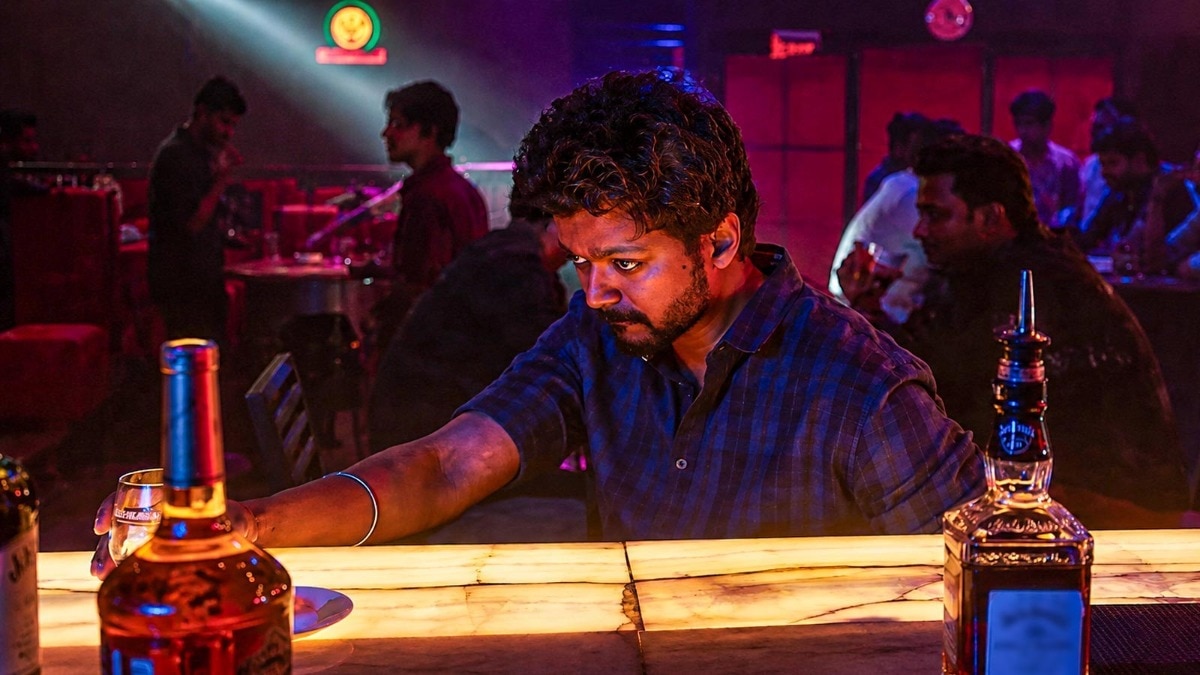
Even Vijay, who is now Tamil Nadu Chief Minister, played a hard-drinking but reformed professor in Master (2021).
GEN Z'S SOBRIETY MATCHES VIJAY'S POLICYThe decision to shut over 700 liquor shops in Tamil Nadu comes at an important time culturally.
TVK cadre and advocate Sankavi noted, "The overall consumption of alcohol across Tamil Nadu remains completely unchanged...
When you talk about drinking culture in a state, generalisations can be dangerous. In Tamil Nadu especially, alcohol is a tricky territory for blanket statements, because it is tied as much to identity as it is to taboo. Alcohol spills into cinema, politics, the dingy TASMAC shops and the dive bars nearby, and unsurprisingly, masculinity.
For the uninitiated, TASMAC is Tamil Nadu State Marketing Corporation, a state government-owned company that controls the wholesale and retail sale of alcohol across the state. Chief Minister C Joseph Vijay's TVK government recently ordered the closure of 717 TASMAC outlets located near schools, colleges, temples, and bus stands, sparking a debate over whether it is the right move for a state that has a serious drinking culture.
Read Full Story
It must be noted that the 717 shops represent roughly 15% of Tamil Nadu's total 4,787 TASMAC outlets. Of these, 276 were near places of worship, 186 near educational institutions, and 255 near bus terminals.
Vijay has also reinforced the legal drinking age in Tamil Nadu to 21 years, directing TASMAC outlets to strictly verify customer age through ID proofs and deny alcohol access to anyone below the limit.
The latest National Family Health Survey (NFHS) data suggests that drinking remains largely a male domain in Tamil Nadu. The latest NFHS-5 data shows that nearly one-third of men in Tamil Nadu (32.8%) consume alcohol, while the figure for women is negligible at 0.4%. The national average for men is 22.4%.
The move by Vijay could have been a risky move in a state that has a drinking culture. However, Vijay is confident that it isn't going to backfire. And a big reason is his support base.
VIJAY PLAYED REFORMED ALCOHOLIC IN 2021 FILM MASTER
Locals say Tamilian tipplers drink for a spectrum of reasons, from celebrating their small victories and large defeats to burying shame, or perhaps just to feel... invincible for the night. That, of course, is true of drinkers and alcoholics almost everywhere in the world.
And yet, for all its visibility, alcohol is still a taboo in Tamil Nadu.
But Tamil cinema has for decades glorified the "mass hero" with alcohol. Whether it was Rajinikanth storming into a TASMAC shop in Padikkadavan (1985) before thrashing villains, or the Tamil party anthem "Machi Open the Bottle" song from Mankatha (2011) starring Ajith Kumar, drinking has often been portrayed as stylish, rebellious, and macho.
Even Vijay, who is now Tamil Nadu Chief Minister, played a hard-drinking but reformed professor in Master (2021). Much like in Tamilian culture, in Kollywood, alcohol makes you a "bad person", but with a swagger.
But when actor-politician Vijay's government made one of its first major policy decisions of shutting TASMAC liquor shops, it also seemed to signal a shift in the larger public mood around alcohol and drinking culture in Tamil Nadu. A sample survey in 2016 said that 92% of the population favoured closure of TASMAC shops. A decade later, that sentiment seemingly still remains.
advertisement
For a state where TASMAC contributes heavily to revenue and alcohol is deeply embedded into working-class culture, this move could have sparked backlash. India Today Digital spoke to Vijay's supporters, TVK workers, and political observers in Tamil Nadu to understand whether people are unhappy with the move or whether "Thalapathy" is being seen as just delivering on his promise of a safer, addiction-free state.
The move could also be seen as an attempt to prioritise public welfare over immediate fiscal concerns.
However, it is seemingly resonating powerfully, especially with the younger Gen Z voters, who reportedly powered Vijay's rise to Chief Minister.
THE CONTEXT BEHIND TASMAC OUTLET CLOSURES
Tamil Nadu has grappled with alcohol-related social issues for years.
While Tamil Nadu's crime rate against women (29.4 per lakh) sits in the mid-range nationally, public perception links easy access to liquor, particularly near sensitive areas, to increased harassment, drunk-driving incidents, and disturbances around educational institutions and places of worship.
TVK cadre and advocate Sankavi Dyannah Tuhinsamuel, a former BJP office-bearer who joined Vijay's party, told India Today Digital, "There were numerous complaints registered by the public stating a number of crimes happening wherever these TASMAC shops were located near schools, colleges, near these sensitive areas. There were actually public protests demanding this closure... Is it a good scene in the morning... a drunkard in the middle of the road, in front of the school gates?"
Ramya Balakrishna, a senior Madras High Court advocate and political observer, told India Today Digital ground reality many women face on a regular basis. "At night, I avoid walking near TASMAC shops because of rowdy drunkards. The shops have grills for their own safety. It's not civilised drinking like you see in Bengaluru breweries and Mumbai pubs. It's cheap liquor, roadside binging, and men passing out on the streets."
advertisement
Supporters say that this approach by the TVK government addresses visible nuisances without fully dismantling the state's liquor monopoly, which previous DMK and AIADMK governments had expanded, most notably through the large-scale addition of retail outlets in the 2010s.
GEN Z'S SOBRIETY MATCHES VIJAY'S POLICY
The decision to shut over 700 liquor shops in Tamil Nadu comes at an important time culturally. Globally and in India, Gen Z is drinking less than previous generations. Studies show they consume about 20% less alcohol per capita than the millennials.
Several recent studies and industry reports, including analyses by Berenberg Research and researchers at University of Michigan between 2023 and 2025, suggest that Gen Z is drinking less due to a slew of factors, like focus on fitness, mental health priorities, social media reputation, and financial prudence.
advertisement
Chennai-based senior journalist and columnist for India Today Digital, TR Jawahar, also said this in a column recently in News Today.
"Gen Z — that scrolling, meme-slinging, reel-making brigade — has been quietly saying no to the glass long before any order... They are choosing clarity over the morning-after haze," Jawahar wrote. He noted how cinema once sold drinking as "macho flex", but today's youth prefer gyms, protein, and mocktails. "The sluices opened by politics and glamour are being quietly shut by the very generation meant to keep them open," he said.Vijay's order has only reinforced this Gen Z trend.
Ramya Balakrishna pointed to Vijay's deeper appeal here, which makes it difficult to fight against his liquor policy decision.
Vijay has an "everyman relatability", Balakrishna said. Unlike some stars, Vijay "looks like every other Tamil guy".
"His films have often featured aspirational monologues echoing MGR and Rajinikanth, which blends heroism with social messaging. It is a style that translated into Vijay's politics as well. Many see him as distinct from dynastic alternatives. And while alcohol is often portrayed as macho in Tamil cinema, it is also subtly linked to violence and emotional instability. The hero might drink, but the films also suggest that alcohol changes him in a way that is not ideal."
advertisement
If you're interested in the rich ancient civilisation of Tamil Nadu, you must check out India Today's ongoing series Time, Tide & Tamil, which chronicles the state's fascinating journey from its ancient civilisational glory and cultural heritage to its uniquely influential modern politics.
TAMILIAN SENTIMENT ON ALCOHOL, AND BOOZE-RELATED REFORMS
Tamils have had a complex and a rather sentimental relationship with alcohol. Unlike in Bihar, where the social harms caused by drinking are a major political talking point, the grim consequences of alcohol have not been discussed as prominently in Tamil Nadu's public discourse.
Also, Tamil Nadu State Marketing Corporation Limited, aka TASMAC, has been a major revenue source under the DMK and AIADMK regimes.
However, women's groups have long protested against alcohol, linking it to domestic violence, financial drain on poor households, and ruined lives.
Against this backdrop, Vijay's cult might only grow, as it fulfils a campaign pledge without alienating moderate drinkers.
TVK cadre and advocate Sankavi noted, "The overall consumption of alcohol across Tamil Nadu remains completely unchanged... The customers may simply travel an extra kilometre... It's just that we don't need TASMAC next to schools, colleges, or these sensitive areas."
But the revenue concerns cannot be ignored. The closure of these 717 shops is estimated to cause a daily revenue loss of around Rs 20 crore, according to initial assessments. This comes on top of Tamil Nadu's massive existing debt burden of over Rs 10 lakh crore.
The focus, however, at least for now, remains on social reform over fiscal hits.
WHERE VIJAY'S BOOZE SHOP CLOSURE COULD BACKFIRE
While the move wins applause for a social reform perspective, it carries risks of backfire too. The daily revenue loss of Rs 20 crore from shutting 717 TASMAC outlets will deepen Tamil Nadu's already crippling debt burden. On a regular basis, TASMAC generates an average daily revenue of roughly 140-150 crore across its 4,787 retail outlets.
In a state heavily reliant on liquor excise for welfare schemes, this could force higher taxes elsewhere or fresh borrowing. How Vijay's government plans to offset the resulting revenue losses remains to be seen.
Past instances show that such targeted closures often face implementation challenges. "During previous AIADMK governments, including under Jayalalithaa, several rounds of shop closures were announced, but many outlets continued operating or reappeared in nearby locations with minimal relocation," said Balakrishna.
More dangerously, restricting legal access in sensitive areas without reducing overall demand might push drinkers toward illicit liquor and black-market hooch, which has been a recurring killer in Tamil Nadu. Major hooch tragedies, such as the 2024 Kallakurichi incident that claimed 65 lives and the 2023 Villupuram-Chengalpattu cases that killed 22, show how illicit liquor thrives in the state.
Job losses have also emerged as a major concern. Soon after the announcement, two Centre of Indian Trade Unions (CITU)-affiliated unions representing TASMAC employees urged CM Vijay to ensure permanent alternative employment for workers likely to be affected by the closure of liquor outlets.
Without a broader implementation plan or alternative employment for TASMAC workers, there are risks creating fiscal pain for the state.
VIJAY'S APPEAL EXPLAINS WHY THE DECISION MIGHT RESONATE ACROSS MASSES
Regardless of the risks, Balakrishna explained why this liquor policy decision might resonate with the masses.
"To understand the leader and how his decisions might be perceived, you must first understand his background. Vijay has always projected the image of a relatable, everyman hero in an industry long dominated by larger-than-life figures. Rajinikanth was — and still is — treated almost like a God. His identity has many layers. He is from Karnataka, speaks Marathi as well as Tamil, and cultivated an on-screen persona that inspired worship rather than everyday identification. Kamal Haasan, a Brahmin from a Paramakudi Iyengar family, brought intellectual depth and versatility, but also carried the subtle cultural distance many Tamil audiences associate with Brahmin-led preaching or elite imagery in a strongly Dravidian society," explained Balakrishna.
"In contrast, Vijay looked and felt like the boy next door. The average Tamil man you might see on the streets of Chennai or Madurai. That grounded, accessible appeal allowed millions to see themselves in him," she said, adding, "That quality has now translated into a powerful political connect."
It is also important to understand that in Tamil Nadu, where cinema shapes culture, Vijay's government is signalling a break from the trope of "hero drinks, hero fights, hero wins".
Senior journalist Jawahar also observed in his column that the "drunk-hero trope is slowly losing its charm. New-age stories show protagonists winning without the bottle."
DRINKING CULTURE SEEING A SHIFT IN TAMIL NADU?
Critics might argue about revenue losses, a prude and moralistic approach towards alcohol, or implementation challenges. But the symbolism for ordinary Tamilians by their beloved star-CM might be big.
Sankavi said, "Our protests have been answered, our complaints have been resolved. We are indeed satisfied... I strongly believe that this is what we ordinary Tamilians, we women, we young people, actually need."
Whether it fully offsets fiscal gaps or sustains long-term remains to be seen. But for now, as Jawahar put it, "The peg is losing its punch. And Tamil Nadu's Gen Z is perfectly okay with that."
- Ends