
The self-making world of Jean-Baptiste Lamarck
Darwin followed Lamarck in believing in the agency of living beings to transform themselves and their environment. He needed a name to designate a new science he thought should exist: a science of all living beings, and only living beings. Living beings collaborated as they worked to form the world and fend off destruction, and Lamarck took a great interest in this collaborative action. He drew, importantly, on Lamarck’s theory in formulating his own, but he also insisted on the distinctness of the two. Living beings are active, self-making, and world-making.
The French naturalist Jean-Baptiste Lamarck was 65 when his great treatise on the transformation of life was published. With Philosophie zoologique (1809), translated a century later as Zoological Philosophy, Lamarck intended to establish an entirely new science, one built on the idea that all living beings are constantly transforming themselves, from the tiniest microbes to the most complex mammals, gaining new forms and new abilities. It wasn’t the bodily structures of organisms that determined their ways of life, Lamarck said, but just the opposite: their ways of life in response to their circumstances gave rise to their changing bodily forms. ‘Can there be any consideration in natural history more important,’ he demanded, ‘or deserving of greater attention, than the one I have just set forth?’ (My translation.)
But if you’ve heard anything at all about Lamarck, it’s probably how wrong he was about one animal in particular, the giraffe, and how this giraffe fiasco epitomises his wrongness about everything. Lamarck suggested that, by stretching to reach leaves in high tree branches, giraffes slightly elongated their necks, creating tiny changes that were then handed down to their offspring, accumulating over many generations to produce the long necks we see today. Around the turn of the 20th century, Lamarck’s giraffe idea became a laughing stock when biologists roundly rejected the notion that bodily changes undergone in the course of an individual lifetime could be inherited in the next generation.
Illustration from Histoire naturelle, générale et particulière (1749-1804) by Georges-Louis Leclerc, Comte de Buffon. Courtesy the Linda Hall Library
It wasn’t only his ideas about long-necked mammals that came under attack. Lamarck’s interest in giraffes was just a passing mention in the midst of his voluminous writings, which set out a revolutionary, field-founding theory: organisms, he claimed, transform themselves and, in doing so, they remake the world. That idea has drawn scorn for more than two centuries.
Though Lamarck is often overlooked, his science was foundational to modern biology and informed the theory of evolution that Charles Darwin later developed. Darwin followed Lamarck in believing in the agency of living beings to transform themselves and their environment. But most people don’t know about Lamarck’s influence on Darwin because, around the turn of the 20th century, Darwin’s followers expurgated every trace of Lamarckism from their neo-Darwinist version of evolution, rendering living beings the objects of random variation and outside forces. For the neo-Darwinists, living things played no direct role in the evolutionary process. Evolution happened through random genetic variation and external environmental pressures. For Darwin’s followers, organisms were just as passive as they had been for the creationists, who saw them as products of divine will.
Throughout the history of modern biology, most powerful figures in science and politics have ridiculed and repressed Lamarck’s radical idea that organisms have agency in the evolutionary process. In mainstream biology today, a neo-Darwinian view of living things as passive still largely dominates, though research in several areas has been challenging its reign.
This is the story of how Lamarck’s radical idea was cast aside by mainstream science, and why it was overlooked for so long. It is also the story of a surprising reversal: in recent decades, some biologists have begun turning back toward Lamarck’s view of life.
While many people think of giraffes when they hear Lamarck’s name, few know that he coined the word ‘biology’, in 1802. He needed a name to designate a new science he thought should exist: a science of all living beings, and only living beings. At the time, there was no such field. There were broader sciences, such as natural history, which included inanimate things like rocks, rivers and mountains; and there were narrower sciences, such as botany or zoology, which covered subsets of the living world. But Lamarck thought there should be a science of life. At the heart of his new science, he developed the first theory of what we now call ‘evolution’, although he didn’t call it that. He simply referred to ‘change’.
Lamarck lived and worked in the Jardin des plantes (Garden of Plants) in Paris from 1788 until his death, aged 85, in 1829. His life was tumultuous, to say the least. He lived through the French Revolution, then under Napoleon, then during the Bourbon Restoration. He survived the Reign of Terror, as well as the withering disdain of Napoleon and his circle of scientific advisors, and the return of the monarchy; he also outlived three wives and four of his eight children. In the last decade of his life, he was blind and frail but carried on working with the help of his daughter Rosalie. At the end of his long career, he had identified and named more than 6,000 species, and for more than two decades had taught a legendary course in the Garden of Plants, drawing students from all over the world. The course grew so famous that even fictional characters attended it, such as the lovelorn young Amaury, hero of Sainte-Beuve’s autobiographical novel Volupté: The Sensual Man (1834).
The Garden of Plants, Paris. Courtesy Wikipedia France’s National Museum of Natural History, located in the Garden of Plants
By daring to usurp God’s monopoly on Creation and reassign it to mortal beings, Lamarck provoked the ire of the mighty and powerful. He wrote that life originated in spontaneous generation, brought about by natural forces such as electricity and heat acting upon inanimate matter. This led to the emergence of the simplest organisms: single-celled protozoa and algae. From that point, a property intrinsic to living matter exerted itself, a tendency to complexify, which Lamarck named ‘the power of life’. As organisms grew more complex, another cause of transformation came into play: their responsiveness to the environment. In the simplest beings, this responsiveness was rudimentary – an irritability or sensitivity, and reflexive reaction. But in birds and mammals, Lamarck argued, it rose to the level of ‘acts of will’, through which creatures could form ‘habits’ and ‘ways of life’ in response to their circumstances. By means of these behaviours, they directed their inner fluids toward the limbs and organs they used most. (Darwin would later propose a similar idea. In 1868, he suggested that parts of the body threw off particles of inheritance, called ‘gemmules’, which were modified by an animal’s behaviours and could carry the modifications into its offspring.)
He imagined the simplest animals might reveal to him the foundation of animal life
Not only did living beings create and transform themselves, according to Lamarck’s picture of things, they also made and re-made the inanimate world. Plants played the primary role in this process, he thought, because they could invent themselves out of just sunlight, air and water. He described experiments to confirm this miraculous capacity. For instance, carve a hollow into the side of a turnip and suspend the vegetable in a window by its root, Houdini-style: nothing up its sleeves! Keep the hollow filled with water, and you’ll see that the turnip will grow a whole flowering plant. It has created itself literally from thin air. Plants, by bringing together the primitive elements into combinations, originated the cosmic relay chain, then handed off their work to animals. By eating, digesting and engaging in their other functions and behaviours, animals produced more elaborate compounds, and so they shared with plants the defining ability of all living beings to build, compose and create.
Having begun his career in botany, in 1793 Lamarck was obliged to move, reluctantly, into zoology. This was in the midst of the Revolution, during the transitional moment when the main botanical garden in Paris – the King’s Garden – became the republican Garden of Plants under the auspices of a new National Museum of Natural History. The committee in charge of this transformation did not assign Lamarck to a chair in botany as he wanted, but instead to the lowliest chair in zoology: the Professorship of Insects and Worms. He would later tell his students that he’d been, at first, disappointed: if he couldn’t carry on studying botany, then why not charismatic megafauna, like lions? But then he’d had two hopeful thoughts. First, his assigned creatures constituted nine-tenths of the animal world, so he hadn’t been relegated to an unimportant corner of zoology. And, second, he imagined the simplest animals might reveal to him the foundation of animal life. Contemplating his insects and his worms with this faint gleam of hope, he created a new taxonomic category, ‘invertebrates’, and set to work studying them.
The invertebrates, he told his students in 1800, ‘conduct us insensibly toward the inconceivable limit of animalisation’, toward those beings ‘barely endowed with animality’ with whom ‘nature perhaps began’. For Lamarck, this essence of animal life was the power of generation and regeneration: the ability to produce living matter, including new bodily tissues and new organisms. The simplest animals had the most widespread generative faculties. For instance, the Genevan naturalist Abraham Trembley had shown that, if you cut up polyps (freshwater hydras) into lots of pieces, they regenerate an entire animal from each part. Other invertebrates, too, had incredible powers of generation. Insects could metamorphose. Crustaceans could grow new legs. Sea stars, new rays. Snails, a new head. The invertebrates far outnumber the vertebrates, Lamarck explained, thanks to this generative ability. Their number is unknowably vast because of the ‘infinite smallness’ of the smallest among them. These animals display a ‘frightening fecundity’, he wrote; it seems that ‘matter animalises itself from every direction.’ Lamarck marvelled at the tiny coral polyps that were identified as the chief producers of the great calcareous mountain chains and enormous banks of chalk found all over Earth. These minuscule animals create islands, fill bays and gulfs, clog ports and ‘completely transform the coastlines’.
Illustration from Mémoires pour servir à l’histoire d’un genre de polypes d’eau douce, à bras en forme de cornes (1744) by Abraham Trembley. Courtesy the Linda Hall Library
The invertebrates became the basis of Lamarck’s idea that living organisms held a monopoly on creative agency. Religious faith, Lamarck acknowledged, could be a consolation for a ‘good man who persuades himself of it’ but was ‘absolutely foreign’ to his own study of living nature. Souls were not physically knowable, whereas the dynamic, creative action of living beings was everywhere apparent. Life, to Lamarck, now became the manifest capacity to create in the face of all nature’s forces of destruction.
The Langkofel group in the Italian Dolomites, built from ancient coral reefs, painted by Gustav Jahn, 1918. Courtesy the Messner Mountain Museum Corones/Wikipedia
The incessant creative activity of each organism was far from solitary. Living beings collaborated as they worked to form the world and fend off destruction, and Lamarck took a great interest in this collaborative action. For instance, one spring day in 1798, having brought his family to a country house he briefly owned outside Paris, he noticed a swallow’s nest in one of the windows. Shortly afterwards, a local child destroyed the nest, leaving the pair of swallows homeless just as the female was about to lay her eggs. Immediately, 10 or 12 other swallows gathered around the wreckage. The birds were so agitated and noisy that at first Lamarck assumed they were quarrelling, but he soon realised it was just the opposite. They had organised themselves to rebuild the nest collaboratively. He watched in amazement as some remained by the construction site while others came and went with twigs. Swallows generally take eight to 12 days to build their nest, Lamarck observed, but these worked so diligently that they finished it the following morning.
The seal used its hind limbs as a paddle when swimming. They hadn’t become a fin because the seal also used them for seizing prey
As evidence of animals’ power of creation and self-transformation, Lamarck cited many examples in which the increased use of a body part had apparently developed and shaped it: the webbed feet of water birds from pushing against the water; the hooked talons of eagles from clasping branches; shorebirds’ long, skinny legs and necks. Lamarck reckoned that shorebirds dislike the water yet have to wade out to catch their prey. Sinking into the mud, they stretch their legs in distaste, straining to keep their body above water, and craning their necks. This behaviour over many generations resulted in stilt-like legs and snaky necks.
When a seal arrived in the menagerie of the natural history museum in June 1809, Lamarck watched the animal with fascination. Its obvious kinship with land mammals confirmed his idea that all mammals, and indeed all life, had originated in the water. He noticed that the seal used its hind limbs as a paddle when swimming. Yet the legs hadn’t fully joined together to become a fin because the seal also used them for seizing prey. The distinctive combination of uses for the hind limbs had produced a structure that could work either like a paddle or like a hand.
Lamarck had set Aristotle’s ancient Scale of Nature not just in motion but in a great commotion. For two millennia, since the time of Aristotle, natural philosophers had imagined every being ranked from simplest to most complex in a fixed, unchanging order. Each form of life had its appointed place in the hierarchy. But now Lamarck announced that, rather than being arrayed along the Scale of Nature, living beings were themselves ever making and remaking the order of life by their own incessant activity, and in many directions at once.
Lamarck’s idea of self-making and world-making organisms gained him powerful enemies. His nemesis was the palaeontologist Georges Cuvier, a favourite of Napoleon. Cuvier was a devout Lutheran who categorically rejected the idea that living forms changed over time and instead upheld the fixity of species. His central anatomical principle, the principle of correlation of parts, was an assertion of rational design: he claimed that one could infer all the parts of a creature from any single part because they all implied one another by rational necessity. Cuvier also insisted that animals’ habits and behaviours followed from their structures – they behaved as they were designed to behave – whereas Lamarck said it was just the opposite: animal structures resulted from their habits and behaviours. This same commitment to fixity shaped how Cuvier read the fossil record.
Cuvier believed in extinctions and was a leading figure in establishing their reality. But he assumed that creatures went extinct because catastrophes, like floods and fires, eliminated them, and then those creatures were replaced by newly created ones. This idea supported the doctrine of special creation: that God had created each species for its place in nature. Cuvier’s science was perfectly suited to Napoleon’s purposes. It was a scientific doctrine of revolutionary change that was also profoundly conservative, each revolution imposed from the outside, each a return to the same ultimate authority, and the whole thing guaranteed by Napoleon’s own scientific experts rather than the Church. Cuvier’s science was cutting-edge, but at the same time, it bolstered an authoritarian order. It was emphatically not the science of the materialist, atheist revolutionaries; but nor was it the older science of the Catholic Church. Cuvier translated the authority of religion into science – a powerful modern concoction.
Rather than consolidating power, Lamarck’s theory distributed it throughout the living world
It’s no surprise, then, that Napoleon loathed Lamarck, who challenged Cuvier’s model of science. This hatred was dramatically apparent on a freezing day in November 1809 when the members of the National Institute stood shivering as they awaited the emperor in a salon of the Tuileries Palace to present their new works. We have the story from the astronomer François Arago, who was present as a new member of the Institute at the age of 23. Standing near young Arago was Lamarck, 65 and frail, holding a copy of his Philosophie zoologique. Napoleon at last entered the room and marched up to Arago as he would to a new conscript, fixing him with a stare and barking: ‘You’re very young! What’s your name?’ Before Arago could answer, his neighbour on the right, eager to be noticed, replied: ‘His name is Arago!’ Napoleon: ‘What science do you cultivate?’ Arago’s left-hand neighbour piped up with: ‘He cultivates astronomy!’ While Arago ruefully reflected that Napoleon must take him for a mute or an imbecile, the emperor turned to Lamarck, who presented his magnum opus. Growling that he was accepting it only ‘out of consideration for your white hair’, Napoleon snatched the book and, without looking at it, thrust it into the hands of an aide, while Lamarck, with tears of humiliation rolling down his cheeks, tried to explain what was in it.
Lamarck handing his book Philosophie zoologique to Napoleon, painted by Mikhail Dmitrievich Ezuchevsky, 1920. Courtesy the State Darwin Museum, Moscow/Alamy
Had Napoleon known what was in the book, he would certainly have liked it even less. Rather than consolidating power, Lamarck’s theory distributed it throughout the living world.
After Lamarck died, Cuvier emerged as the victor who wrote the history, quite literally. While director of the National Institute, he wrote Lamarck’s official ‘eulogy’, which is surely the nastiest eulogy ever written, dismissing Lamarck’s theory as poetry rather than science. This set the tone for assessments of Lamarck’s ideas for a long time to come.
Following Cuvier, many others ridiculed Lamarck’s science. Because it emerged in the midst of the French Revolution and replaced God with the creative agency of living organisms, it smelled to contemporaries of atheism, revolution and regicide. These ill odours promised trouble not only for Lamarck and Lamarckism but for evolutionary theory more generally.
The first known diagram of an evolutionary tree, published in Lamarck’s Philosophie zoologique. Courtesy the Wellcome Collection, London
Darwin struggled over his relations with Lamarck. He drew, importantly, on Lamarck’s theory in formulating his own, but he also insisted on the distinctness of the two. As he wrote to his geologist friend Charles Lyell in 1863, he knew that an association with Lamarckism would be ‘very injurious’ to his theory’s reputation. Still, Darwin did retain various forms of agency within the evolving organism, including Lamarck’s principle that animal behaviours produced heritable effects on their bodies, which Darwin called ‘the inherited effects of use and disuse’. Natural selection, he believed, worked in conjunction with these other factors. But after Darwin died, his followers around the turn of the 20th century eliminated all traces of Lamarckism from their neo-Darwinist theory, rendering organisms as passive as they had been at the hands of Cuvier’s divine creator. The eradication of Lamarckism became the defining feature of neo-Darwinism.
A founding figure in this movement was the German biologist August Weismann. In the 1880s, he began to draw a sharp distinction between somatic (body) cells and germ (reproductive) cells. He said that no changes taking place in the somatic cells could ever be transmitted to the germ cells. This is the so-called Weismann barrier, eliminating the possibility of ‘inheritance of acquired characters’. In a rather cruel series of experiments, Weismann chopped the tails off several generations of mice in order to show that their offspring had perfectly healthy tails. He himself acknowledged that this result had no real bearing on Lamarck’s theory: neither Lamarck nor Darwin had ever claimed that amputations were inherited, only internally generated changes. But Weismann reckoned it would defeat popular belief in the inheritance of acquired characteristics. The mouse-tail experiments remain rhetorically powerful, and still appear in biology textbooks today.
Weismann emphasised that his approach to science rested on the assumption of a divine presence behind the whole process. He assured his readers that his biology didn’t just leave room for a ‘Universal Cause’ but actually demanded one. He wrote of a ‘Final Cause’ operating ‘behind’ the mechanism of the universe. All agency lay with this remote, divine presence and none with the evolving, mortal beings themselves. Therefore, Weismann said his science was ‘absolutely opposed’ to materialism.
There’s a eugenic logic in the idea that living beings are the passive objects of genetic programming and outside forces
The ‘Weismann barrier’ – the exclusion of Lamarckian inheritance – became the central principle of neo-Darwinism. After the identification of the structure of the DNA molecule in 1953, Francis Crick restated the Weismann barrier as the ‘central dogma of molecular biology’: DNA transcription runs only in one direction, from DNA through RNA to protein, never in the reverse, from which Crick drew the implication that acquired characteristics could never be inherited. Nothing a living being did could make a difference to the machinery of inheritance.
Denying the agency of organisms has not been a purely intellectual mistake. It has had implications reaching far beyond the debates of scientists. For one thing, there’s a eugenic logic built into the idea that living beings, including humans, are the passive objects of genetic programming and outside forces. Essentially all the neo-Darwinists of the early through middle decades of the 20th century were fervent eugenicists. Crick is an example. ‘Let us take up this whole question of eugenics,’ he exhorted his colleagues at a London conference in 1963. ‘I do not see why people should have the right to have children,’ he observed. He mused that it would be a fairly simple matter for a government to sterilise the whole population by putting some chemical in the food supply and then reverse the effect only for those people ‘licensed to bear children’. These were not fringe views; eugenic theories and programmes were mainstream in neo-Darwinist biology for much of the 20th century, and some still linger today.
Cartoon by Robert L Dickey, first published in Life magazine in 1914, with the caption: ‘My dear, what does all this fuss about eugenics mean?’ ‘It means, Jack, that man has just discovered the necessity of applying to himself theories of development he has practiced on our family for generations.’ Courtesy Wikipedia
Additionally, the idea of the fundamental passivity of organisms has helped inform two centuries of environmental destruction, as it has encouraged people to regard the living world as raw material to manipulate and exploit for economic and imperial gain. Lamarck, who witnessed the Industrial Revolution firsthand, warned of this in his last work. He pointed out deforestation and its consequences, and he lamented that people were selfish and shortsighted, waging wars and plundering nature for riches, annihilating their own means of conservation. He concluded despairingly: ‘It looks as if man were destined to exterminate himself after making the globe uninhabitable.’
From the start, Lamarck’s science of self-making, world-creating living beings antagonised the powerful. In contrast, the dominant tradition in evolutionary biology from the end of the 19th century, largely abiding still today, renders living organisms as the objects of external forces, posing no threat to gods or monarchs or other worldly powers. Evolutionary science became the reductive account of an essentially passive living world. By this standard, Lamarck’s vision of a world continually in the making, shaped by its own mortal inhabitants, wasn’t even wrong: it just wasn’t science. But science, like living beings, is always changing. Evolutionary biology today is full of exhilarating unrest.
Lamarck’s ideas have been making a comeback in several areas of biology. For instance, the study of epigenetic inheritance – involving structures outside the DNA that influence gene expression – has demonstrated, throughout every kind of organism, that characteristics acquired in an individual lifetime can indeed be inherited. Many of the examples that scientists have been finding involve the responses of various kinds of animals to climate change. An example is the spiny chromis, a slender damselfish inhabiting the coral reefs of the Pacific. In 2015, marine biologists showed that its metabolism responds to the higher water temperatures brought on by climate change by transforming in myriad ways, and that these changes are inherited from generation to generation. The spiny chromis isn’t alone. In 2020, scientists found that the reef-building coral that provides the damselfish’s home also responds to changing ocean temperatures and salinity with epigenetic changes that it passes on to its offspring.
German evolutionary geneticists have found that wild guinea pigs subjected to heat-stress show heritable alterations in their livers, which play a crucial role in metabolic regulation; and biologists in the United States and Kenya have shown that the metabolisms of baboons also heritably change in response to differences in their food supply. In fact, it seems increasingly apparent that all kinds of living beings respond to their changing environments with heritable epigenetic transformations. These might provide means of rapid adaptation that precedes, and perhaps shapes, slower genetic changes.
Bird nests, beaver dams, termite mounds – the evidence of organisms creating their own environments is ubiquitous
Another area of current interest is the role of animal behaviour in directing natural selection. Martha Muñoz, an ecologist and evolutionary biologist at Yale University in Connecticut, studies a kind of lizard in the Dominican Republic called the anole, which is closely related to the iguana. Muñoz has shown that, as these lizards moved from the coast up into the mountains, reaching as high as 3,000 metres, they adapted to the much colder temperatures by being ‘behaviourally nimble’, for example, by basking on the sun-drenched boulders. Rather than showing physiological differences that would give them greater cold tolerance, they have rapidly evolved shorter legs and flatter skulls, enabling them to hide from predators in the crevices of the rock. ‘Far from being passive vessels at the mercy of their circumstances,’ Muñoz told the journal Science in 2022, ‘organisms can influence evolution directly.’ Her research confirms that ‘behaviour is one of the major architects of evolution’ and that ‘organisms can influence natural selection.’
The theory of ‘niche construction’ offers another example. The central principle of this theory is that organisms contribute to shaping their environments, creating the ecological niches that exert selective pressures on them. Bird nests, beaver dams, termite mounds, worm and mole burrows, spiderwebs, beehives – the evidence of organisms creating their own environments is ubiquitous. John Odling-Smee, the scholar who coined the term ‘niche construction’, wrote in 2024 that biologists should rethink what the theory of evolution should be about: not just natural selection acting upon organisms in given environments but ‘the coevolution of organisms with their environments’.
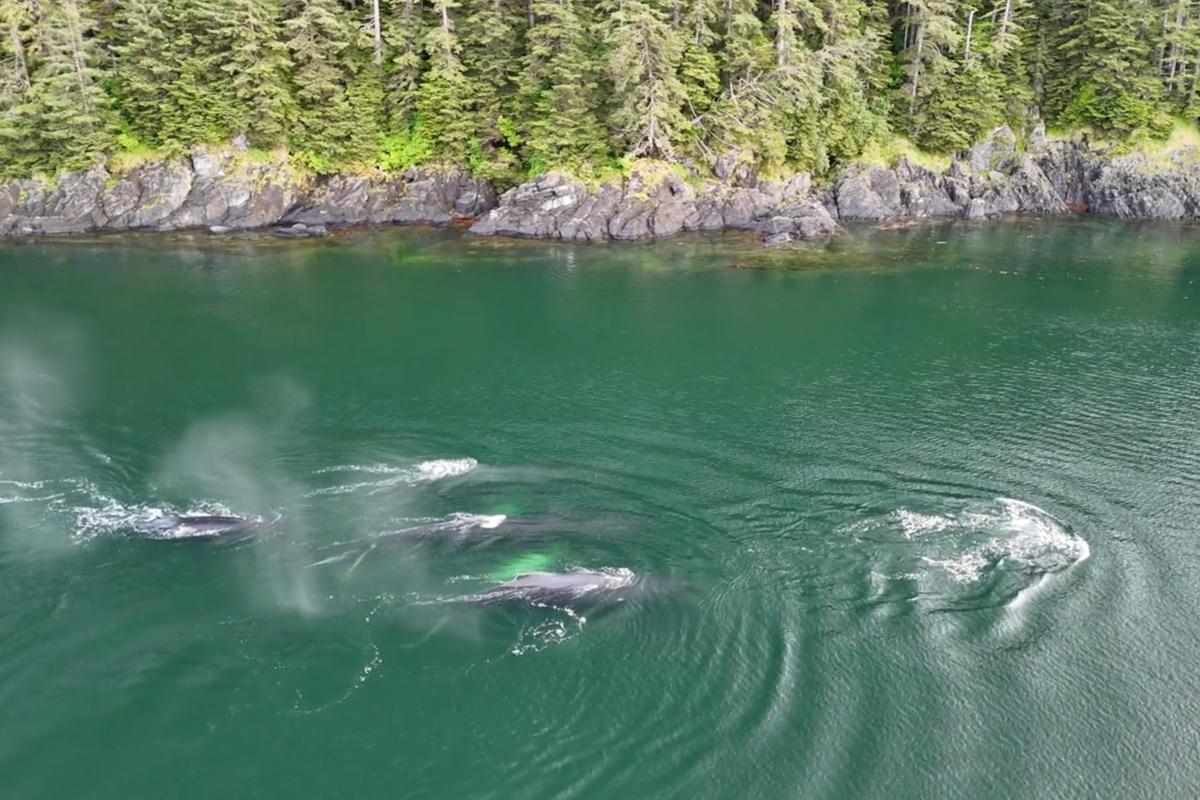
Neo-Darwinism, with its passive model of living beings, has been teetering on its throne. One current movement, known as the extended evolutionary synthesis, seeks to widen the evolutionary picture beyond the neo-Darwinist focus on random genetic variation and natural selection, in part by including behavioural and even cultural elements. Many animals have something like what we call culture in humans, and this includes cultural forms that are inherited and passed down. Lamarck knew this. He wrote that intelligent animals – birds and mammals – could create new habits and ways of life that would be maintained over generations. There is overwhelming and definitive evidence that all kinds of animals – birds, primates, whales, fish, insects – learn from one another and have cultural traditions that are handed down from generation to generation. Communication and social learning make a crucial difference to survival and reproduction, and therefore to evolution. Animals communicate vitally important things to one another including information about food, predators, songs, migration routes and where to find a mate. To give just one example, humpback whales develop different approaches to hunting from one community to another – one in the Northeast Pacific, another in the Gulf of Maine – and teach these to their offspring.
These innovative humpback whales, along with the nimble mountain lizards of the Dominican Republic and legions of other living things – all of them, in fact – exemplify what Lamarck knew and mainstream evolutionary biology has long denied. Living beings are active, self-making, and world-making. They are creators, even the humblest of them. The implication, deeply unpopular with autocrats from Napoleon onward, can be a source of hope: neither creativity nor transformative power can ultimately be controlled or monopolised.






© All Rights Reserved.