We will also cap off the month with a Beaver Moon.
Nov. 5 — Southern Taurids meteor showerThe Taurids are a unique meteor shower that actually presents in two different areas of the night sky.
Nov. 12 — Northern Taurids meteor showerThe Northern Taurids range from Oct. 13 to Dec. 2 and peak on the evening of Nov. 12.
Nov. 24 — Beaver SupermoonThe full moon of November is known as the Beaver Moon.
The Beaver Moon this year is also a supermoon, meaning it will appear 14% bigger and 30% brighter than an average moon, according to NASA.
Taurids, Leonids and a Beaver Supermoon: Astronomical events for November 2026 Three meteor showers and a supermoon
Updated: 6:18 PM EST Nov 2, 2026 Editorial Standards ⓘ Matt Maielli Copy Editor
Falling back on the clock means more time to look at the stars.
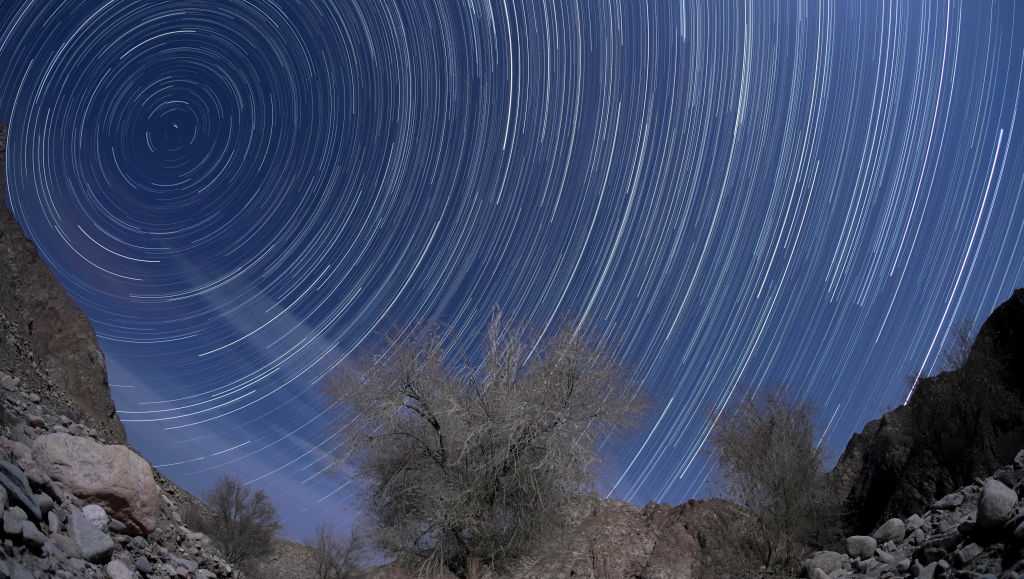
There will be plenty to look up for in November’s night sky. There will also be some clear nights for stargazing before the weather gets too cold for the year. Also, we’ll have three chances to see a meteor shower this month, as well as plenty of chances to spy the planets. We will also cap off the month with a Beaver Moon.
Advertisement
Related video above: The dark energy pushing our universe apart may not be what it seems, scientists say
Read below for the full list of astronomical events in November.
November mornings — Jupiter, Mars, Venus
All eyes will be on the southeastern morning sky. Throughout November, Jupiter and Mars will be paired in the sky as they cross in front of the constellation Leo. Venus will also be visible lower in the sky, crossing near Spica, the brightest star in Virgo.
Later in the month, Mercury will also appear beneath Virgo, before dipping back below the horizon in December.
Historical Photo of the Great Red Spot on Jupiter, taken by Voyager 1 in March 1979.
November evenings — Saturn
Saturn will be visible between the constellations Pisces and Cetus, the Whale, in the southeastern evening sky, just after dusk.
Universal History Archive A giant of a moon appears before a giant of a planet undergoing seasonal changes in this natural-color view of Titan and Saturn from NASA’s Cassini spacecraft.
Nov. 5 — Southern Taurids meteor shower
The Taurids are a unique meteor shower that actually presents in two different areas of the night sky. The Southern Taurids occur between Sept. 23 and Dec. 8, but they peak on the evening of Nov. 5. The Taurids’ radiant, or origin point, is the constellation Taurus, for which they are named.
Photo 12 The Seven Sisters, also known as the Pleiades star cluster, located more than 400 light-years away in the Taurus constellation. Captured by the Spitzer Space Telescope.
Nov. 9 — New moon
A new moon does not make for a particularly exciting sky, but it does make for a clear one. Use this opportunity to get some stargazing in. This time of year in the Northern Hemisphere, you can see the constellations Andromeda and Cetus. Hopefully, your local weather will cooperate to make for a star-filled evening.
J. W. Draper One of the first-ever pictures of the moon taken in 1840 by Dr. J.W. Draper, of New York.
Nov. 12 — Northern Taurids meteor shower
The Northern Taurids range from Oct. 13 to Dec. 2 and peak on the evening of Nov. 12. The northern variant of the meteor shower also originates from the constellation Taurus, this time near the star Atlas.
The Taurids consist of debris from the comet Encke, which orbits around the sun every three years.
Science & Society Picture Library Encke’s Comet as seen from the observatory at Hartwell Manor, Buckinghamshire.
Nov. 17-18 — Leonid meteor shower
The Leonids are one of the most prominent meteor showers of the year. According to NASA, they are considered to be some of the fastest meteors and can be quite colorful. This year, we should expect to see anywhere from 3 to 15 meteors per hour. The Leonids usually are active between Nov. 6 and 30, and their peak this year falls on the evening of Nov. 17.
The radiant of the Leonids is the constellation Leo. They will be visible in the eastern night sky after midnight. Jupiter and Mars will also be in conjunction near Leo on that same night, just above Regulus, one of the brightest stars in the sky.
The Leonid meteor shower consists of the debris of the comet 55P/Tempel-Tuttle. The comet orbits the sun every 33 years. It also causes meteor storms, which are when more than 1,000 meteors can be seen in an hour, every 33 years when it passes by Earth. The latest Leonid meteor storm took place in 2002. According to NASA, comet 55P was independently discovered by both Ernst Tempel and Horace Tuttle just a year apart, so it is named for both of them.
NASA This bright Leonid fireball is shown during the storm of 1966 in the sky above Wrightwood, California.
Nov. 24 — Beaver Supermoon
The full moon of November is known as the Beaver Moon. According to The Old Farmer’s Almanac, this was traditionally the time of year when "beavers begin to take shelter in their lodges, having laid up sufficient food stores for the long winter ahead." The general use of the name traces back to explorer Jonathan Carver’s book "Travels through the interior parts of North-America in the years 1766, 1767, and 1768," which lists names for the moons used by some Great Lakes Indigenous tribes. Carver wrote that the name Beaver Moon was used because "for in this month the beavers begin to take shelter in their houses, having laid up a sufficient store of provisions for the winter season."
Other Indigenous names for the moon include the Freezing River Moon (Abenaki, Anishnaabe, Arapaho, Cree), the Frost Moon (Assiniboine, Creek), the Moon of the Panther (Choctaw), the Moon of Fledgling Hawk (Hopi), the Moon of the Turkey (Potawatomi), and the Moon When All is Gathered in (Pueblo).
The Beaver Moon this year is also a supermoon, meaning it will appear 14% bigger and 30% brighter than an average moon, according to NASA.