This isn’t the first time Claude users have been able to interact with Anthropic’s agents on their mobile devices.
“Your computer must be awake, and the app must be open for Claude to work on tasks,” reads Anthropic’s description.
It’s unclear whether this will roll out to free users, who don’t have access to Claude Cowork in their subscriber tier.
Alongside this release, Anthropic dropped a report detailing usage patterns for Claude Cowork.
OpenAI rolled out Codex Remote in June, a feature similar to Claude Dispatch, letting users control their desktop agents from their smartphones.
I first tried Claude Cowork when it dropped in January, and I was immediately stunned that this agent could actually follow through and complete the tasks I asked it to run on my laptop, like organising a mess of screenshot files into respectable, labelled folders. It also did a solid job of helping me schedule events on my calendar. The agent wasn’t perfect, and it still exposed me to the risk of prompt injections or other security breaches, yet Cowork felt like a step change in how everyday users could interact with their devices.
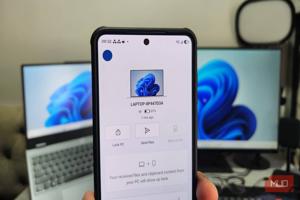
This isn’t the first time Claude users have been able to interact with Anthropic’s agents on their mobile devices. Previously, users could pair their smartphone app with their desktop through the Dispatch feature. This enabled users to send task requests from their phone, no matter where they were. But this approach had one major limitation. “Your computer must be awake, and the app must be open for Claude to work on tasks,” reads Anthropic’s description. That’s why some users left their laptops open to keep sessions running. Now, Cowork can run tasks without an active desktop session.
This announcement is part of a larger, recent shift in Silicon Valley towards always-running, semi-autonomous AI agents that you can control via texting. The trend was sparked by OpenClaw, a home-brew agent with a lobster mascot that went viral at the beginning of 2026, as early adopters ran it 24/7 and handed over control of their online lives.
Other tech companies were jealous of all this crustacean-focused praise. So, in the first half of the year, OpenAI hired OpenClaw’s creator and launched Codex, its adaptive agent; Google launched Spark, its take on the always-on agent; and Anthropic leant further into making its agents more user-friendly. Anthropic’s breakout hit was Claude Code, which helped developers automate tasks. Cowork takes a similar approach, translates it out of the context of the computer terminal and puts that power into chatbot form for average users.
Anthropic plans to roll out this revamped version of Cowork as a beta to subscribers of its Max plan, which starts at $100 a month. Then, the features are expected to trickle down to members of Anthropic’s cheaper tier, Pro, which costs $20 a month. It’s unclear whether this will roll out to free users, who don’t have access to Claude Cowork in their subscriber tier.
Alongside this release, Anthropic dropped a report detailing usage patterns for Claude Cowork. The company claims white-collar labourers are increasingly using its tools as part of their workflows. “Business process and operations”, such as data reports and checklists, and “content creation and copywriting”, like slide decks and partnership proposals, are the two largest categories of recent usage.
Both OpenAI and Anthropic are exploring ways to weave their popular chatbots and agents together into a unified, smartphone-centric user experience. OpenAI rolled out Codex Remote in June, a feature similar to Claude Dispatch, letting users control their desktop agents from their smartphones. OpenAI also launched more Codex-focused updates for its iOS app in July, including “support for creating, searching, opening, forking, and managing Codex tasks directly from a conversation.” Anthropic is taking it one step further with this latest release, merging the Claude chatbot interface and the Cowork agent for the browser and desktop versions.
These moves are part of a Silicon Valley vision that agentic automation could become central to how users interact with their devices, not just for nerdy developers. Rather than launching new apps or stand-alone tools, the strategy is to build these capabilities right into the chatbots that millions of people already have on their phones.
This story originally appeared on WIRED US.