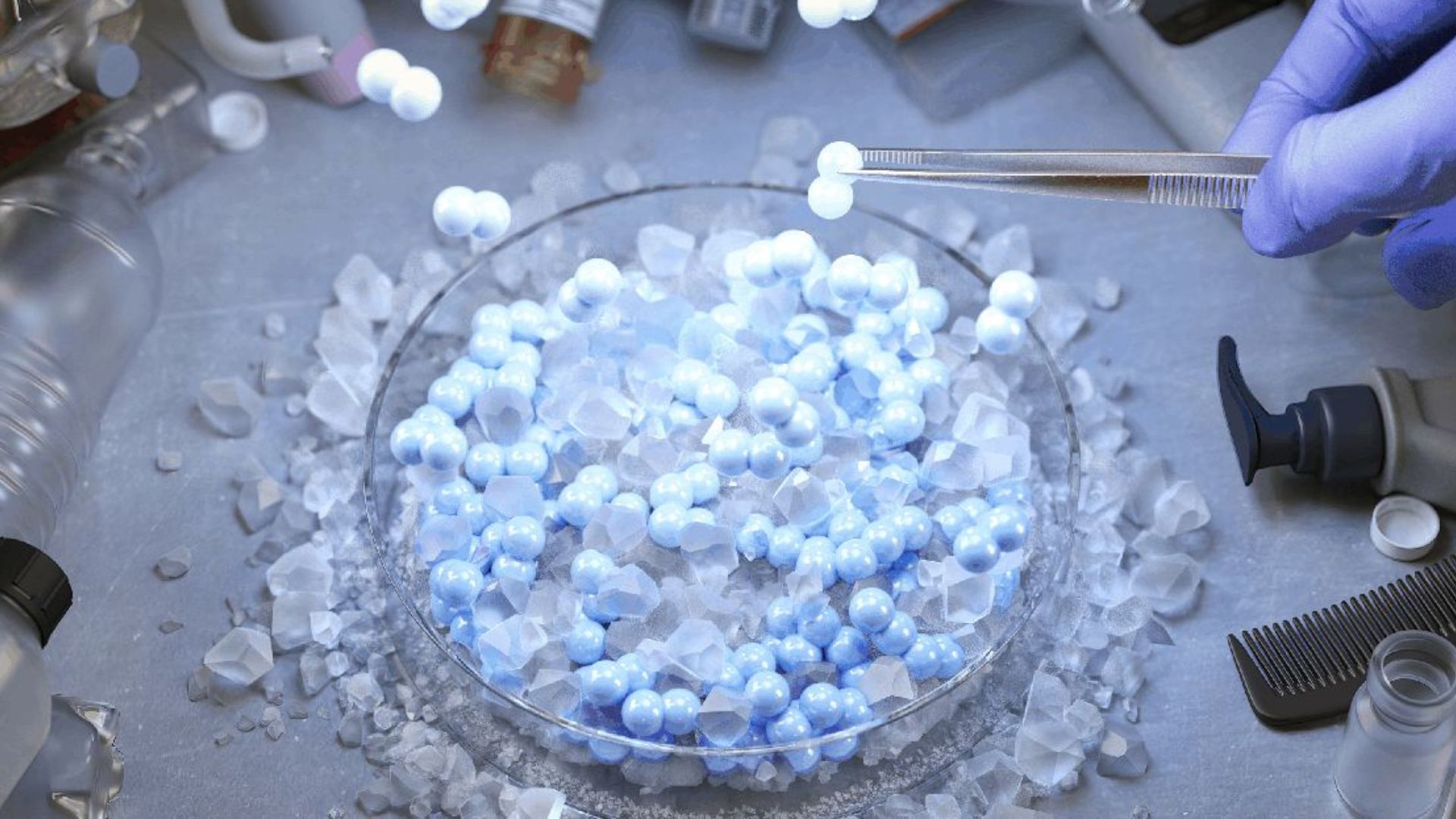
A process called Alkaline Thermal Treatment (ATT) has been tested to turn mixed plastic waste into high-purity hydrogen fuel.
This process eliminates the costly and laborious step of sorting plastic waste before recycling.
“Plastic waste is accumulating at alarming rates, and clean hydrogen is essential for decarbonizing energy.
It leads to 79 percent of plastic waste ending up buried in landfills, while another 12 percent is burned away into atmospheric pollution.
Alkaline Thermal Treatment uses heat to trigger a reaction between sodium hydroxide and organic matter, generating hydrogen fuel in the process.
A process called Alkaline Thermal Treatment (ATT) has been tested to turn mixed plastic waste into high-purity hydrogen fuel. Researchers from the UCLA Samueli School of Engineering and Ewha Womans University in South Korea undertook this new study. This process eliminates the costly and laborious step of sorting plastic waste before recycling. The single-reactor method successfully processes a mixture of the three most common, hard-to-recycle plastics: polyethylene terephthalate (PET), polyethylene (PE), and polypropylene (PP).
“We are solving two urgent global problems at the same time,” said Ah-Hyung “Alissa” Park, the Ronald and Valerie Sugar Dean of UCLA Samueli and a professor of chemical and biomolecular engineering. “Plastic waste is accumulating at alarming rates, and clean hydrogen is essential for decarbonizing energy. This technology tackles both of these challenges in a creative and scalable way,” the co-corresponding author added. Mixed plastic processing Look around you. The water bottle on your desk, the crinkly shopping bag in your pantry, and the sleek dashboard of your car all share a drawback. Once you throw them away, the waste is almost impossible to recycle as a single stream. A persistent challenge in global recycling is the labor-intensive requirement to sort plastics by type before processing. It leads to 79 percent of plastic waste ending up buried in landfills, while another 12 percent is burned away into atmospheric pollution. Only 9 percent ever get a second life.
But the new study overcomes this challenge. The team demonstrated a chemical technique that takes a chaotic, unsorted cocktail of the world’s three most common plastics and transforms it into hydrogen fuel. Interestingly, the method does it without releasing a single puff of carbon dioxide. Alkaline Thermal Treatment uses heat to trigger a reaction between sodium hydroxide and organic matter, generating hydrogen fuel in the process. It was originally designed to extract hydrogen fuel from ocean biomass, such as seaweed. The researchers wondered if the same principles could dissolve our mounting plastic problem. While plastic bottles (PET) broke down easily during the process, shopping bags (PE) and food containers (PP) resisted the chemical attack due to highly stable, stubborn carbon-hydrogen bonds. To overcome this chemical defense, a thermal oxidation pretreatment was introduced. In this process, the mixed plastic was briefly exposed to mild heat in the air. After this, oxygen was introduced into the stubborn polymer chains, which created the reactive weak spots needed for the treatment to dismantle all three plastic types.
Eco-friendly process Once activated, the unsorted plastic soup degrades beautifully inside a single reactor, pumping out hydrogen gas with a purity level exceeding 90 percent. ATT process changes the game for environmental footprints by operating at temperatures around 400 degrees Celsius (752 F), which are cooler than those of extreme gasification methods. Furthermore, the technique uses a sodium hydroxide reagent to capture the plastic’s carbon rather than venting greenhouse gases into the atmosphere. The carbon is permanently bound into a stable, solid mineral called sodium carbonate. The researchers have already outlined a simple secondary process to turn that byproduct into calcium carbonate. That is the exact mineral used by the concrete and construction industries, locking the plastic’s carbon away forever in infrastructure. The breakthrough is currently confined to precision laboratory settings. Significant optimization is required to scale the technology up for municipal recycling plants, and its long-term economic viability still needs to be rigorously tested.
The study was published in Proceedings of the National Academy of Sciences.