Second-hand smoke, outdoor pollution and indoor pollutants can affect respiratory health.
However, ventilation does not completely remove harmful particles released by burning tobacco.Avoid staying in rooms where people smoke.
Consider exercising indoors instead.When outdoor exposure cannot be avoided, wearing a properly fitted N95 mask can help reduce the amount of particulate matter inhaled.However, a mask should not be treated as complete protection against air pollution.
Reducing time spent outdoors during severe pollution remains important.Outdoor pollution is not the only concern.
Burning incense sticks and other indoor sources can also affect air quality.Keep indoor spaces adequately ventilated, stay hydrated and include vegetables and fruits in a balanced diet.
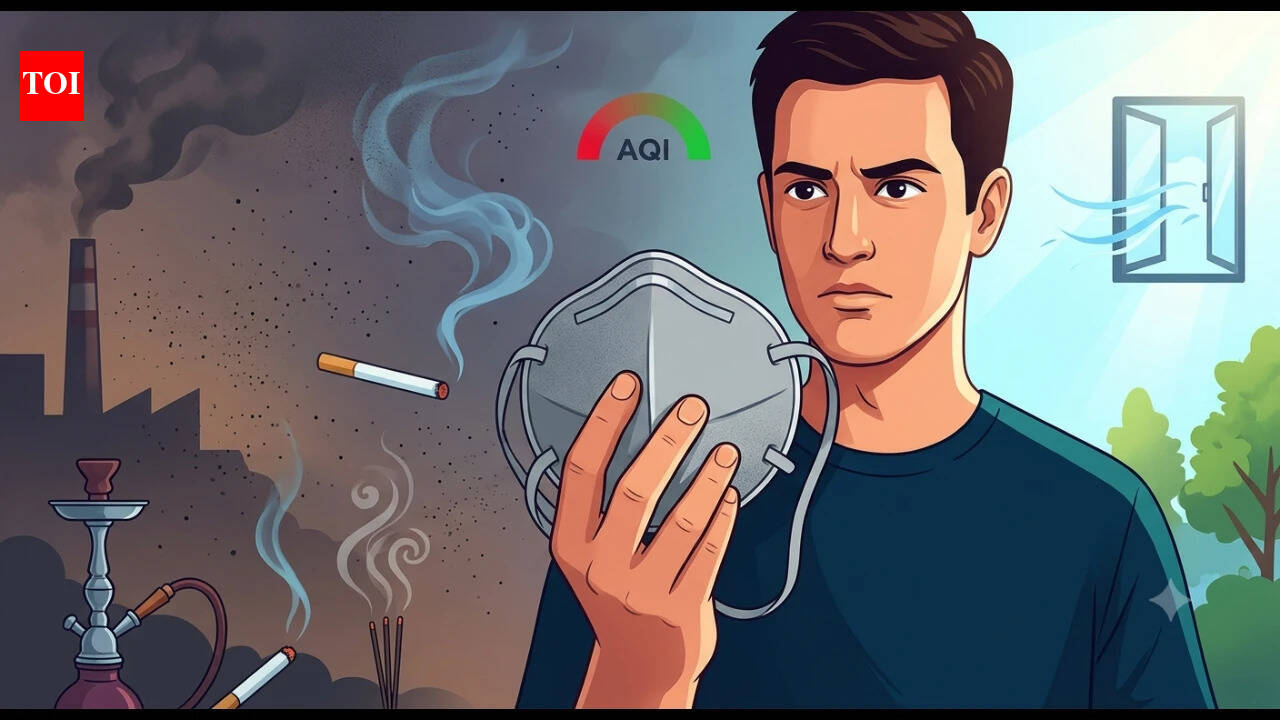
Not smoking does not automatically protect the lungs. Second-hand smoke, outdoor pollution and indoor pollutants can affect respiratory health. Here are five practical ways non-smokers can reduce their exposure. (AI generated image)
Do not underestimate smoke from other people's cigarettes
Opening windows is not enough to remove tobacco smoke
Check air quality before planning outdoor exercise
Use an N95 mask when pollution levels are high
Pay attention to indoor pollution and everyday habits
Disclaimer: This article is for general awareness and does not replace medical advice. People experiencing persistent coughing, breathlessness or wheezing should consult a qualified doctor.
Not smoking is one of the best decisions for lung health. But there is a lesser-known problem: even people who have never touched a cigarette can breathe in harmful substances every day. From cigarette smoke and sheesha fumes to polluted outdoor air and indoor irritants, the lungs face several threats without a person actively smoking.Long-term exposure can irritate the respiratory system and increase the risk of breathing problems, asthma and heart and lung diseases. According to Dr Vijay Kumar Agrawal, Director – Pulmonology and Sleep Medicine, Yatharth Super Speciality Hospital, Faridabad, protecting respiratory health requires more than simply staying away from cigarettes.Second-hand smoke is a concern even for people who have never smoked. Sitting beside someone smoking a cigarette, sheesha or another tobacco product can expose non-smokers to harmful substances.The risk is not limited to crowded public places. Homes, offices and vehicles can also become exposure points. Maintaining smoke-free surroundings is important, particularly in enclosed spaces where smoke can linger.A common assumption is that opening a window or switching on a fan makes a smoking environment safe. However, ventilation does not completely remove harmful particles released by burning tobacco.Avoid staying in rooms where people smoke. Keep homes, workplaces and vehicles smoke-free rather than relying on fresh air to clear the smoke.A morning walk or jog may be part of a healthy routine, but outdoor exercise during heavy pollution can increase exposure to harmful particles.Check the local Air Quality Index (AQI) before stepping outside. On highly polluted days, avoid strenuous outdoor activities such as running, jogging and intense workouts. Consider exercising indoors instead.When outdoor exposure cannot be avoided, wearing a properly fitted N95 mask can help reduce the amount of particulate matter inhaled.However, a mask should not be treated as complete protection against air pollution. Reducing time spent outdoors during severe pollution remains important.Outdoor pollution is not the only concern. Burning incense sticks and other indoor sources can also affect air quality.Keep indoor spaces adequately ventilated, stay hydrated and include vegetables and fruits in a balanced diet. These habits support general health, although they cannot cancel out the effects of continued exposure to smoke or pollution.As Dr Agrawal emphasised, protecting the lungs is a daily responsibility, even for people who do not smoke. Avoiding exposure, rather than simply avoiding cigarettes, is an important part of that effort.