How The Streaming War Has ChangedIn the first quarter of 2026, OTT subscribers in India crossed 600 million.
Its bundled Prime membership, which combines shopping benefits with video streaming, has also helped improve customer retention.
Netflix, YouTube, Prime Video and other apps simply sit alongside one another on the same home screen.
Meanwhile, traditional streaming platforms are recognising that digital creators already command highly loyal audiences.
A former print ... Read MoreFirst Published: July 17, 2026, 09:33 ISTNews explainers Netflix Wants To Be YouTube Now.
Netflix Wants To Be YouTube Now. Why The New Streaming War Isn’t About Subscribers?
Written By :
,
Last Updated: July 17, 2026, 10:04 IST
Netflix is borrowing YouTube’s playbook with creator-led shows, podcasts and live content. What does that reveal about the future of streaming?
Rapid Read
According to a recent survey, the average urban Indian subscribes to two or three OTT platforms but actively uses only one on a regular basis. Subscription fatigue is becoming a growing challenge.
From ‘Squid Game’ to ‘Bridgerton’ and ‘Stranger Things’, Netflix has produced enough original content to earn a reputation as one of the world’s best streaming services. From August 3, it will begin adding video content from digital publishers such as BuzzFeed, Condé Nast and Variety for subscribers in select markets, including the US and Canada. In other words, the kind of videos people would normally watch on YouTube.
Netflix recently told subscribers they will no longer have to leave the platform to watch “some of their favourite videos from around the internet", as it expands its library with everything from two-minute clips to 20-minute episodes.
So, why is Netflix suddenly embracing creator-led shows, live events, comedy specials, podcasts and unscripted programming? And what does that say about the future of streaming?
“I feel for a large part the audience is done with scripted content and the age-old format of extremely curated content. Creator-led shows, podcasts, etc offer a certain level of authenticity in terms, character and uniqueness that the audience can relate to," said Sidharth Vohra, Founder and Creative Director, The Matic Studio, a specialised design and AI-focused animation company based in New Delhi.
The global streaming industry has revolved around subscriber growth for years. Every quarterly earnings report focused on how many new users Netflix, Prime Video or Max had added. More subscribers meant more market dominance.
But today the battle in streaming is no longer about convincing people to pay for another subscription. It is about keeping them watching for longer. In other words, the new currency is attention.
How The Streaming War Has Changed
In the first quarter of 2026, OTT subscribers in India crossed 600 million. Of these, Netflix has around 50 million Indian subscribers. Amazon Prime Video follows with nearly 200 million subscribers. But in today’s streaming business, subscriber numbers tell only part of the story.
Netflix’s turning point came in 2023, when it slashed subscription prices and introduced a mobile-only plan. The move doubled its subscriber base in India. By 2026, its content strategy had become deeply local, with shows like ‘Sacred Games’, ‘Scam 1992’ and ‘Delhi Crime’ taking Indian storytelling to global audiences. Today, Netflix releases at least four Indian original titles every month, nearly half of them in regional languages.
Amazon Prime Video has taken a less aggressive but equally effective approach. Originals like ‘Panchayat’, ‘Mirzapur’ and ‘The Family Man’ have built a loyal fan base in India. In 2026, Amazon also began experimenting with simultaneous theatrical and OTT releases for select Bollywood films, adopting a hybrid model aimed at boosting both box-office collections and streaming viewership. Its bundled Prime membership, which combines shopping benefits with video streaming, has also helped improve customer retention.
Perhaps the biggest story in India’s streaming wars is the rise of regional content. Tamil, Telugu, Malayalam, Kannada, Bengali and Marathi programming now accounts for over 40% of content on major OTT platforms. South Indian films regularly find wider audiences through Hindi-dubbed versions, while platforms like SonyLIV have strengthened their presence in Tamil Nadu and Hoichoi continues to dominate the Bengali streaming market. Increasingly, the battle for viewers is being fought language by language.
According to a recent survey, the average urban Indian subscribes to two or three OTT platforms but actively uses only one on a regular basis. Subscription fatigue is becoming a growing challenge, with viewers often cancelling a service after finishing a popular show before moving to another platform. That is why streaming companies are increasingly betting on binge-worthy content that keeps audiences hooked, and subscribed, for longer.
Every minute someone spends watching YouTube is a minute they are not spending on Netflix. The same applies to Instagram Reels, podcasts, gaming and live sports. Entertainment companies are no longer competing only with each other. They are competing with every screen demanding a consumer’s attention.
“Doom-scrolling is ever present in our lives, be it Facebook, YouTube or Instagram. The dopamine hit from scrolling endlessly is keeping the user engaged but only for first three to four seconds. If that interests the viewer only then will the attention be retained. Even at the studio, when we are working on animation and motion design projects, clients are always looking for a ‘first three seconds hook’. So, yes, viewer attention in today’s date is everything," said Vohra.
How Dramatically Have Viewing Habits Shifted?
According to Nielsen’s latest report, streaming now accounts for 44.8% of all television viewing in the US, overtaking broadcast and cable television combined.
Within streaming itself, YouTube has emerged as the single biggest player. It now accounts for 13.5% of television viewing, compared with 8.2% for Netflix. The competition extends beyond television screens.
Research by Digital i shows viewers worldwide now spend 99.1 minutes every day on YouTube, compared with 93.4 minutes on Netflix.
The difference may appear small, but across hundreds of millions of users, those additional minutes translate into enormous advertising opportunities, stronger audience loyalty and greater influence over viewing habits.
In today’s entertainment economy, watch time has become as valuable as subscriber numbers.
“Long-form content is slowly dying. People’s viewing habits are changing majorly because of short form content. A study says that even while watching an action movie, about 65% of people feel the need to check their phone or Instagram because the movie lingers periods of concentration. The habits mostly, if not fully, have moved to short formats," Vohra stressed.
Why Netflix Is Starting To Look More Like YouTube
Netflix’s programming strategy reflects this changing reality. Netflix executive John Derderian said the goal is to help members “keep exploring the stories and personalities they love" once a show or movie ends.
The company is investing beyond premium scripted series into creator-led programming, live entertainment, stand-up comedy, sports-adjacent content and podcasts.
These formats are generally quicker to produce, encourage repeat viewing and keep audiences returning more frequently than big-budget dramas released only a few times each year.
India illustrates that strategy particularly well. Netflix has announced plans to release around four new titles every week, spanning scripted originals, documentaries, films and creator-led programming. Rather than relying solely on expensive prestige productions, the company is building a more diverse content pipeline designed to keep viewers engaged throughout the year.
The shift also recognises how audiences increasingly consume entertainment.
Viewers no longer distinguish sharply between a professionally produced Netflix documentary and a high-quality YouTube creator explaining the same subject. The deciding factor is often whether the content is engaging, not where it comes from.
Why India Could Shape The Future Of Streaming
Few markets illustrate this transformation better than India. The country now has an estimated 601 million OTT viewers, including 148 million paid subscriptions, making it one of the world’s largest streaming markets. At the same time, YouTube remains unmatched in scale.
Google’s advertising data estimates the platform reaches around 500 million users in India, making the country YouTube’s largest audience globally. Viewing habits are changing as well.
Connected TV users in India surged 87% year-on-year to 129.2 million, meaning more households are watching digital content on television screens instead of smartphones.
That change matters because it removes one of the biggest distinctions between YouTube and traditional OTT platforms.
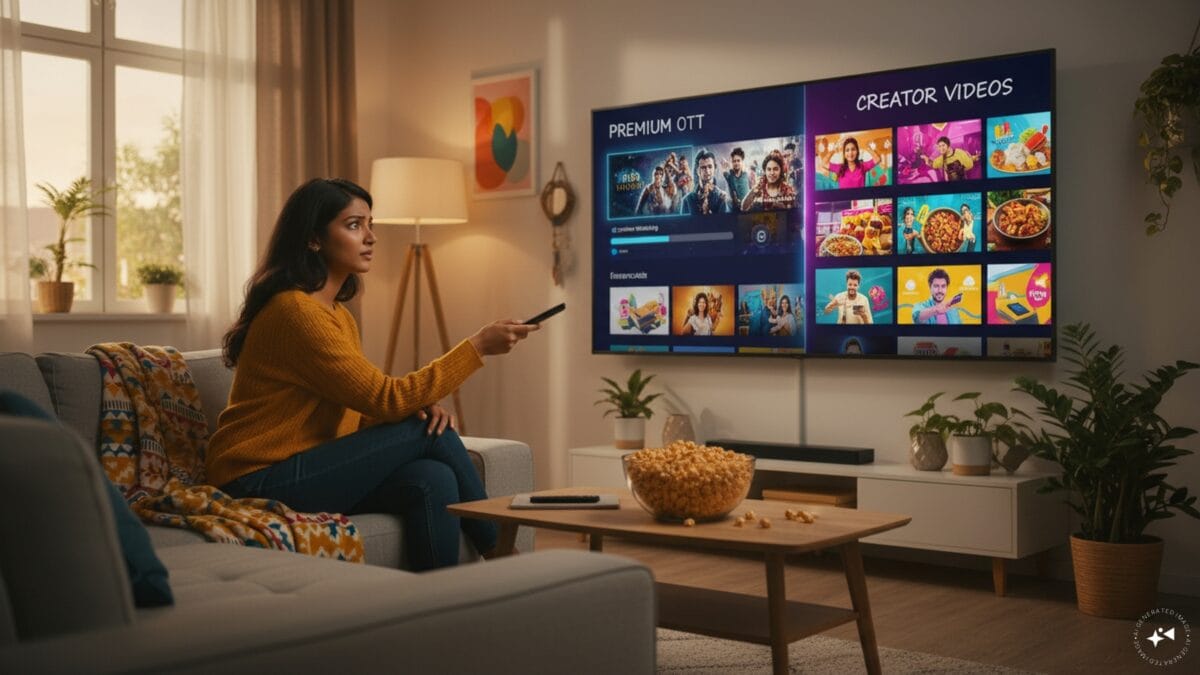
On a smart television, viewers no longer think in terms of “social media" versus “streaming". Netflix, YouTube, Prime Video and other apps simply sit alongside one another on the same home screen.
Research also suggests Indian adults now spend more than 72 minutes every day on YouTube, while 87% access the platform daily, reinforcing its position as mainstream entertainment rather than merely a video-sharing website. That has major implications for India’s creator economy.
The country’s biggest YouTubers are increasingly crossing into mainstream entertainment through web series, reality shows, documentaries and podcasts. Meanwhile, traditional streaming platforms are recognising that digital creators already command highly loyal audiences.
The future of streaming may no longer depend on who owns the largest catalogue of movies and television shows. Instead, success is likely to be measured by engagement.
“YouTube has been king of content for over two decades. It’s not a surprise that Netflix is following up on similar formats. Algorithms, watch suggestions, viewing history of all integrated deeply into both formats," said Vohra.
Platforms that can persuade viewers to spend an extra 10 or 20 minutes every day will gain valuable advantages in advertising, subscriptions, data and customer retention.
For advertisers, this creates more opportunities to reach audiences spending increasing amounts of time on connected televisions rather than traditional broadcasting.
News18 Newsletter Handpicked stories, in your inbox A newsletter with the best of our journalism submit
Key Questions Answered How will Netflix's new strategy impact content creators? Netflix's new strategy of incorporating short-form video content from publishers like BuzzFeed and Condé Nast, starting August 3, aims to boost viewer engagement and compete with platforms like YouTube and TikTok. Could this shift change how we define 'streaming platforms'? Yes, the definition of 'streaming platforms' may shift as Netflix incorporates content from digital publishers and adopts a YouTube-like model focused on attention rather than solely subscribers. What does this mean for traditional TV advertising revenue? Traditional TV advertising revenue is expected to be surpassed by connected TV (CTV) advertising within the next decade. CTV advertising is projected to grow from $44 billion in 2025 to $81 billion by 2030.
About the Author Shilpy Bisht Shilpy Bisht is a News Editor at News18, where she leads the English app operations. She writes on world affairs, health, AI, career, business, and issues affecting women and children. A former print ... Read More
First Published: July 17, 2026, 09:33 IST
News explainers Netflix Wants To Be YouTube Now. Why The New Streaming War Isn’t About Subscribers?
Disclaimer: Comments reflect users’ views, not News18’s. Please keep discussions respectful and constructive. Abusive, defamatory, or illegal comments will be removed. News18 may disable any comment at its discretion. By posting, you agree to our Terms of Use and Privacy Policy Loading comments...