Milk: A natural recovery drinkMilk offers a combination of whey and casein proteins, each serving a distinct role in recovery.
“Casein works more slowly, providing a sustained release of amino acids.”Together, they support both immediate and long-term muscle recovery.
AdvertisementCurd and the role of gut healthCurd adds another dimension to fitness nutrition through its live cultures.
Recovery is more than muscle sorenessRecovery is no longer viewed as simply easing muscle soreness after a workout.
“Adding dairy after exercise is a simple, evidence-backed way to preserve lean muscle, support recovery and meet daily protein requirements,” she explains.
As India embraces fitness as a lifestyle, everyday foods like milk and curd are gaining renewed attention for their role in protein intake, recovery and gut health. Experts explain why dairy is becoming central to active living
India’s relationship with fitness is evolving in ways that go far beyond gym memberships. Running clubs are expanding across tier-two cities. Strength training is drawing more women than ever before.
Gym parking lots are filling up before sunrise. From cycling groups to recreational cricket, people are investing in their health with consistency rather than short-term bursts of motivation.
This shift towards sustained physical activity has triggered an equally important question. What are people eating to support their fitness goals, and is traditional Indian nutrition enough?
Fitness is no longer a phase
The modern Indian fitness movement is less about trends and more about habit formation. People are building routines that integrate exercise into daily life, whether through structured workouts or informal physical activity.
Advertisement
“The nutritional case for dairy in active lifestyles was always strong,” says Ravin Saluja. “What has changed is that people are now asking more informed questions about what they eat and how it supports their health.”
He adds that this growing awareness is encouraging individuals to look beyond trends and towards the science behind everyday foods.
Why protein is at the centre of the conversation
As fitness levels rise, so does the need for adequate protein intake. Physically active individuals require more protein than those who are sedentary, particularly for muscle repair and recovery.
More from Lifestyle More from Lifestyle
The International Society of Sports Nutrition highlights protein as a critical component for training adaptation and recovery. However, quality is just as important as quantity.
“Instead of following trends, people are looking at how everyday foods can meet their protein and recovery needs,” says Saluja.
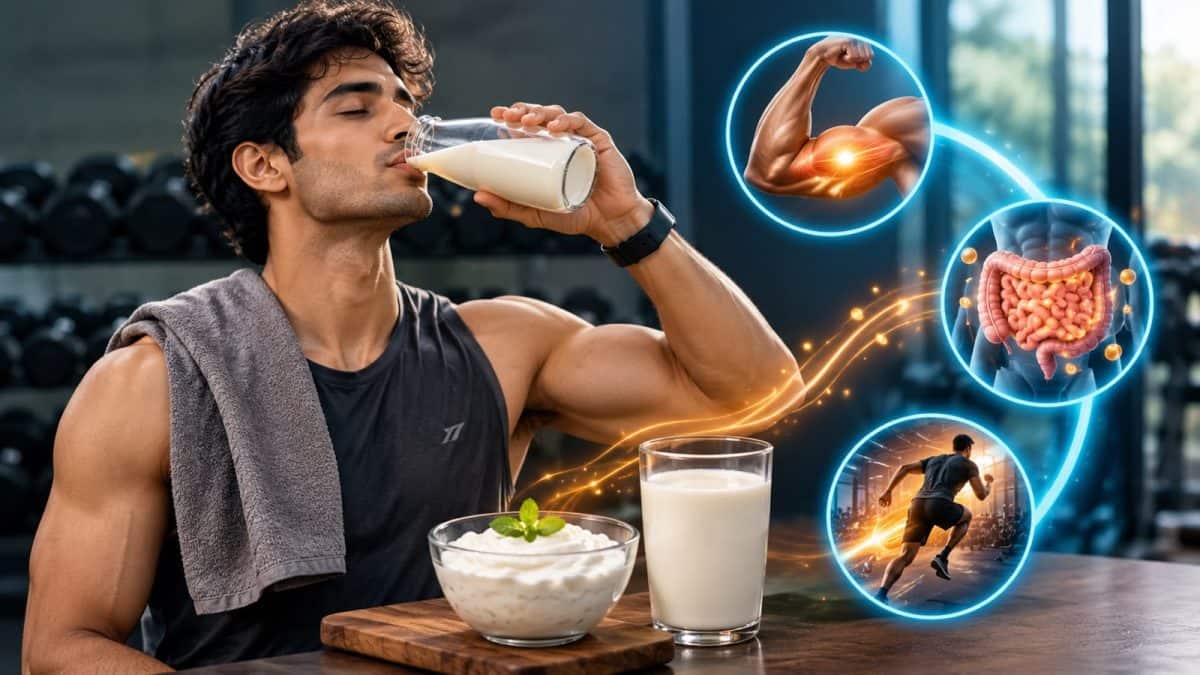
Milk: A natural recovery drink
Milk offers a combination of whey and casein proteins, each serving a distinct role in recovery.
“Whey is rapidly absorbed and is useful immediately after a workout when muscles are primed to take up nutrients,” explains Saluja. “Casein works more slowly, providing a sustained release of amino acids.”
Together, they support both immediate and long-term muscle recovery. Milk also provides calcium, potassium, vitamin B12 and carbohydrates, making it a well-rounded recovery option.
Advertisement
Curd and the role of gut health
Curd adds another dimension to fitness nutrition through its live cultures.
For individuals who train frequently, nutrient absorption becomes critical. Gut health directly influences how efficiently the body can utilise nutrients for recovery.
“These things are not separate conversations anymore,” says Saluja. “Protein, recovery and gut health are all interconnected.”
What Indian guidelines and research say
India’s dietary guidelines from the ICMR National Institute of Nutrition recommend milk and dairy as part of a balanced diet, particularly for their contribution to protein and micronutrient intake.
The ICMR INDIAB study, published in Nature Medicine, further highlights the importance of protein in metabolic health. The study found that higher protein intake, whether from dairy, pulses, eggs or fish, was associated with a lower risk of prediabetes and diabetes.
At the same time, it revealed a gap. Many Indians are not consuming enough protein, even as fitness becomes more mainstream.
A growing preference for simple, functional foods
The fitness community in India is becoming more discerning. People are reading ingredient labels, asking questions and choosing foods that serve multiple nutritional purposes.
Advertisement
“Dairy is a complete fitness food, naturally combining high-quality protein, carbohydrates and electrolytes to support both performance and recovery,” says Dr Neha Gupta, Consultant in Internal Medicine at Max Super Specialty Hospital, Patparganj.
“Before a workout, milk and yoghurt provide sustained energy through lactose while whey and casein proteins support active muscles. After exercise, dairy helps replenish glycogen, repair muscle tissue and restore hydration,” she adds.
Recovery is more than muscle soreness
Recovery is no longer viewed as simply easing muscle soreness after a workout. It now includes long-term factors such as bone strength, immune function, hydration and overall energy levels.
“Dairy is one of the most effective post-workout foods because it naturally combines fast-digesting whey and slow-digesting casein proteins,” says Lakshmi Kale, Head Nutritionist at Nutrition In Sync.
“Adding dairy after exercise is a simple, evidence-backed way to preserve lean muscle, support recovery and meet daily protein requirements,” she explains.
Accessibility and sustainability matter
One of the advantages of dairy is its accessibility. Milk and curd are widely available, affordable and culturally familiar, making them easier to integrate into daily routines compared to specialised supplements.
For individuals building long-term fitness habits, this accessibility plays a crucial role in maintaining consistency.