image AI generatedHow early Americans followed mammoths and other giant herbivores across the AmericasMegafauna supplied more than 99 per cent of early Americans' food; study findsWhy early Americans preferred hunting mammoths and other giant herbivoresHow the extinction of mammoths and giant sloths changed early American lifeFor decades, archaeologists have debated a basic question about the first people who spread across the Americas.
Were they broad-spectrum foragers who adapted to whatever food was available in each landscape.
Across much of North America, Columbian mammoths dominated the record.
Farther south, giant ground sloths and gomphotheres featured prominently.According to the study, this pattern suggests that early populations were tracking large herbivores rather than adapting their diets primarily to local ecosystems.
Early populations used specialised projectile points and curated toolkits designed for hunting and processing large mammals.
image AI generated
How early Americans followed mammoths and other giant herbivores across the Americas
Megafauna supplied more than 99 per cent of early Americans' food; study finds
Why early Americans preferred hunting mammoths and other giant herbivores
How the extinction of mammoths and giant sloths changed early American life
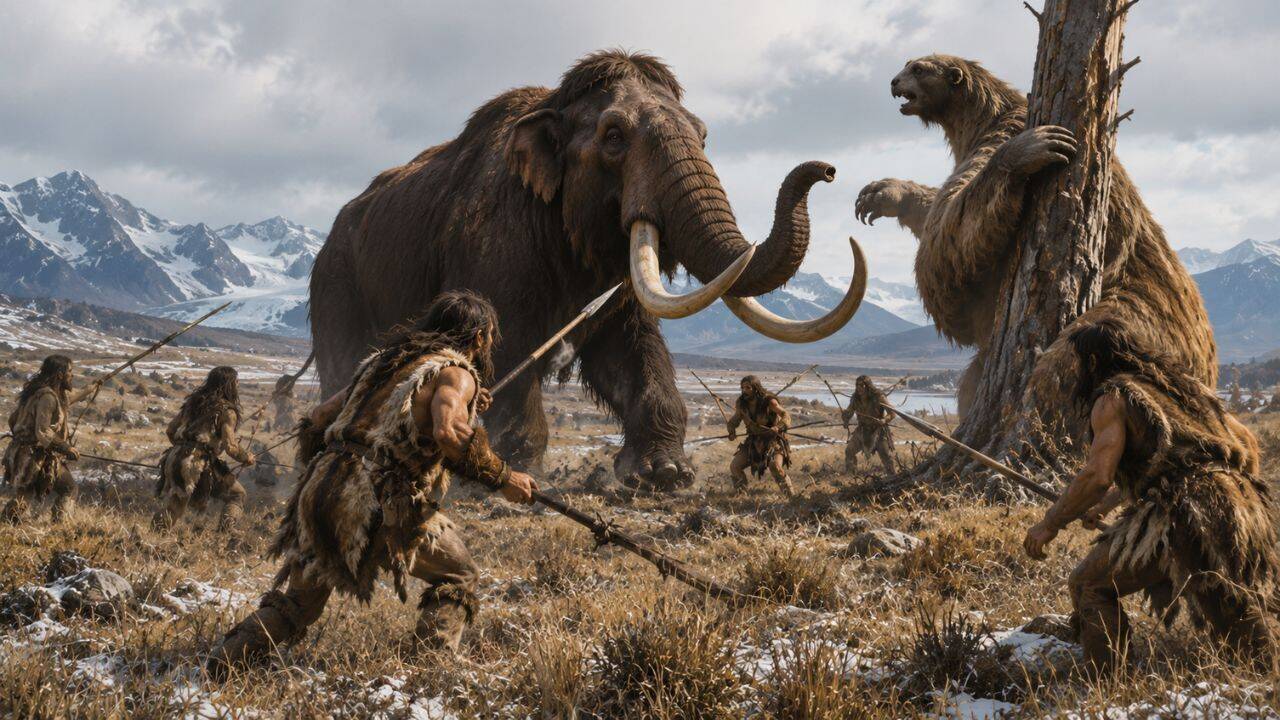
For decades, archaeologists have debated a basic question about the first people who spread across the Americas. Were they broad-spectrum foragers who adapted to whatever food was available in each landscape. According to the study published in Science Advances, on 1 July 2026 titled “ Hemisphere-wide evidence of Early Paleoindian megaherbivore specialisation ”, the answer may be far more specialised than many researchers have recently assumed. After examining evidence from 50 archaeological sites stretching from Alaska to Patagonia, the researchers concluded that some of the earliest widespread human populations in the Americas obtained most of their food from enormous herbivores such as mammoths, gomphotheres and giant ground sloths. According to the study, these animals were not occasional targets but formed the backbone of early diets across vast regions of the continent.The study examined three major early cultural groups: people living in eastern Beringia in what is now Alaska and north-western Canada, Clovis communities in North America, and groups associated with Fishtail Projectile Points in South America.Although these populations occupied very different environments, the researchers found striking similarities in the animals represented at archaeological sites.In Alaska, woolly mammoths appeared most frequently. Across much of North America, Columbian mammoths dominated the record. Farther south, giant ground sloths and gomphotheres featured prominently.According to the study, this pattern suggests that early populations were tracking large herbivores rather than adapting their diets primarily to local ecosystems. The researchers argue that focusing on animals weighing more than a tonne may have helped people move rapidly through unfamiliar landscapes because similar prey could be found across a wide range of habitats.The authors describe these groups as "dietary specialists but habitat generalists", meaning they occupied many different environments while continuing to pursue a relatively narrow set of prey species.One of the strongest findings came from estimates of edible biomass. Rather than simply counting animal remains, the team calculated how much food each species could potentially provide.According to the study, megafauna accounted for more than 99 per cent of the edible biomass represented at the sites examined in Alaska, North America and South America. Smaller animals, including rabbits, birds and other game, contributed only tiny fractions of the total.The researchers found that mammoths alone supplied the overwhelming majority of edible biomass in eastern Beringia and much of North America. In South America, giant ground sloths and gomphotheres made up most of the available food resources represented in the archaeological record.Even when hypothetical increases in the number of small animals were added to the calculations, megafauna still dominated the overall food picture. That result led the authors to conclude that the archaeological evidence is difficult to reconcile with the idea of broadly generalist diets.Large herbivores offered rewards that smaller prey could not match. A single mammoth or giant sloth provided enormous quantities of meat and fat, resources that could support highly mobile groups for extended periods.According to the researchers, these animals were particularly attractive because of their energy returns and because people only needed to understand the behaviour of a limited number of prey species rather than learning the details of every local plant and animal community they encountered.Similarities in hunting technology across the Americas. Early populations used specialised projectile points and curated toolkits designed for hunting and processing large mammals. Evidence for plant-processing equipment, fishing gear or other tools associated with broad-spectrum subsistence is largely absent from the sites examined.Taken together, the authors argue that these patterns fit a model of highly mobile big-game hunters whose movements and technologies were closely tied to the continent's largest herbivores.The findings do not settle every debate surrounding the peopling of the Americas. Archaeologists continue to disagree about how representative the surviving archaeological record is and how heavily humans contributed to the extinction of Ice Age megafauna.Even so, the new analysis presents one of the most comprehensive examinations of early American diets to date. According to the study, the evidence from animal remains, edible biomass calculations, mobility patterns and hunting technology points in the same direction: the first continent-wide populations in the Americas relied heavily on giant herbivores, from mammoths in the north to giant ground sloths in the south.As those animals gradually disappeared near the end of the Ice Age, human communities appear to have shifted towards smaller prey and more regionally distinct ways of life.