$40 Billion Investment Push, Energy, Semiconductors: What PM Modi’s 5-Nation Tour AchievedReported By :,Last Updated: May 21, 2026, 11:15 ISTFrom semiconductors and AI to energy security and defence cooperation, the visit touched almost every sector that India currently sees as strategically critical.
Rapid ReadPrime Minister Narendra Modi’s five-nation diplomatic tour has delivered a major investment push for India.
From semiconductors and AI to energy security and defence cooperation, the visit touched almost every sector that India currently sees as strategically critical.
India-UAE defence ties moved into a new phaseBeyond energy, India and the UAE expanded cooperation in defence, maritime security and cyber coordination.
News18 Newsletter Handpicked stories, in your inbox A newsletter with the best of our journalism submitFirst Published: May 21, 2026, 11:15 ISTNews india $40 Billion Investment Push, Energy, Semiconductors: What PM Modi’s 5-Nation Tour AchievedDisclaimer: Comments reflect users’ views, not News18’s.
$40 Billion Investment Push, Energy, Semiconductors: What PM Modi’s 5-Nation Tour Achieved
Reported By :
,
Last Updated: May 21, 2026, 11:15 IST
From semiconductors and AI to energy security and defence cooperation, the visit touched almost every sector that India currently sees as strategically critical.
Rapid Read
Prime Minister Narendra Modi’s five-nation diplomatic tour has delivered a major investment push for India.
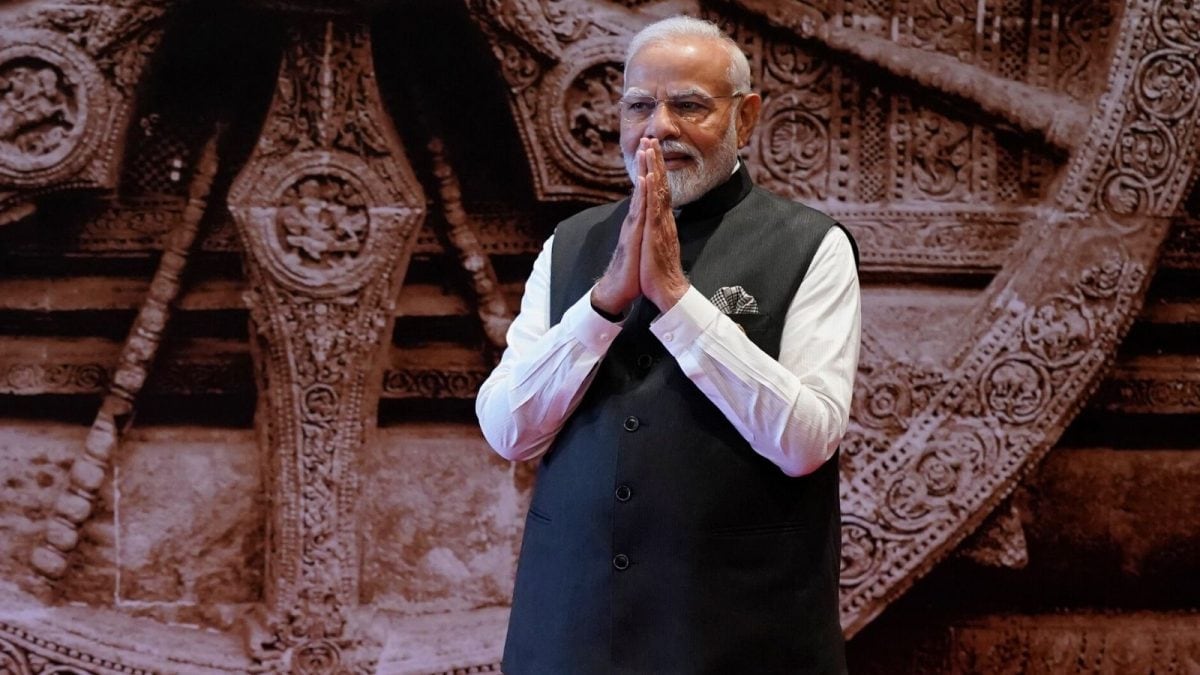
Prime Minister Narendra Modi’s five-nation diplomatic tour has delivered a major investment push for India, with fresh business commitments and expansion plans worth an estimated Rs 3.5 lakh crore (around USD 40 billion) emerging from meetings with global industry leaders and partner countries.
During the visit, Modi met CEOs of more than 50 major international companies — together valued at nearly USD 3 trillion — many of whom already have a significant presence in India, with cumulative investments and business exposure of about USD 180 billion.
Officials said several new projects are now in the pipeline across semiconductors, logistics, technology, manufacturing and infrastructure, while the UAE alone announced fresh investments of USD 5 billion (around Rs 45,000 crore) in India.
The high-profile five-nation diplomatic tour this week, with the PM travelling across the UAE, Sweden, Norway, the Netherlands and Italy, came at a time of mounting geopolitical tensions, energy uncertainty and global economic realignments.
While the visit produced several formal agreements, officials in New Delhi believe the larger success of the tour lay in how India positioned itself — as a trusted economic partner, a technology hub, a manufacturing alternative and an increasingly influential geopolitical player.
From semiconductors and AI to energy security and defence cooperation, the visit touched almost every sector that India currently sees as strategically critical.
Here are the 10 biggest takeaways from the tour:
Energy security remained central in UAE talks
With global oil markets still volatile because of tensions in West Asia, India focused heavily on long-term energy cooperation with the UAE. Discussions covered crude supplies, LNG partnerships, strategic petroleum reserves and future investments in the energy sector. For India, which imports a majority of its oil needs, the Gulf remains indispensable. The UAE committed through an MoU to maintain a gas reserve in India.
India-UAE defence ties moved into a new phase
Beyond energy, India and the UAE expanded cooperation in defence, maritime security and cyber coordination. Officials said both sides discussed strengthening naval cooperation in the Indian Ocean region and increasing collaboration in defence manufacturing and emerging technologies.
Semiconductor partnerships became a major focus
One of the quieter but more consequential aspects of the tour was India’s push for semiconductor partnerships. Meetings in Europe focused on chip manufacturing ecosystems, supply chains and advanced technology cooperation as India tries to build its domestic semiconductor industry.
The discussions are part of New Delhi’s larger strategy to reduce dependence on foreign supply chains and attract global chipmakers to India. The MoU between ASML and Tata in the Netherlands was a highlight.
Modi met top global CEOs and investors
Throughout the tour, Modi held multiple meetings with CEOs, technology leaders and investors across sectors, including semiconductors, clean energy, manufacturing, AI and mobility. Government officials projected these interactions as part of India’s pitch to global businesses looking for stable investment destinations amid economic uncertainty elsewhere.
Several CEOs expressed interest in expanding manufacturing and technology operations in India.
Italy ties saw a major strategic upgrade
India and Italy elevated their relationship to a “Special Strategic Partnership", signalling a significant deepening of ties. Prime Minister Modi and Italian Prime Minister Giorgia Meloni discussed defence production, trade, mobility, critical technologies and industrial partnerships. Italy is increasingly being seen by India as a key European strategic partner.
The Modi-Meloni optics again dominated headlines
The personal chemistry between Modi and Meloni — now popularly dubbed “Melodi" online — once again became a global talking point. Their informal interactions and public appearances generated major social media traction and helped keep India at the centre of international attention beyond the formal diplomatic outcomes. It was also seen as an expression of India’s soft power.
Nordic countries deepened technology and green partnerships
At the India-Nordic Summit, discussions focused heavily on green energy, sustainable mobility, AI, innovation ecosystems, digital infrastructure and Arctic cooperation. Nordic countries are increasingly looking at India as a long-term market and technology partner.
India pitched itself as a China-Plus-One manufacturing hub
Across meetings with governments and businesses, India repeatedly highlighted its manufacturing push and large domestic market. With many global companies looking to diversify supply chains away from China, New Delhi used the tour to pitch India as a democratic, reliable and scalable alternative.
Modi received major global honours on food security
During the Italy leg of the visit, Modi was awarded the FAO’s Agricola Medal for contributions to food security and sustainable agriculture. The honour was projected domestically as recognition of India’s growing role in global development and support for the Global South. He also received Norway’s top honour.
India projected itself as a balancing global power
More than anything else, the tour reinforced India’s strategy of engaging simultaneously with Europe, the Gulf and other major power centres without becoming tied to any one bloc. In a fragmented world order, India presented itself as a country capable of balancing strategic autonomy with expanding economic and security partnerships.
For the Modi government, the message was clear: India wants to be seen not merely as a fast-growing economy, but as one of the countries shaping the next phase of the global order.
News18 Newsletter Handpicked stories, in your inbox A newsletter with the best of our journalism submit
First Published: May 21, 2026, 11:15 IST
News india $40 Billion Investment Push, Energy, Semiconductors: What PM Modi’s 5-Nation Tour Achieved
Disclaimer: Comments reflect users’ views, not News18’s. Please keep discussions respectful and constructive. Abusive, defamatory, or illegal comments will be removed. News18 may disable any comment at its discretion. By posting, you agree to our Terms of Use and Privacy Policy Loading comments...