As reported by the National Park Service (NPS), in 1950, he and Mamie bought a 189-acre farm beside the battlefield.
Gettysburg naturally held a particular attraction.In 1950, they purchased a 189-acre farm adjoining the Gettysburg battlefield.
For the first time in decades, he and Mamie could live according to something closer to their own timetable.They returned to the Gettysburg farm permanently as their retirement home.
He had returned as a young officer during the First World War.
The Eisenhower property tells a much later story.
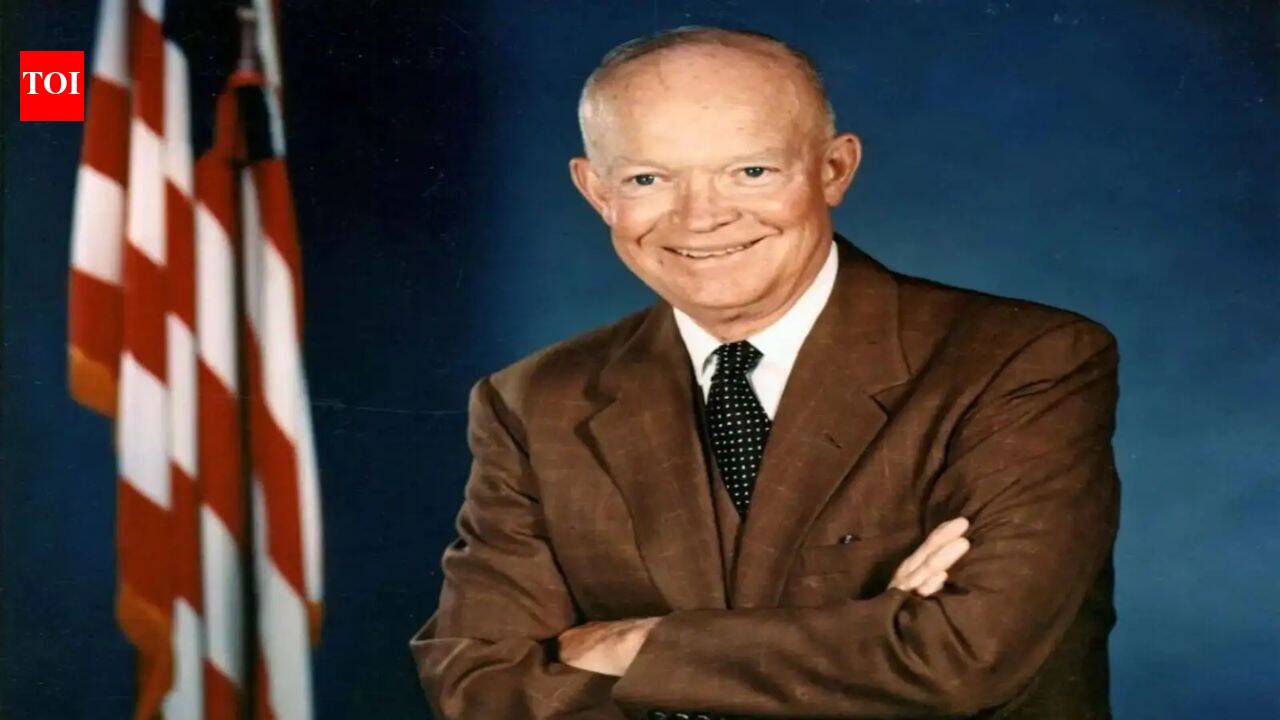
Ex- US President Eisenhower's early years at Gettysburg
Eisenhower purchased a 189-acre Gettysburg farm before becoming president
The house was rebuilt while he was president
Gettysburg became a working presidential retreat
Life after the presidency was quieter, but not inactive
The farm became part of their legacy
Eisenhower donated his Gettysburg farm after nearly two decades as his home
Gettysburg entered Dwight D. Eisenhower's life long before he became a general or president. In 1915, he arrived there as a West Point cadet, studying the ground where the Civil War's most famous battle had unfolded. Three years later, he was back, now a young Army officer assigned to Camp Colt, a tank training centre established on the battlefield. He had wanted to go overseas during the First World War, but his orders kept him in Pennsylvania, where he worked with soldiers preparing for deployment.Years passed, and Eisenhower's career carried him through senior military commands, the Second World War and eventually the White House. Yet Gettysburg remained familiar. As reported by the National Park Service (NPS), in 1950, he and Mamie bought a 189-acre farm beside the battlefield. It would eventually become their retirement home and the place where Eisenhower spent his final years.Eisenhower's relationship with Gettysburg began in the spring of 1915, when he was still a cadet at the US Military Academy at West Point.The visit was part of his military education. Gettysburg was not simply a historic landscape to the young officers studying there.The battlefield offered a practical setting in which they could examine decisions made during the 1863 battle, look at the terrain and consider how armies had operated across it.Three years later, Eisenhower returned under very different circumstances.The First World War was underway, and Capt. Eisenhower had hoped to serve overseas. Instead, he was assigned to Camp Colt, a US Army Tank Corps training centre established on part of the Gettysburg battlefield. His responsibilities were straightforward but substantial: prepare volunteers, organise and train them, equip the men and have them ready for service abroad.He arrived with his wife, Mamie, and their first son. The posting meant that Gettysburg, briefly a place he had known as a cadet, became part of the Eisenhower family's early life.Camp Colt was eventually disbanded after the war, and Eisenhower moved on. His military career would take him far beyond Pennsylvania. Over the following decades, he served in a succession of assignments and eventually became one of the senior American commanders of the Second World War.After the Second World War, Eisenhower's life had changed considerably. He had become an internationally recognised military commander and, after leaving active military service, served as president of Columbia University.He and Mamie began looking for a place where they could eventually retire. Gettysburg naturally held a particular attraction.In 1950, they purchased a 189-acre farm adjoining the Gettysburg battlefield. The property had belonged to Allen Redding, whose family later recalled how proud he was to have sold the farm to Eisenhower.The purchase did not immediately give the couple the quiet retirement they had imagined. Eisenhower soon accepted another demanding role, leaving the United States to take command of NATO in Europe.The farm remained, waiting for a later chapter. That chapter began in earnest after Eisenhower returned to the United States and entered the 1952 presidential race. The property became part of his Pennsylvania political campaign from the beginning. State Republican leaders were invited to a picnic there, turning what was intended as a home into a setting for an early gathering with political allies.Yet the farm was never simply a political property.When Eisenhower became president in 1953, the Gettysburg farm was still not ready to serve as the comfortable weekend retreat the couple wanted.The original house had serious structural problems. Much of it had to be removed, and the property underwent extensive renovation. Work was completed in March 1955.From then on, the Eisenhowers began spending weekends and holidays there whenever the demands of the presidency allowed.The setting was familiar territory for Eisenhower, but the scale of his responsibilities had changed dramatically since his days at Camp Colt. He was now responsible for the executive branch and dealing with international crises, yet the farm provided a degree of distance from Washington that was difficult to find elsewhere. His routine there reflected both sides of his life.There were ordinary farm activities and leisure. Eisenhower played golf at the Gettysburg Country Club, spent time at his skeet range and took an interest in the Angus cattle he kept on the property.The farm became particularly important in 1955, when Eisenhower suffered a heart attack. During his recovery, the property served for a period as the "Temporary White House". That meant that the quiet rural surroundings were accompanied by the machinery of government. Eisenhower continued to receive briefings and conduct business while recuperating.His mornings often began with information about events around the world. Staff meetings could take place at the farm, and important matters still reached him there. The arrangement was unusual in appearance but practical in some respects. Eisenhower could step away from Washington without completely stepping away from the presidency.The farm also became a place where he could meet people away from the formal atmosphere of the White House.Visitors included political figures and foreign leaders. Some meetings began at Camp David before guests travelled on to Gettysburg. Once there, Eisenhower could show them the farm, including the Angus cattle and barns, before settling with them on the porch of the house.Eisenhower later explained that the informal surroundings helped him understand the people he was dealing with and what he called "the other man's equation". The setting removed some of the ceremony that normally surrounded meetings with a president. A farm visit could become a diplomatic conversation.Eisenhower left the presidency in January 1961 after two terms in office. For the first time in decades, he and Mamie could live according to something closer to their own timetable.They returned to the Gettysburg farm permanently as their retirement home. Eisenhower was still far from an idle retiree.During the week, he worked from an office at Gettysburg College. He wrote and worked on his memoirs, while his position as a former president and former Allied commander meant that political figures and business leaders continued to seek his advice.He also remained connected to international affairs. World leaders still visited him, and successive presidents could draw on his experience. The distinction was that he was no longer required to make the final decisions from the Oval Office.At the farm, the rhythm of life was different.Family visits, friends, cattle and time outdoors became more important parts of the day. The property had begun as a place they bought with retirement in mind, but by the 1960s it had become something more permanent: the centre of their private life.For Eisenhower, the landscape also carried a long personal history.He had first seen Gettysburg as a cadet. He had returned as a young officer during the First World War. Decades later, he was living beside the same battlefield after serving as one of the most prominent American military commanders of his generation and as president of the United States.The Eisenhowers decided not to keep the property as a private family estate indefinitely.In 1967, General and Mrs Eisenhower donated their home and farm to the National Park Service. The decision ensured that the property would eventually become accessible as a historic site rather than remaining solely a private residence.Eisenhower died two years later, in 1969, at the age of 78. Mamie remained at Gettysburg.There had been suggestions that she move to Washington, where she would have been closer to relatives and friends. She chose instead to continue living at the farm. For another decade, the house remained her home.She died in 1979. The following year, the National Park Service opened the property to the public.The Eisenhower National Historic Site occupies an unusual place alongside the battlefield that first brought the future president to Gettysburg.The Civil War landscape around it is associated with armies, commanders and the events of July 1863. The Eisenhower property tells a much later story. Its history is tied to military service too, but also to presidential life, diplomatic meetings, retirement and family routines. The connection between the two is difficult to miss.Eisenhower first came to Gettysburg to study a battle fought generations earlier. His second visit placed him in the middle of another war, training soldiers for a conflict that was then still unfolding. After that came a career that carried him across the United States and Europe, culminating in the presidency. Yet after all those movements, he returned to Gettysburg.The farm gave him a place where cattle could occupy the same landscape as presidential briefings, where foreign dignitaries could sit on a porch after touring a barn, and where the former commander of Allied forces could spend time with family away from the formal institutions that had defined much of his public life.For nearly two decades, the property was both a retreat and a workplace. In retirement, it became home.