"An executive from a private sector doesn't have the domain knowledge, and will have to be too much dependent on subordinate employees.
"Procurement of goods and services in BSNL is highly process-driven and often results in delays.
Operational bottlenecks must be removed and field teams should be equipped to restore services faster," AIGETOA executive said, adding that BSNL employees stood by the company through its toughest years.
"The new leader will have full support in restoring profitability and making BSNL a telecom operator every customer can rely upon.
"We expect the new leadership to safeguard the interests of BSNL and its employees as it works towards that goal.
Advt
Advt
By ,
ETTelecom
Join the community of 2M+ industry professionals. Subscribe to Newsletter to get latest insights & analysis in your inbox. All about ETTelecom industry right on your smartphone! Download the ETTelecom App and get the Realtime updates and Save your favourite articles.
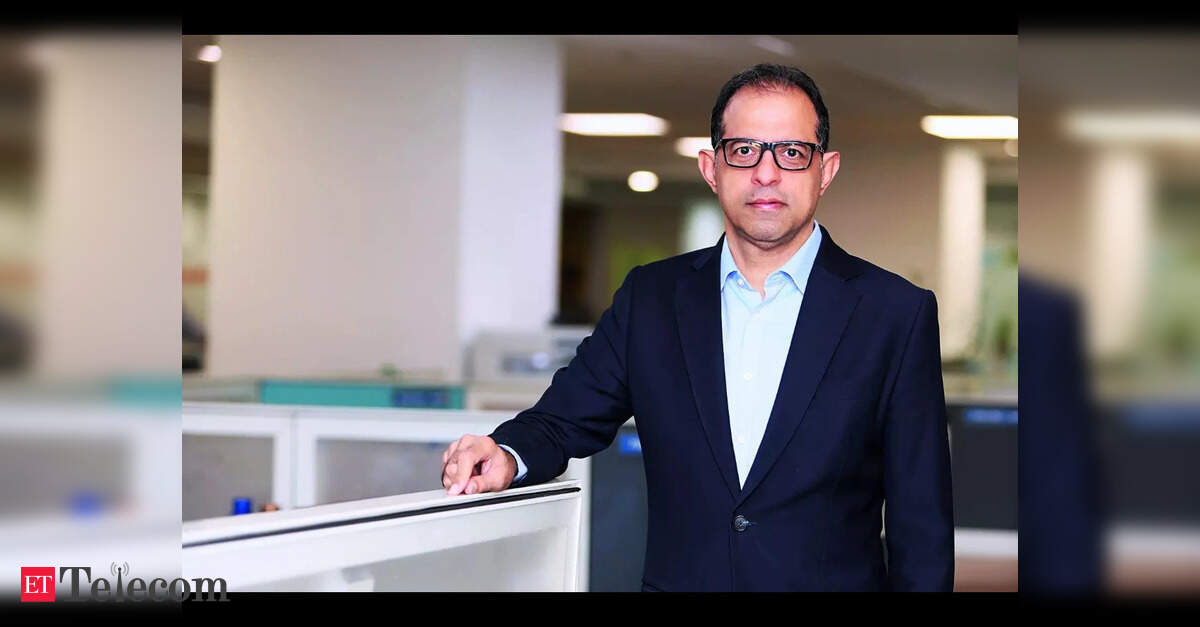
NEW DELHI: Tarun Chhabra , a former executive of Finnish telecom gear maker, is set make a way into state-run Bharat Sanchar Nigam Limited BSNL ) for the top role, to which workforce and employee groups reacted sharply and candidly, saying that the Centre's decision has not only strengthened talks about privatisation and would discourage Atmanirbhar Bharat (self-reliance India) vision while a few believe that the move would facilitate expeditious decision making, and operations could be improved.Chhabra's name has reached to the top echelons of the government, following a recommendation of a five-member search-cum-selection-committee (SCSC) that includes two members originally coming to the public fold from the private sector.Meanwhile, sources said that Chhabra sought “additional perks, powers and a free hand” in decision making from the administrative ministry.Few employees on the conditions of anonymity expressed displeasure on recent developments, and said that any appointment to the top position from a private sector would derail Prime Minister Narendra Modi's ambition of Atmanirbharta (self reliance) for a strategic public-owned company with critical infrastructure. Nokia was one of the prominent multinational partners of BSNL which supplied both hardware and software solutions including core network elements until recently when the telco embraced indigenously designed, developed and manufactured equipment, to safeguard national telecom infrastructure.Chhabra's capabilities remain untested due to being an outside candidate, and his past experience at a private sector multinational with business to business (B2B) functional role is uncomparable with a large employee-driven consumer-facing public sector enterprise. His appointment may also weigh high on the purported privatisation move," a former senior telecom department official toldSince July 2024, the state-controlled telecom company has been running on an interim arrangement with A Robert J Ravi, a 1990-batch Indian Telecommunications Services (ITS) officer at the helm of affairs."An executive from a private sector doesn't have the domain knowledge, and will have to be too much dependent on subordinate employees. We have big doubts about the performance of an outside leader," PK Jain, former president, ITSA toldFollowing a recommendation by the Department of Telecommunications (DoT), the Appointment Committee of the Cabinet (ACC) will have a final say, which is expected within the next couple of weeks."BSNL, being a wholly government-owned company, involves considerable interface and coordination with various government departments and agencies. An ITS officer, with an understanding of the government's administrative and decision-making processes, may therefore be better suited to handle this aspect of the organisation," RK Upadhyay, former chairman, BSNL said."Public-sector telco has unique challenges with many regulatory, procurement and policy constraints. The selected person will have a big challenge in hand. The new incumbent's private telecom industry experience can help in improving service delivery and quality but at the same time, he has to adapt to the rules and procedures of a wholly-government owned enterprise," Ravi Shil Verma, general secretary, All India Graduate Engineers & Telecom Officers Association (AIGETOA) said.Delhi-based AIGETOA is a Bhartiya Mazdoor Sangh (BMS)-affiliated group.Some employees, however, believe that a person from a private industry skills could smoothen contract management and commercial negotiations, leading to a faster decision making."While the delivery or output from the proposed BSNL head, can be better accessed by the competent authorities from the Department of Telecommunications (DoT) but we will continue to pursue issues of members to a possible extent," Mahadev Adasul, general secretary, Sanchar Nigam Executives Association (SNEA) said.The new incumbent, once appointed, may have to walk a tightrope and resolve multiple legacy issues afresh, and have to win back trust of as many as 50,000 employees, and to keep them motivated as the telecom carrier shifts gear to next generation (5G) technology network.From a standpoint of the fourth-largest public owned service provider in a critical sector, BSNL needs to make some decisive and swift decisions, to not only take the revenue market share (RMS) to at least to a level when it touched nearly 22% in 2005-2006, but to also arrest losses, cut operating costs and strengthen enterprise business.In September 2026, the private telecom carriers - Reliance Jio Bharti Airtel and Vodafone Idea together held 92.74%of the wireless subscribers market, as compared to BSNL and MTNL combined which had a share of 7.26%, as per the Telecom Regulatory Authority of India (Trai).The public sector company's consolidated net loss widened to ₹1,532 crore in the September quarter, up 31% from ₹1,106 crore a year earlier, and ₹1,280 crore in the previous quarter.Since 2009, BSNL began losing its market to private sector incumbents, and further lost ground following the foray of Indian billionaire Mukesh Ambani-owned Reliance Jio, backed by freebees in September 2016."Procurement of goods and services in BSNL is highly process-driven and often results in delays. Streamlining procurement procedures and ensuring timely decision-making, while maintaining due diligence, will be essential," Upadhyay said.With Tata Consultancy Service (TCS)-led consortium, on the back of homegrown technology, deploying 1-lakh fourth generation or 4G sites, but BSNL's slow decision making and lack of legacy networks upgrade and expansion, continues to churn its subscribers who look for a better customer experience as they upgrade feature phone to smartphone in a fast-moving data network.The state-controlled telco chose the 700 MHz frequency band, which according to experts lacks capacity over coverage.The add-on order of another 26,000 4G sites under phase IX.2 expansion still hangs in balance as the telco is yet to procure antennas and other elements.Compared to private sector rivals, BSNL's data network is minuscule and that too tilted towards rural and semi-urban areas, which are considered as low average revenue per user (ARPU) regions.On the contrary, industry players, Reliance Jio, Bharti Airtel and Vodafone Idea today have 4G as well as 5G coverage across the country barring a few remote locations."The ongoing 4G rollout needs close attention. Several operational and network-related issues need to be resolved, and the rollout should be completed on priority to ensure reliable coverage and quality of service," Upadhyay said."Proper maintenance of BSNL's telecom network for providing seamless mobile services is a big challenge, which has been badly neglected particularly due to lack of funds and infrastructure," Jain said."The immediate challenge for BSNL is to stabilise indigenous 4G and chart an expeditious path to 5G rollout," Verma said, adding that the government should back BSNL's rural and strategic connectivity obligations and mandate the use of its Swadeshi (homegrown) network across government agencies. "We hope that whosoever is appointed will put BSNL back on the path to profitability and sustained growth."BSNL's enterprise business continues to have a huge potential but owing to the lack of a seamless next generation data network, large organisations and agencies prefer private operators over a public sector services company. The deadlock over key enterprise customers should be handled cautiously. Services such as CUG, IBS, leased circuits, fibre-to-the-home (FTTH) and managed cloud services require a holistic review with a dedicated leadership to make new breakthroughs."On the business front, acquisition of high-ARPU customers and expansion of enterprise business must receive priority. BSNL's brand also needs to be repositioned and popularised, particularly in urban markets, where it has considerable scope to regain market share," Upadhyay added.The former ITSA leader also said that in order to make an impressive growth story, BSNL has to diversify into other products such as Air Fibre and uninterrupted broadband services as well as tailor-made enterprise solutions.State-owned telco is implementing the Centre's prestigious BharatNet program which was amended in 2023, and aims to offer digital connectivity to 6.5 lakh villages through 2.5-lakh gram panchayats or village blocks. The initiative, under phase - III or the Amended BharatNet Program (ABP), is yet to touch significant milestones even after a lapse of 18 months of its kickstart.Vendors are moving at a slow pace following price hike of essential components and raw materials due to the West Asia crisis, leading to a sharp increase in OFC and router prices. The vendors, however, sought force majeure. Close monitoring and vendor management for a faster service delivery to the last mile would remain a top priority for a new incumbent."Priorities also include developing a nationwide reliable and stable optic fibre cable (OFC) network and strong backbone for BSNL, " Adasul added.Customer is a king. It remains more pertinent to a public sector company, BSNL as it competes with private players in a highly fierce marketplace where a minor technology shift makes a tectonic impact.BSNL, however, lacks agile and user friendly consumer touch points, an area where it needs to learn more from market peers.Recently, it unveiled a new selfcare app to manage the entire service bouquet, but in the course, the telco sees a drop in seamless customer migration to an all-new platform. BSNL, not only needs aggressive strategy but a cautious approach in concurrence with the market trends, and prioritise service over cost."Building trust and confidence amongst executives and employees will be another major challenge. The new leader will have to address this on priority and take the workforce along in the transformation process," Upadhyay said."It is high time to win back customers and grow revenues. Operational bottlenecks must be removed and field teams should be equipped to restore services faster," AIGETOA executive said, adding that BSNL employees stood by the company through its toughest years. "The new leader will have full support in restoring profitability and making BSNL a telecom operator every customer can rely upon."Winning back the confidence of every employee even if at a remote location, is essential to rekindle enthusiasm among the workforce. Some of the human resource (HR)-related grievances such as a revision of the 3rd Pay Revision Committee (PRC), and timely promotions remain critical issues that need redressal beyond assurances from top levels. BSNL together with the telecom department (DoT) should find a way forward."There are many HR management issues, which need to be settled now, " Jain added."We expect the new leadership to safeguard the interests of BSNL and its employees as it works towards that goal. We hope that the new top executive will be a team leader, and will consider each and every employee as an asset to the company," Verma said."One of the focusses includes getting approval for the third pay revision for employees which is a major reason for industrial unrest among BSNL employees, Adasul added.Further, Verma echoed SNEA's views, and said that the new incumbent should rebuild employee confidence through dialogue and time-bound action should be taken on long-pending issues of pay, pension and promotion including the third PRC and residual issues of second PRC.In 2019, the Centre approved ₹69,000 crore, as a part of revival package for revitalising BSNL and MTNL that included a Voluntary Retirement Scheme (VRS) with an outlay of ₹29,937 crore, covering 50% of employees, and focussing on monetisation of assets.In 2022, the Union Cabinet approved another revival package with a total outlay of ₹1.64-lakh crore, for de-stressing the public sector company's balance sheet.Established in September 2000 under the Companies Act, 1956, BSNL quickly expanded with annual revenues touching nearly ₹40,000-crore in 2006-07.