News world 'We Can't Live With War': Ex-Iran President Calls For Diplomacy, Says 'US Can't Be Trusted''We Can't Live With War': Ex-Iran President Calls For Diplomacy, Says 'US Can't Be Trusted'Published By :,Last Updated: August 16, 2026, 22:48 ISTKhatami said Iran had survived external pressure and would remain in place despite its shortcomings.
Iran has also laid down several conditions for reopening the Strait of Hormuz, including compensation for damages caused by the war.
Iran demands that the United States permanently end the war with Iran and its regional allies, and promise never to threaten Iran again.
How might domestic issues affect Iran's foreign policy?
Economic strain and internal divisions over nuclear negotiations also contribute to uncertainty in foreign policy.
News world 'We Can't Live With War': Ex-Iran President Calls For Diplomacy, Says 'US Can't Be Trusted'
'We Can't Live With War': Ex-Iran President Calls For Diplomacy, Says 'US Can't Be Trusted'
Published By :
,
Last Updated: August 16, 2026, 22:48 IST
Khatami said Iran had survived external pressure and would remain in place despite its shortcomings.
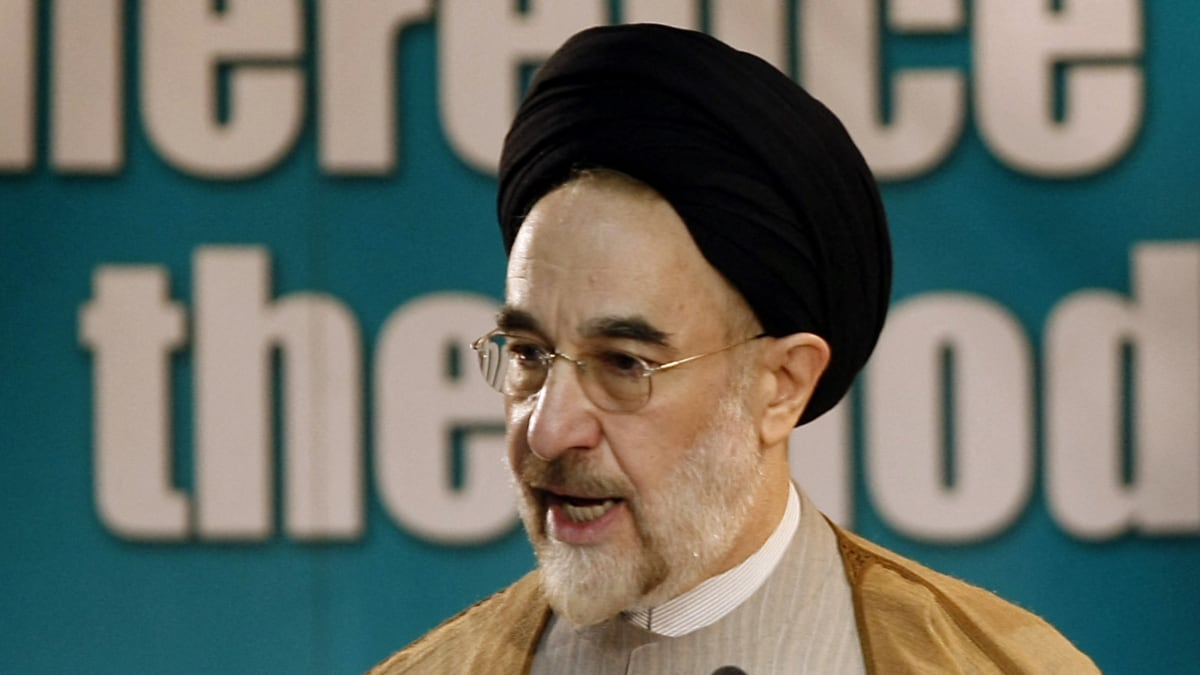
Former Iranian president Mohammad Khatami (Image: AFP/File)
Former Iranian President Mohammad Khatami has warned that Iran cannot continue living under the shadow of war indefinitely, while calling for a measured diplomatic approach towards the United States and Israel.
Khatami said the Islamic Republic had survived external pressure and would remain in place despite its shortcomings. However, he cautioned that Tehran must also address domestic problems that have contributed to growing public dissatisfaction.
Khatami Warns Against Prolonged War
“Although the United States cannot be trusted and Israel will stop at nothing to continue tensions and conflict, this obstacle must also be confronted with prudence and measured diplomacy," Khatami said, according to news outlet Iran International.
He maintained that the Islamic Republic was “here to stay" and argued that foreign aggression and an all-out war would not succeed in bringing down Iran.
At the same time, Khatami warned that the country could face serious challenges if authorities failed to tackle issues that had distanced large sections of society from the government.
“We cannot live with war. The people cannot, and it is not possible to continue daily life, meet people’s needs and govern society under such conditions," he said.
US-Iran Conflict
His remarks come amid the ongoing conflict between Iran, the United States and Israel, which began on February 28 after US and Israeli forces launched attacks on Iran, escalating tensions across the region.
The fighting continued for several weeks before an April ceasefire brought a temporary halt to hostilities. A framework for peace talks was later announced in June, but the efforts eventually broke down.
Since then, Iran and the US have continued to exchange fire sporadically, with much of the fighting focused on southern Iran and around the strategically vital waterway, the Strait of Hormuz.
Meanwhile, Tehran and Washington have maintained indirect contact through mediators, although there has been little progress towards a diplomatic breakthrough. Iran has also laid down several conditions for reopening the Strait of Hormuz, including compensation for damages caused by the war.
Khatami’s remarks come as Iran continues to deal with pressure on both fronts — the ongoing confrontation with its foreign adversaries and growing domestic challenges.
News18 Newsletter Handpicked stories, in your inbox A newsletter with the best of our journalism submit
Key Questions Answered Powered by Ask News18 What are Iran's conditions for reopening the Strait of Hormuz? Iran demands that the United States permanently end the war with Iran and its regional allies, and promise never to threaten Iran again. Other conditions include lifting the blockade on Iranian ports, paying compensation for war damages, lifting economic sanctions, and releasing frozen Iranian assets. Could diplomacy resolve the long-standing US-Iran tensions? Diplomacy is considered the only viable path to resolve US-Iran tensions, but deep mistrust between the two nations and maximalist demands from both sides continue to stall progress. Iran has stated its commitment to diplomacy despite heightened tensions and stalled ceasefire talks. However, Iran also demands security guarantees, an end to the US blockade, sanctions relief, and the release of frozen assets before any new agreement. How might domestic issues affect Iran's foreign policy? Domestic issues could affect Iran's foreign policy by strengthening hardliners and reducing diplomatic flexibility due to US pressure, and by creating divisions within the leadership regarding the conflict with the US and Israel. Economic strain and internal divisions over nuclear negotiations also contribute to uncertainty in foreign policy. Powered by Ask News18
About the Author Manisha Roy Manisha Roy is a Senior Sub-Editor at News18.com's general desk. She comes with an experience of over 5 years in media industry. She covers politics and other hard news. She can be contacted at Manish... Read More
Location : Tehran, Iran
First Published: August 16, 2026, 22:48 IST
Disclaimer: Comments reflect users’ views, not News18’s. Please keep discussions respectful and constructive. Abusive, defamatory, or illegal comments will be removed. News18 may disable any comment at its discretion. By posting, you agree to our Terms of Use and Privacy Policy Loading comments...