News world US Is Moving Its Key Aircraft Carrier From Pacific To Middle East Amid Iran War.
How China Could BenefitUS Is Moving Its Key Aircraft Carrier From Pacific To Middle East Amid Iran War.
How China Could BenefitPublished By :,Last Updated: August 16, 2026, 08:13 ISTThe US is moving the USS George Washington to the Middle East amid the Iran war, temporarily leaving the Pacific without a US aircraft carrier.
The USS George Washington is leaving the Pacific and is expected to replace the USS Abraham Lincoln in the Middle East.
Extended Deployments Are Straining US NavyThe redeployment also underlines the pressure being placed on America’s aircraft carrier fleet.
News world US Is Moving Its Key Aircraft Carrier From Pacific To Middle East Amid Iran War. How China Could Benefit
US Is Moving Its Key Aircraft Carrier From Pacific To Middle East Amid Iran War. How China Could Benefit
Published By :
,
Last Updated: August 16, 2026, 08:13 IST
The US is moving the USS George Washington to the Middle East amid the Iran war, temporarily leaving the Pacific without a US aircraft carrier.
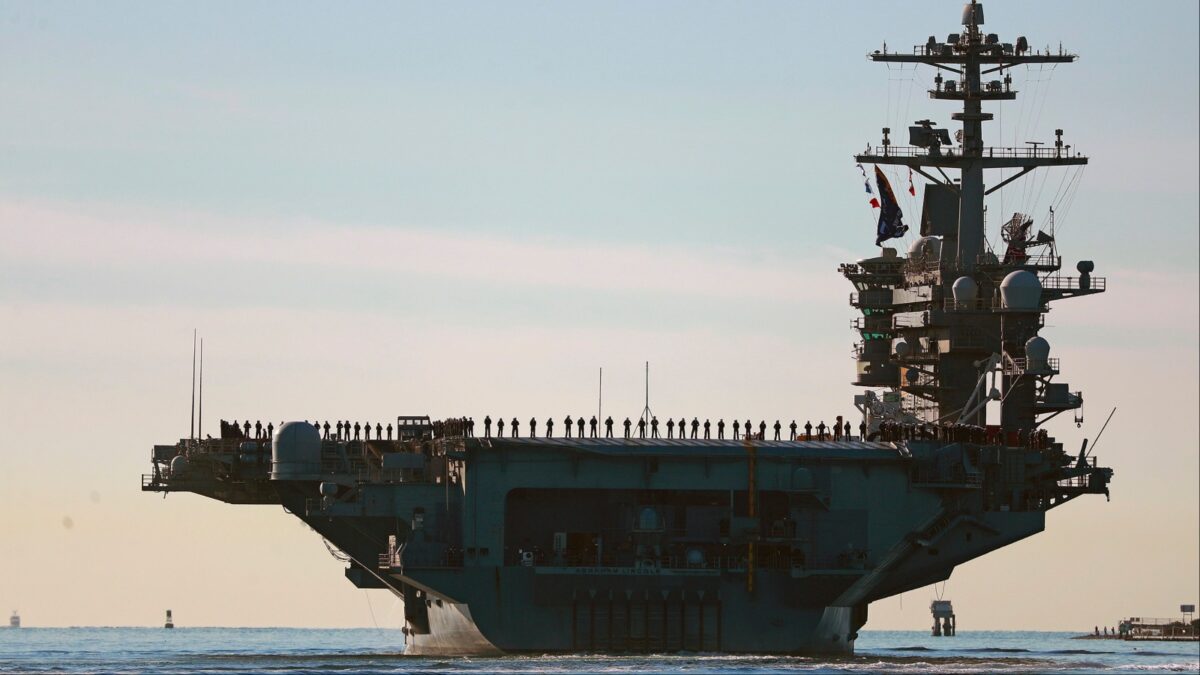
USS George Washington aircraft carrier being redeployed from the Pacific to the Middle East amid the Iran war (Photo: AP)
The United States is shifting one of its key aircraft carriers from the western Pacific to the Middle East as President Donald Trump’s war with Iran puts increasing pressure on the US Navy, creating a temporary gap in American naval presence in a region where China is showing growing signs of assertiveness.
The USS George Washington is leaving the Pacific and is expected to replace the USS Abraham Lincoln in the Middle East.
The move comes as the Lincoln’s deployment has been extended beyond its original May return date to support US operations against Iran.
LIVE Updates On The US-Iran War
The prolonged deployment has also raised concerns about supply issues and sailors’ mental health aboard the carrier.
The immediate consequence is that the western Pacific could be left without a US aircraft carrier, although the gap may be temporary if another carrier is deployed to the region in the next couple of months.
Still, analysts cited by The Associated Press say the development highlights the strain that prolonged operations against Iran are placing on US naval resources.
US Focus Shifts From Pacific To Iran
The carrier movement reflects the competing demands facing the Trump administration.
While the administration has said the Pacific is supposed to be its most important region after the Western Hemisphere, the continuing war with Iran is pulling American military resources toward the Middle East.
Greg Poling, director of the Southeast Asia Program at the Centre for Strategic and International Studies, said the US is instead “doing the exact opposite" of its previously expressed goal of pulling out of the Middle East.
The shift is also causing concern among US allies in the Pacific.
Poling said American partners are unsettled by the unpredictability of the administration, while Beijing is “quite happy with US distraction, with the frustration of US allies and partners."
Why China Could Benefit
China views the US military presence in the region as a threat to its rise and an obstacle to its ambition to take control of Taiwan, the self-governing island it claims as its own.
ALSO READ | Iran Says 3 Of Its Pilots Are Being Held By Qatar Since March, Doha Denies It: What We Know
The absence of a US aircraft carrier does not mean China is expected to invade Taiwan, but analysts say Beijing could use the situation to demonstrate its growing strength.
Bryan Clark, a former Navy submariner and defence analyst at the Hudson Institute, said the absence gives China another opportunity to project power to countries across the region.
“They’re using this as part of the narrative to demonstrate to the Philippines, to Japan, to Indonesia and others that the US is not the big dog in the western Pacific anymore," Clark said.
He added that China would prefer countries in the region to conclude that Beijing is the bigger power and that Washington is no longer able to guarantee their security.
That could be particularly significant for US allies and partners such as Japan and the Philippines, which have territorial disputes with China.
Beijing conducted naval exercises with Indonesia this week and has recently shown signs of aggression toward Japan and the Philippines.
China also conducted military drills this month near the Scarborough Shoal in the South China Sea, which is claimed by both China and the Philippines.
Last month, a Chinese guided-missile destroyer conducted a live-fire exercise off Japan’s southernmost island of Okinotori.
US Allies Face A New Strategic Signal
The US is attempting to reassure its regional partners despite the carrier’s departure.
Adm. Frank Bradley, head of the US Special Operations Command, visited Manila on Thursday and told Filipino counterparts that US special operations forces were prepared to increase joint exercises to strengthen the alliance.
He is also expected to travel to Japan.
But Evan Sankey, a policy analyst at the Cato Institute who focuses on US policy toward China, said aircraft carriers provide psychological reassurance to American allies.
The absence of a carrier, he said, “adds to the general sense that the U.S. is distracted by events in the Middle East."
Extended Deployments Are Straining US Navy
The redeployment also underlines the pressure being placed on America’s aircraft carrier fleet.
The USS Abraham Lincoln has spent more than 240 days continuously at sea, setting a record for uninterrupted time at sea, while its deployment has been extended to support operations against Iran.
Robert Farley, who teaches national security and diplomacy at the University of Kentucky, said warships and their crews can only withstand prolonged deployments for so long.
“People don’t get enough rest. It’s psychologically exhausting," Farley said, adding that the ability of a crew to operate at peak efficiency declines over time.
Clark said the strain reflects a lack of preparation and planning for a conflict with Iran that has continued longer than expected.
He said the US Navy could have altered carrier schedules if it had anticipated a prolonged conflict.
The US has 11 aircraft carriers and typically deploys two or three at a time, according to Clark.
The Navy could potentially deploy four if the USS Theodore Roosevelt leaves San Diego for the Middle East, allowing the George Washington to return to the Pacific.
However, increased deployments could create another problem: maintenance. The carriers will eventually require servicing, potentially creating a bottleneck at the US Navy’s only two carrier shipyards.
“We’ll end up with a maintenance debt that needs to be paid for the next few years," Clark said.
China Gets An Opportunity To Project Power
For Beijing, the carrier movement therefore offers more than a temporary change in the location of one American warship.
It creates an opportunity to reinforce a broader message that the US is increasingly distracted by its commitments elsewhere.
Swaine questioned the future role of aircraft carriers as warfare changes, noting that large carriers can be targeted by drones and missiles and that smaller ships and submarines can also be effective in striking targets.
Top US Navy officials have also indicated an interest in reducing reliance on massive aircraft carriers.
Adm. Daryl Caudle, chief of naval operations, told AP in February that he wanted commanders to consider smaller, newer ships and other assets rather than consistently relying on huge aircraft carriers.
ALSO READ | Iran And Oman Strike Landmark Deal To Secure Strait Of Hormuz—But Full Reopening Still Hinges On US Actions
News18 Newsletter Handpicked stories, in your inbox A newsletter with the best of our journalism submit
Key Questions Answered Powered by Ask News18 Will the US carrier shift impact Pacific security alliances? The shift of a US aircraft carrier from the Pacific to the Middle East could impact Pacific security alliances by raising concerns among US allies in the region. This move, driven by the ongoing war with Iran, creates a temporary gap in American naval presence in the Pacific, potentially affecting US-led Indo-Pacific initiatives that rely on forward deployment. How does this redeployment affect US naval readiness? The redeployment of the USS George Washington to the Middle East creates a temporary gap in US naval presence in the Pacific, which could allow China to project its growing strength. This shift also highlights the strain on the US carrier fleet due to the prolonged war with Iran, potentially leading to maintenance backlogs and reduced carrier availability in the Indo-Pacific in the future. Could China use this opportunity to assert more power? The temporary absence of a US aircraft carrier in the Pacific could provide China with an opportunity to project power to countries in the region and demonstrate its growing strength. Analysts suggest China could use the situation to test US resolve, reassure its allies, or show that Washington's attention is divided. Powered by Ask News18
About the Author Vani Mehrotra Vani Mehrotra is the Deputy News Editor at News18.com. She has more than 10 years of experience in national and international news and has previously worked on multiple desks.
First Published: August 16, 2026, 08:00 IST
Disclaimer: Comments reflect users’ views, not News18’s. Please keep discussions respectful and constructive. Abusive, defamatory, or illegal comments will be removed. News18 may disable any comment at its discretion. By posting, you agree to our Terms of Use and Privacy Policy Loading comments...