Tehran has established the Persian Gulf Strait Authority (PGSA), a new government body that it says is the sole legal authority responsible for regulating maritime transit through the strait.
THE TURKISH BLUEPRINT TO COLLECT TOLLSSo, what exactly is the model Iran is trying to replicate?
The Strait of Hormuz, by contrast, is a natural international waterway bracketed by two different countries: Iran and Oman.
Oil prices have surged as traders worry that prolonged disruption in the Strait of Hormuz could choke global energy supplies.
What is already clear, however, is that the battle over the Strait of Hormuz is no longer just about closing a waterway.
Imagine sitting down with a cup of coffee or tea, trying to make sense of the absolute mess going on between the US and Iran over control of one of the most important shipping routes. The tantalising pause from the interim peace deal didn't even last a month. We are now on the seventh consecutive day of drone and missile strikes exchanged by the two countries. But if you strip away all the jargons, what Iran is trying to pull off right now in the Strait of Hormuz boils down to something much simpler: gain control over the world's most important maritime chokepoint --and make everyone who depends on it play by its rules.
Read Full Story
If Tehran actually pulls this off, their new playbook will flip the Strait of Hormuz from a highly volatile military flashpoint into a guaranteed multi-billion-dollar goldmine for the Islamic Republic.
And their entire playbook? It's ripped straight from a 90-year-old Turkish maritime strategy. Let's break down exactly what's happening, how Tehran is trying to collect tolls, and why the US, and the rest of the world, is losing mind over it.
HOW HORMUZ TOLL PLAN EVOLVED
To understand how we got here, we have to look at the fallout of the recent US-Israel-Iran conflict. When things flared up earlier this year, the Islamic Republic did what it has always threatened to do: it effectively choked off the Strait of Hormuz.
The Strait of Hormuz may be only about 33 kilometres wide at its narrowest point, but it is one of the world's most strategically important maritime chokepoints. It serves as the gateway for nearly a quarter of global seaborne crude oil trade and around a fifth of the world's liquefied natural gas (LNG) shipments. Beyond energy, it is a critical transit route for liquefied petroleum gas (LPG), petrochemicals, fertilisers, chemicals, refined petroleum products, containerised cargo and other commodities that connect producers in the Gulf with markets across Asia, Europe and beyond.
But instead of just slamming the door shut and walking away, the Iranian Revolutionary Guard Corps (IRGC) realised they could make a massive amount of money off the chaos.
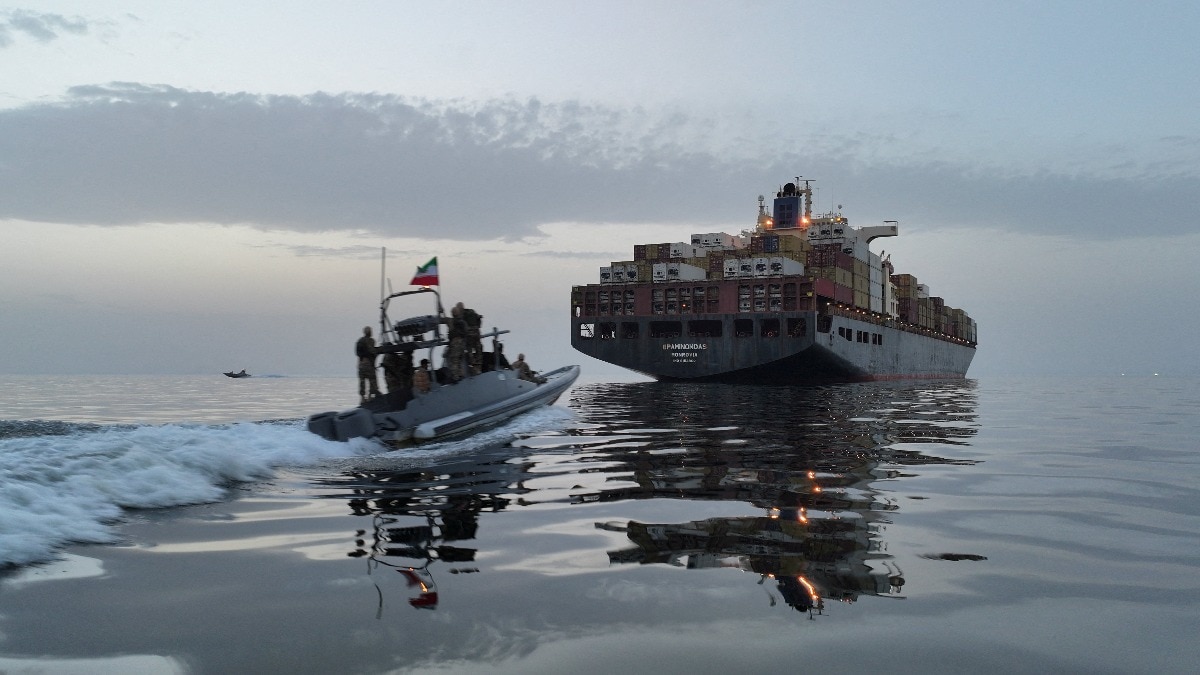
Tehran has established the Persian Gulf Strait Authority (PGSA), a new government body that it says is the sole legal authority responsible for regulating maritime transit through the strait. The authority acts as the administrative interface for vessels seeking passage and coordinates with IRGC, which enforces security in the area. Iran says all ships must obtain prior authorisation, submit detailed documentation -- including ownership records, crew manifests, cargo declarations, insurance details and intended routes -- and comply with its transit procedures before entering the waterway.
In practice, the system functions as a de facto toll framework. Commercial vessels are directed to follow a tightly controlled northern shipping corridor near Iran's Larak Island, where the IRGC oversees movement through the strait. Ship captains were reportedly asked to pay a hefty passage fee settled quietly in Chinese yuan. However, this couldn't be independently verified.
Last month, Washington and Tehran signed a temporary 60-day Memorandum of Understanding (MoU) to pause the shooting and get shipping moving again. The MoU explicitly stated that ships could pass "with no charge for 60 days only." The US assumed things would go back to normal after that. But Iran had other ideas.
advertisement
Iranian Parliament Speaker and chief negotiator Mohammad Bagher Ghalibaf made Tehran's long-term goals crystal clear, stating: "Everyone needs to know that management of the strait will never return to the way it was before. National security lies in maintaining the 'Iranian arrangements' on the Strait of Hormuz."
THE TURKISH BLUEPRINT TO COLLECT TOLLS
So, what exactly is the model Iran is trying to replicate? The answer lies nearly 2,500 kilometres away in Turkey.
Turkey controls the Bosphorus and the Dardanelles, two narrow waterways that connect the Black Sea to the Mediterranean via the Sea of Marmara. Together, they form the Turkish Straits, one of the world's busiest and most important maritime corridors. The Bosphorus stretches about 31 kilometres through the heart of Istanbul and narrows to just 700 metres at its tightest point, while the Dardanelles extends roughly 61 kilometres and is between 1.2 and 6 kilometres wide. Every year, more than 40,000 commercial vessels transit the Turkish Straits, carrying everything from grain and oil to liquefied natural gas and military cargo.
Since 1936, navigation through these waterways has been governed by the Montreux Convention, an international treaty that guarantees freedom of passage for merchant ships while giving Turkey responsibility for administering and securing the straits. The convention does not allow Ankara to impose a simple transit toll on ships merely for passing through. Instead, it permits Turkey to recover the costs of services it provides to ensure safe navigation.
advertisement
That is where Turkey found a legal formula. Rather than charging a tax on transit, Ankara levies mandatory fees for services such as lighthouse maintenance, medical assistance, rescue operations, sanitation, vessel traffic management and other navigational support. Depending on a vessel's characteristics and circumstances, additional pilotage or tugboat services may also be requested or required. It's highly lucrative, bringing Turkey hundreds of millions of dollars a year.
Iran's Hormuz plan is a similar replica. The logic Iran is pushing is pretty straightforward: they argue that if their navy is the one out there actively managing vessel traffic, coordinating security, and protecting the coastline from catastrophic oil spills. To hear Iranian officials tell it, they are just trying to recover the massive administrative and environmental overhead that comes with keeping one of the world's most dangerous chokepoints operational.
But here is the massive catch: Turkey's actual earnings are relatively modest. Even with recent price hikes raising fees to $6.70 per net ton, Turkey only pulls in about $254 million a year from the Bosphorus and Dardanelles. Iran, on the other hand, wants to use this template to completely replace its heavily sanctioned oil revenues. Tehran estimates that if they can force the world to swallow their new blueprint, it will generate an eye-watering $40 billion to $80 billion a year. We're talking about charging global ships up to 90 times what Turkey does.
advertisement
THE OMANI DILEMMA
It sounds like a clever legal loophole, but Iran's comparison to Turkey is completely apples-to-oranges.
For one, the Turkish Straits run directly through the heart of Turkey's undisputed domestic territory and are backed by a century-old global treaty. The Strait of Hormuz, by contrast, is a natural international waterway bracketed by two different countries: Iran and Oman.
Under the United Nations Convention on the Law of the Sea (UNCLOS), global shipping enjoys the absolute right of "transit passage" through Hormuz. On cannot legally impede, halt, or tax ships just for crossing. Now, Iran likes to point out that they never actually ratified UNCLOS, so they claim they are only bound by older "passage" rules -- meaning they get to decide if a ship poses a security threat.
advertisement
Earlier in the crisis, Tehran wanted to bring Oman into a joint framework for administering the strait. The two countries even agreed to establish a joint working group to discuss the future management of navigation, maritime services and the costs associated with those services, with Iran portraying the proposal as a cooperative arrangement between the strait's two littoral states.
However, Oman, which usually acts as the neutral, friendly mediator in the region, backed away from the toll idea. Muscat is terrified of a unilateral Iranian move.
Omani delegate Khamis bin Mohammed Al Shamakhi recently argued at an International Maritime Organization (IMO) meeting: "The right of transit passage through straits used for international navigation is guaranteed under international law and does not support the imposition of transit tolls."
THE DOMINO EFFECT
The Western powers are totally losing their minds over this proposal because of the terrifying precedent it sets. If Iran successfully normalises charging a toll for a natural strait, what stops the Houthis from demanding a tax on the Bab el-Mandeb? What stops someone else from doing it in the Strait of Malacca?
US Secretary of State Marco Rubio drew a hard line during a visit to Bahrain, saying: "The reality is that no country on earth has the right to charge for the use of international waterways, and that will never be an acceptable condition of any deal."
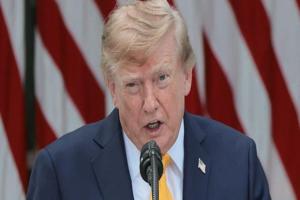
The situation took a bizarre, chaotic turn when US President Donald Trump briefly tried to beat Iran at its own game. Trump proposed that since the US Navy acts as the "guardian" of the region, the United States should start demanding its own 20 per cent "Reimbursement Fee" on the value of all cargo transiting Hormuz.
However, Trump abruptly walked the idea back 24 hours later.
WHAT HAPPENS NOW?
Right now, the shipping industry is caught in a nerve-wracking limbo. The 60-day truce is already fraying, and US-Iran missile exchanges have flared up again along the coast.
Iran has already published its own unilateral maritime maps, declaring alternative safe corridors proposed by the West to be "unsafe due to unmapped mines." They are effectively telling global shipping: Use our lanes and accept our authority, or take your chances with the drones and the mines.
The US, meanwhile, is trying to counter that strategy by reimposing a naval blockade on Iranian ports and shipping. Washington says the blockade will cut off Iran's maritime trade while continuing to safeguard freedom of navigation for commercial vessels using the Strait of Hormuz.
Shipping firms are left with a brutal choice. They can play along with Tehran's new regulatory template, face skyrocketing insurance premiums, or undertake the logistical nightmare of avoiding the Persian Gulf entirely. Iran has already proved it can close the world's most vital energy artery.
The uncertainty is already being felt far beyond the Gulf. Oil prices have surged as traders worry that prolonged disruption in the Strait of Hormuz could choke global energy supplies. Even without formally shutting the waterway, Iran has shown it can unsettle one of the world's most important shipping routes.
Whether Tehran ultimately succeeds in turning its regulatory framework into an accepted international norm remains uncertain. What is already clear, however, is that the battle over the Strait of Hormuz is no longer just about closing a waterway. It is about who gets to write the rules for one of the world's most strategically important maritime chokepoints.
- Ends