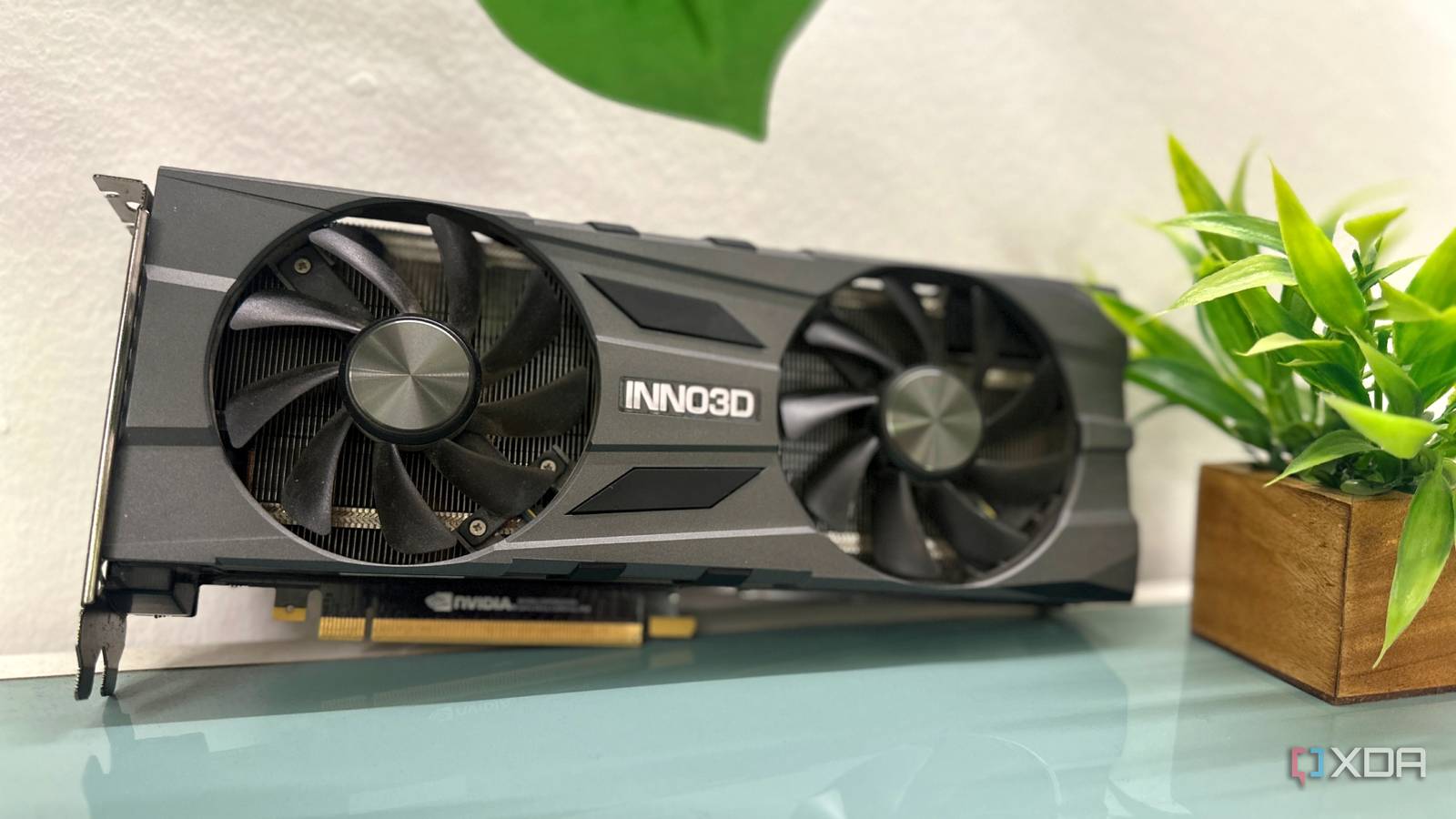
Meanwhile, there's another story unfolding in the GPU department, where only 8.54% of Nvidia RTX owners are still gaming on an RTX 20 series graphics card.
It's actually easy to see how the RTX 20 series today has ended up becoming Nvidia's Windows 7 — it's refusing to die, sure, but it also introduced ideas that felt years ahead of their time.
Windows 11 today may not look anything like Windows 7 on the surface, but take just a tiny look closer under the hood, and you'll see the foundations for these modern Windows 11 features laid all the way back in 2009.
When the RTX 20 series launched in 2018, ray tracing was more of a curiosity than a reason to upgrade.
Today, with the luxury of hindsight, it's impossible not to admire how ambitious the launch of the RTX 20 series was.
It's not every day that Steam Hardware Survey stats make me stop scrolling, but May 2026's numbers seem to have done exactly that. Windows 7, often heralded as one of the greatest versions of Microsoft's desktop OS, is now down to just 0.07% of Steam users. Meanwhile, there's another story unfolding in the GPU department, where only 8.54% of Nvidia RTX owners are still gaming on an RTX 20 series graphics card. Now, at first glance, those two figures might not have anything to do with one another, but together, they do paint a familiar picture.
It's actually easy to see how the RTX 20 series today has ended up becoming Nvidia's Windows 7 — it's refusing to die, sure, but it also introduced ideas that felt years ahead of their time. Those ideas have since evolved into the tech that modern PC gaming depends on today, even if the hardware that debuted them is slowly disappearing from our desktops.
The RTX 20 series was ahead of its time
Windows 7, too, introduced features that Windows 11 perfected
Windows 7 occupies a very special place in Microsoft's history (and in the hearts of users). Comparatively speaking, Windows 7 wasn't as transformative as XP or as radical as Windows 95, but so much of what made it special still exists today. The redesigned taskbar evolved into the one Windows 11 users interact with every single day for hours on end. Aero Snap, which Windows 7 brought out, has now evolved into Snap Layouts. It's also impossible to forget about DirectX 11, which laid the groundwork for the graphics APIs that powered an entire decade of PC gaming.
In fact, even some seemingly mundane additions such as native SSD optimization and improved multicore scheduling, all quietly became standard expectations instead of headline features. Windows 11 today may not look anything like Windows 7 on the surface, but take just a tiny look closer under the hood, and you'll see the foundations for these modern Windows 11 features laid all the way back in 2009.
Out of the 56.45% share that all GeForce RTX GPUs command in the Steam Hardware survey, 8.54% of it is made by an RTX 20-series GPU.
It's impossible not to feel the same way about Nvidia's Turing architecture today. When the RTX 20 series launched in 2018, ray tracing was more of a curiosity than a reason to upgrade. DLSS 1.0 was pretty much just a proof-of-concept with a public launch, since every game using it looked like it had a coat of Vaseline rubbed over it. Plus, Tensor cores barely had any meaningful workload, and everywhere you saw, reviewers kept recommending turning off DLSS and ray-tracing, and the "Ray Tracing Tax" simply couldn't be justified. And yet, the groundwork had been laid for an oncoming era of graphics and rendering technologies that would take the world by storm.
Today, with the luxury of hindsight, it's impossible not to admire how ambitious the launch of the RTX 20 series was. Nvidia built a graphics card that laid foundations for games that developers hadn't even built yet. Much like Windows 7 quietly introduced ideas that would define Windows for the next decade and a half, the RTX 20 series planted seeds that simply need a little more time to grow.
Related Windows 7: Microsoft's last great OS? Before Metro or "Microslop," it's time to revisit the Windows everyone loved...
Every generation after the RTX 20 series simply finished what Turing started
The execution improved while the ideas stayed
First-generation technology is rarely ever the finished product, and DLSS is easily the clearest example. Version 1.0 was more of an interesting experiment than a must-have feature that would become a unique selling point. It had limited game support, and image quality was... terrible. Fast-forward a few years, and DLSS 4.5 has now become one of Nvidia's biggest competitive advantages, capable of producing stunning image quality and reconstruction techniques, along with some rather fantastic tech like Multi-Frame Generation that pushed performance numbers into absurd territory.
It's not tough to see how ray tracing followed a rather similar path. Early RTX demonstrations looked spectacular, but only in tech demos that were carefully curated. Once you enabled the feature in actual games, your frame rate dropped horrifically, and the visual difference was only visible if you squinted your eyes and buried your nose into the screen. Today, things couldn't be more different, because fully path-traced experiences are becoming increasingly common, and dedicated RT hardware has gone from luxury to expectation. The idea never changed, and thankfully, the ecosystem finally caught up. After all, ray-tracing and upscaling are the biggest drivers of the PlayStation 5 Pro sales as well, showing just how these PC-first technologies made their way into consoles.
That's exactly what happened with Windows 7's defining features, too. The taskbar, Snap, and DirectX never disappeared, but they evolved into refined versions that are now indispensable parts of the Windows 11 experience. Nvidia has followed the same playbook, with every RTX generation since Turing polishing its biggest innovations. Now, they're all impossible to imagine gaming without.
The RTX 20 series is now the oldest generation still hanging on
That's exactly the role Windows 7 used to play
Every piece of successful technology eventually reaches an interesting point in its life where it stops being the default recommendation and quietly becomes the oldest thing still hanging around. Windows 7 reached that milestone years ago, and even today, if you're feeling particularly experimental, you can run some pretty big AAA games on that OS. Even after Windows 10 (and 11, eventually) became the obvious upgrade, millions refused to move on because the OS still did everything they needed it to. So, from Microsoft's flagship, Windows 7 became the industry's most stubborn survivor.
Today, most enthusiasts have upgraded to the RTX 30, 40, and 50 series by now, yet thousands of RTX 2060, 2070, and 2080 owners continue to game perfectly happily every evening. That's hardly surprising, because these cards still support hardware ray tracing, modern DirectX feature, DLSS 4.5 upscaling, and virtually every contemporary graphics technology. Nobody's calling them cutting-edge, but they're far from obsolete.
That's also why I think history has become much kinder to Turing than launch-day reviews ever were. Back in 2018, it was easy to dismiss ray tracing as an expensive gimmick and DLSS as an undercooked experiment. Now, almost eight years later, both those things have become central pillars of PC gaming, while Tensor cores now power everything from image reconstruction to local AI models. Nvidia sure didn't get every detail right the first time, but in terms of direction, Team Green absolutely did get it right.
Gigabyte GeForce RTX 5070 Ti Eagle OC Ice SFF
Every generation gets its own Windows 7 moment
Years from now, the RTX 20 series will be remembered for laying the foundation for modern PC gaming's features.
Technology doesn't always reward the products that arrive first. More often than not, it celebrates the ones that arrive at exactly the right moment. That's why history tends to take a kinder approach to pioneering hardware than launch-day reviews ever do. Time has a habit of separating short-term disappointment from long-term influence.
Years from now, I don't think the RTX 20-series will be remembered for its benchmark numbers or its price tags. Instead, it'll be remembered for proving that AI-assisted graphics and hardware ray tracing weren't passing trends, but the foundation of PC gaming's features. That's not a bad legacy to leave behind at all.