Why poor sleep deserves medical attentionBusting the modern sleep mythsWhat can people do tonight?
It may be a sleep disorderWhen one sleep problem is actually threeWalking, driving, even fighting in your sleep?
Poor sleep can leave people less alert in the morning, affect their ability to function at work, and make them irritable.
While a nightcap may make someone feel sleepy, Dr Manchanda maintains that sedation is not the same as restorative sleep.
Persistent sleep problems need to be understood rather than simply treated with a sleeping pill.
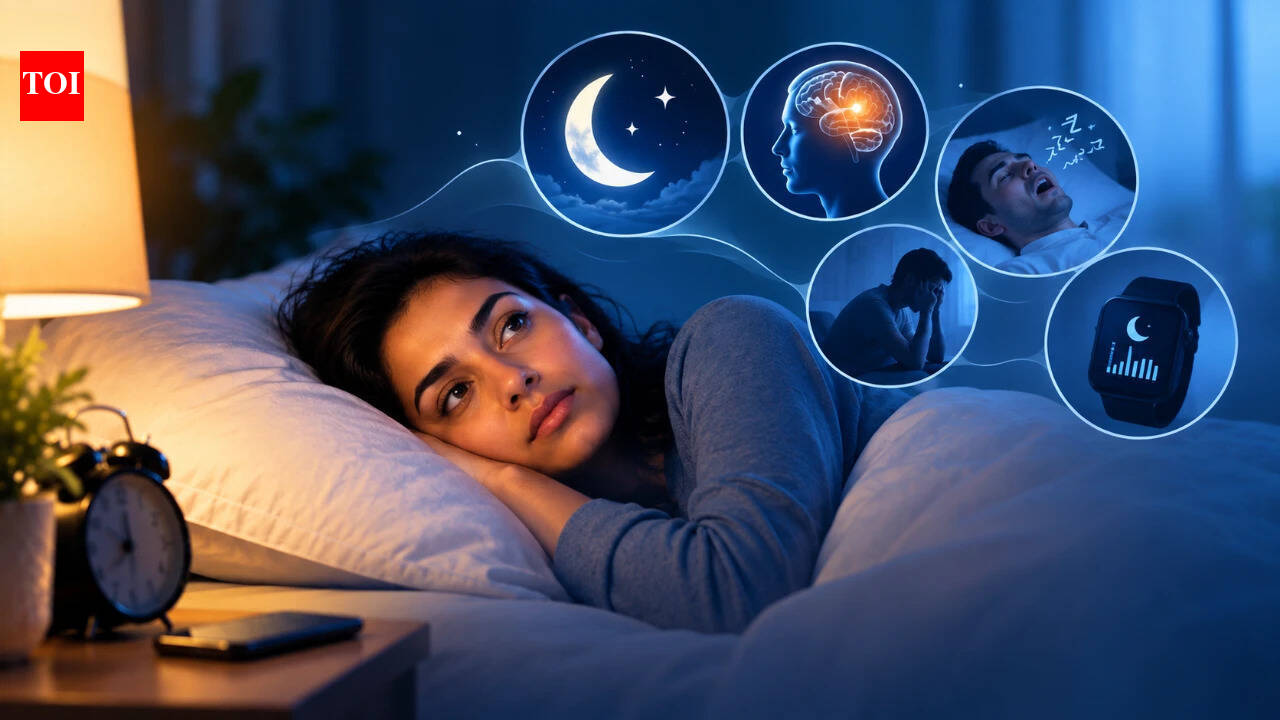
AI-generated image
What does ‘I don’t sleep’ actually mean?
Why poor sleep deserves medical attention
Busting the modern sleep myths
What can people do tonight?
Other talking points:
Always sleepy? It may be a sleep disorder
When one sleep problem is actually three
Walking, driving, even fighting in your sleep?
Understanding narcolepsy, parasomnias and cataplexy
From lying awake for hours to snoring, restless legs or suddenly falling asleep during the day, sleep problems can take very different forms. The fixes we often turn to — from sleeping pills and melatonin to alcohol and even smart watches — may not address the real problem. So, what does healthy sleep actually look like, and when should sleeplessness be taken seriously?TOI spoke to Dr Sanjay Manchanda, sleep specialist and founder of the first sleep clinic at S R Gangaram Hospital, Delhi, to separate sleep myths from disorders and explain what you really need for better sleep.Sleep is far more than a nightly pause in activity. It is when the body repairs tissues, forms neuronal connections and consolidates memories, says Dr Manchanda. “This is the period where our body gets rejuvenated.” Yet, people often reduce a range of sleep problems to one complaint: “I don’t sleep.” Manchanda says insomnia is an “overused terminology” and prefers the term dysomnia to describe poor sleep quality.“There is nothing which is one-size-fits-all,” he says. Some people struggle to fall asleep despite feeling sleepy; others take a long time to drift off, sleep in fragments or have a delayed sleep-wake cycle.These complaints can stem from very different disorders, including sleep apnea, restless legs syndrome, narcolepsy and parasomnias.That is why simply prescribing a sleeping pill can miss the problem. “All the pills are not for all the sleep disorders,” Dr Manchanda stresses. A detailed sleep history — and, when required, a sleep study examining brain activity, breathing, heart rate, movements and other parameters — can help establish what is disrupting sleep.Poor sleep is not merely a problem of feeling tired the next morning. Depending on its cause, it can affect the cardiovascular system, memory, mood and ability to function through the day, and also increase stroke risks. “Ignorance about sleep is the worst sleep disorder of them all. If you’re not serious about your sleep, you might falter a lot,” says Dr Manchanda, cautioning that persistent sleep problems should not be treated as a minor inconvenience.The effects can extend well beyond daytime fatigue. Manchanda says sleep deprivation and sleep apnea can be linked with high blood pressure, while inadequate sleep can also weaken immunity. “The memory consolidation also becomes weak because you need optimum REM (rapid eye movement) sleep to do that,” he adds.The impact can also show up in behaviour and performance. Poor sleep can leave people less alert in the morning, affect their ability to function at work, and make them irritable. For Dr Manchanda, the message is simple: sleep problems need to be understood first before they are treated.Dr Manchanda compares healthy sleep to a three-legged stool: its stability depends on duration, regularity and quality. Compromising any one of these can undermine restorative sleep. Technology has made maintaining this balance harder. Light from phones, tablets and laptops can signal daytime to the brain, while notifications can interrupt sleep. “Never take the phone to bed. A single tinkle can break your sleep and trigger the reflex to check what has arrived,” he says.From surviving on four hours of sleep to relying on melatonin, magnesium or smart watch scores, modern sleep habits are often shaped by misconceptions. “There is a myth that you can train yourself to sleep for four hours and still function normally. No such thing will happen,” adds Dr Manchanda.Alcohol is another common misconception. While a nightcap may make someone feel sleepy, Dr Manchanda maintains that sedation is not the same as restorative sleep. Supplements, too, should not become substitutes for finding the cause of a sleep problem. Melatonin, he explains, is a hormone produced by the pineal gland in response to darkness and has specific uses, including jet lag and some shift-work situations. “It is not a sleeping pill,” he says. He is equally cautious about magnesium being treated as a universal solution for insomnia.Even technology has limits. Smart watches can track aspects of sleep, but their estimates of sleep stages are not equivalent to a clinical sleep study. He says formal studies assess several parameters, including brain activity, eye and muscle movements, heart activity and breathing.Better sleep does not necessarily require a complicated routine. “You have to get up at the same time every day and go to bed when you feel sleepy,” he says. Not just phones, people should avoid watching the clock while trying to sleep as well, because it can create anxiety, he says.Caffeine is another factor to watch. If sleep quality is poor, he recommends avoiding tea and coffee after 5pm. He also cautions against trying to exhaust the body into sleeping. “You want a relaxed body to sleep, not an exhausted body,” he adds.A warm shower before bed can help the body wind down. But these measures should not become a substitute for medical evaluation. Persistent sleep problems need to be understood rather than simply treated with a sleeping pill.