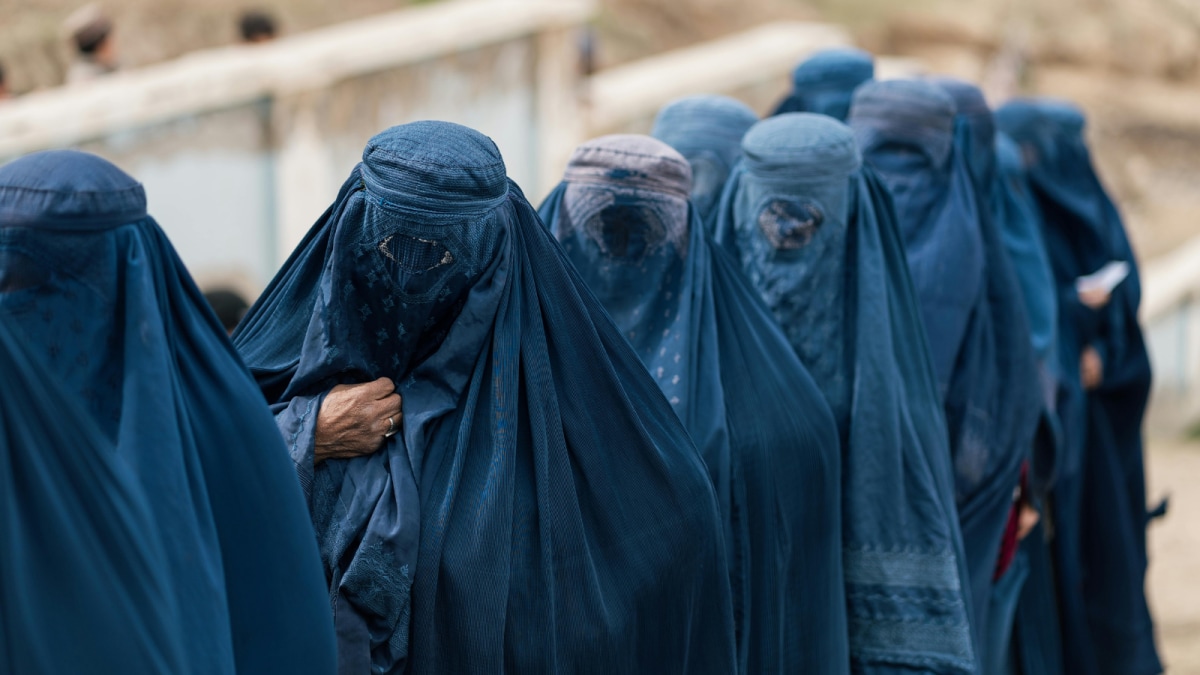
But in Afghanistan, a newly published Taliban family law has raised alarm around the world by formally recognising child marriage under certain conditions.
Human rights groups say the move further weakens the rights of girls and women in a country where many freedoms have already been severely restricted since the Taliban returned to power in 2021.
Although child marriage has long existed in parts of Afghanistan, critics say this decree effectively gives it formal legal recognition.
(Image: Pexels)ADVERTISEMENT5 / 8 Silence Can Be Treated as ConsentThe law states that the silence of a “virgin girl” after puberty may be interpreted as consent to marriage.
(Image: Pexels)ADVERTISEMENT7 / 8 Human Rights Groups Have Condemned The LawInternational organisations and women’s rights advocates say child marriage can lead to serious health risks, interrupted education and long-term emotional harm.
Last Updated: May 18, 2026, 17:00 IST
1 / 8 For millions of girls, childhood is meant to be a time for learning, dreaming and growing up safely. But in Afghanistan, a newly published Taliban family law has raised alarm around the world by formally recognising child marriage under certain conditions. Human rights groups say the move further weakens the rights of girls and women in a country where many freedoms have already been severely restricted since the Taliban returned to power in 2021. (Image: Wikimedia Commons)
2 / 8 The Taliban Has Introduced A New Family Law
The new regulation, titled “Principles of Separation Between Spouses,” was approved by Taliban supreme leader Hibatullah Akhundzada and published in Afghanistan’s official gazette in May 2026. It contains 31 articles dealing with marriage, divorce and related family matters. (Image: Wikimedia Commons)
ADVERTISEMENT
3 / 8 It Formally Recognises Child Marriage
One of the most controversial aspects of the law is that it allows marriages involving minors to be treated as legally valid in certain circumstances. Although child marriage has long existed in parts of Afghanistan, critics say this decree effectively gives it formal legal recognition. (Image: Pexels)
4 / 8 Fathers and Grandfathers Are Given Broad Authority
Under the new rules, fathers and paternal grandfathers have the strongest legal authority when it comes to arranging marriages for minors. This means girls may have little or no say in decisions that could shape the rest of their lives. (Image: Pexels)
ADVERTISEMENT
5 / 8 Silence Can Be Treated as Consent
The law states that the silence of a “virgin girl” after puberty may be interpreted as consent to marriage. This provision has drawn widespread criticism because it raises serious concerns about whether consent is truly voluntary. (Image: Pexels)
6 / 8 Annulment is Possible, But Not Easy
The regulation includes the concept of khiyar al-bulugh, or the “option upon puberty,” which allows a child married at a young age to seek annulment after reaching puberty. However, such annulments require approval from a Taliban court, making the process difficult and uncertain. (Image: Pexels)
ADVERTISEMENT
7 / 8 Human Rights Groups Have Condemned The Law
International organisations and women’s rights advocates say child marriage can lead to serious health risks, interrupted education and long-term emotional harm. Critics argue that the new rules further institutionalise discrimination against girls and women. (Image: Pexels)