Rebaudioside D and M are rarer variants that taste closer to sucrose: cleaner, rounder, without the lingering edge.
That restricted activity may help explain why Rebaudioside D and M show up in only small amounts in even the best stevia varieties.
Slight genetic variations from plant to plant – known as haplotypes – appear to nudge those sweetness enzymes in different directions.
A recent review called Rebaudioside M the next-generation steviol glycoside, citing growing consumer demand for cleaner sugar alternatives.
The bitter aftertaste that has long held stevia back is a fixable problem – written into a handful of genes and a few cell layers.
Pick up two stevia products from the same shelf and the labels look nearly identical. Both say stevia extract and claim zero calories – but they don’t taste the same.
Most people chalk the difference up to personal preference. Maybe one brand just uses better extract.
A new study says the bitterness is encoded in the plant’s genetics – determined by specific enzymes and precisely where in the leaf they switch on.
The two faces of stevia
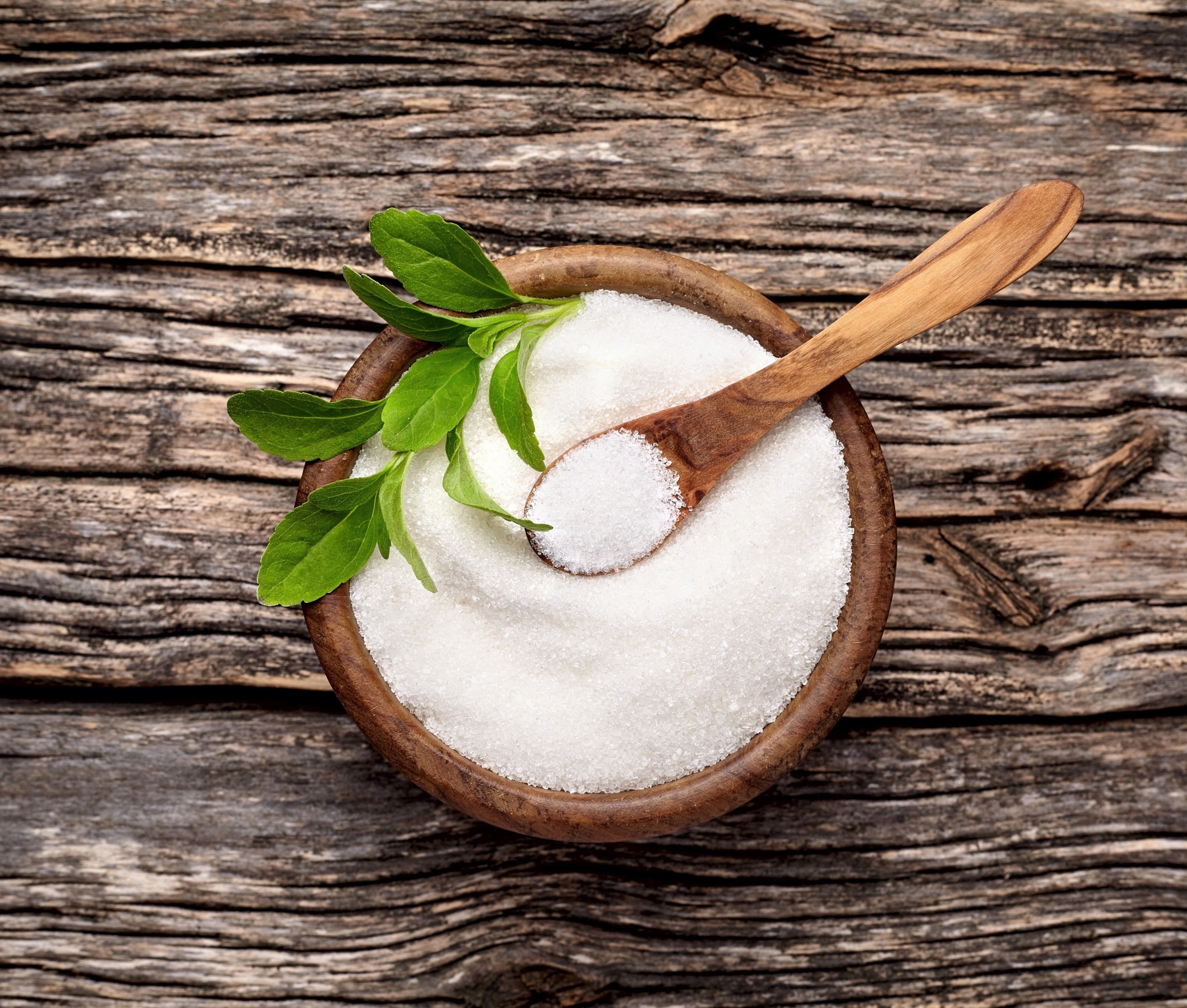
The sweetener comes from leaves of Stevia rebaudiana, a small South American shrub grown commercially worldwide.
Its leaves produce a family of compounds called steviol glycosides that can taste up to 300 times sweeter than table sugar.
Not all taste the same. Stevioside and Rebaudioside A – the two most abundant compounds in a typical stevia leaf – carry the licorice-like bitterness many people associate with stevia.
Rebaudioside D and M are rarer variants that taste closer to sucrose: cleaner, rounder, without the lingering edge.
Manufacturers prize those cleaner variants for premium product lines, but plants make them in only trace amounts. The reason had never been clearly explained.
Mapping the plant’s genome
Professor Tsubasa Shoji, a plant molecular biologist at the University of Toyama, led the team behind the new work.
Earlier stevia genome assemblies had been patchy, with gaps right where sweetness genes sit.
Shoji’s team built a high-quality reference genome from scratch and filled those gaps in.
The practical goal was to find what drives a plant to make one glycoside over another, so breeders could push varieties toward the cleaner end.
Genes involved in sweetness production
The researchers focused on a family of enzymes called glycosyltransferases.
These molecules attach glucose to a backbone compound called steviol, building larger sweet compounds one sugar at a time. Each added glucose changes the flavor profile.
One cluster of genes turned out to be central – the same group a previous study had already flagged as likely players in sweetness production.
The Toyama team went further. Slight differences in those genes from one stevia variety to the next appear to steer the plant’s chemistry in different directions.
Some variations tip production toward Rebaudioside A – the common, bitter-edged compound. Others tip it toward D and M.
A limited window of opportunity
Identifying the right genes was only half the picture. Where in the leaf those genes were active mattered just as much – the same gene running in different cells can produce very different outcomes.
The researchers used two techniques in combination. One reads which genes are active inside individual cells one at a time, rather than averaging across whole tissue samples.
The other technique maps where specific compounds show up across a slice of leaf.
One gene, UGT91D4, stood out. It was active only in two narrow zones: the mesophyll cells deep in the leaf’s photosynthetic layer and the epidermal cells forming the outer surface. Everywhere else, silent.
That restricted activity may help explain why Rebaudioside D and M show up in only small amounts in even the best stevia varieties.
Most of the leaf may simply not be running the chemistry that produces them.
Small differences, big effects
Another layer turned up. Slight genetic variations from plant to plant – known as haplotypes – appear to nudge those sweetness enzymes in different directions.
Two plants can carry what looks like the same gene yet produce a completely different balance of glycosides.
Shoji explained that the key genes work by attaching sugar molecules to compounds in the leaf.
Depending on exactly how it plays out, that step may tip the plant toward a cleaner or a more bitter flavor profile.
What this could change
Commercial stevia leans on Rebaudioside A – plentiful and relatively cheap to extract.
The cleaner D and M variants are scarce in nature, so producers currently make them through enzymatic conversion or microbial fermentation rather than harvesting them from leaves.
A plant that naturally produces more D and M would change that calculation.
Breeders could select for the right haplotypes and cell-level expression patterns to develop natural sweeteners whose leaves yield premium quality without costly downstream processing.
A recent review called Rebaudioside M the next-generation steviol glycoside, citing growing consumer demand for cleaner sugar alternatives. This paper hands breeders a clearer route to it.
“Thus, the flavor profile of stevia is determined not just by its genes, but by precisely where those genes are activated,” Shoji said.
Broader implications of the study
The implications reach past sugar substitutes. Plants produce many high-value compounds – pharmaceuticals, fragrances, flavors – through pathways where key enzymes run in only a few cell types.
These single-cell techniques could apply to any crop where production concentrates in a narrow slice of tissue.
For consumers, the change arrives gradually. Cleaner-tasting low-sugar drinks. Baked goods without a metallic finish.
A recent paper found that Rebaudioside D and M did not worsen metabolic dysfunction in mice on high-fat diets, strengthening their case as safer sugar substitutes.
The bitter aftertaste that has long held stevia back is a fixable problem – written into a handful of genes and a few cell layers.
The study is published in the journal New Phytologist.
—–
Like what you read? Subscribe to our newsletter for engaging articles, exclusive content, and the latest updates.
Check us out on EarthSnap, a free app brought to you by Eric Ralls and Earth.com.
—–