Known as the “Great Dying,” it was far more destructive than the later disaster that wiped out the non-avian dinosaurs.
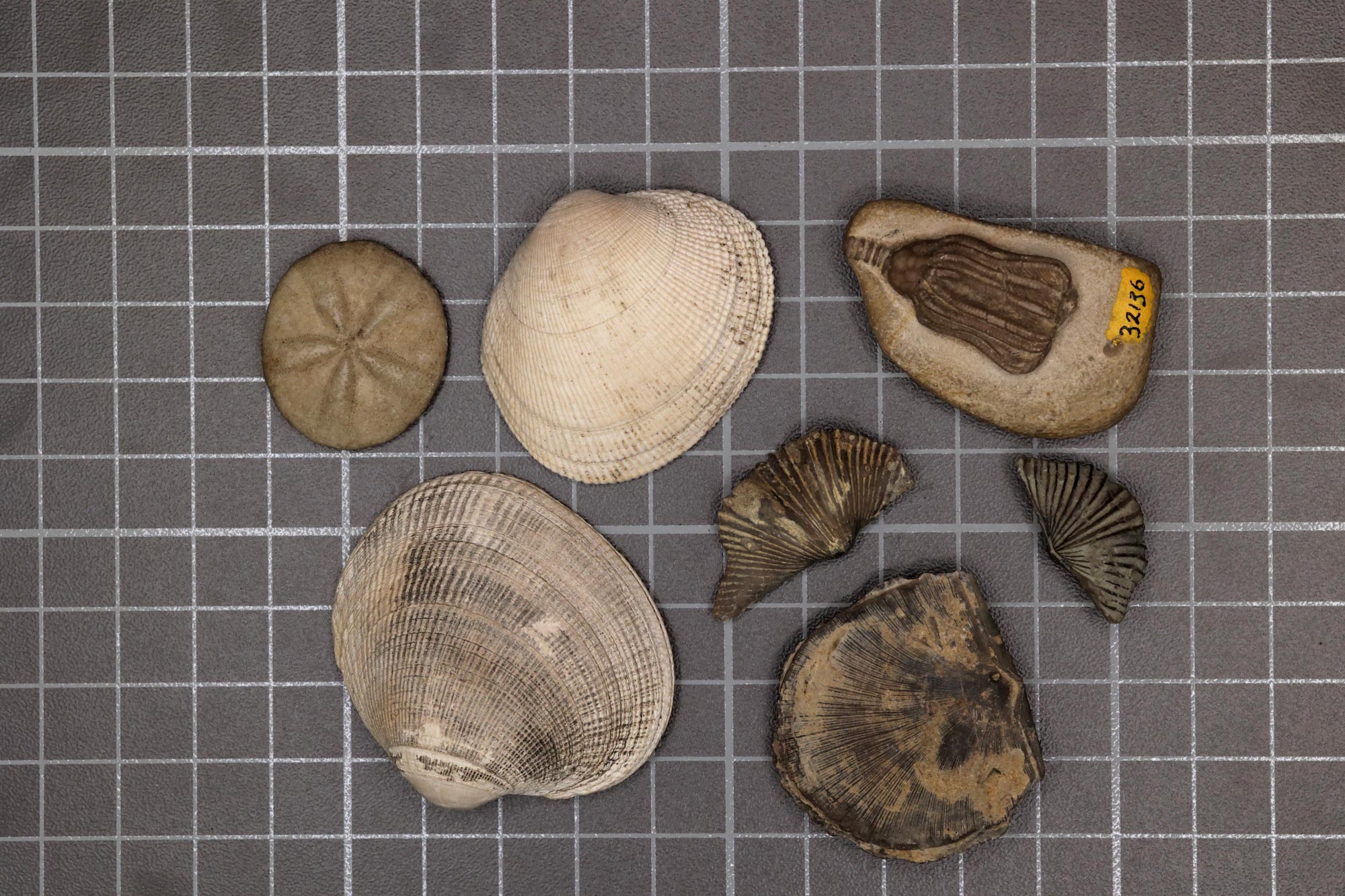
The team collected animals representing both Paleozoic and modern marine communities, including brachiopods from Washington state’s San Juan Islands.
Fossil evidence indicates that this shift from brachiopod-dominated communities toward mollusk-dominated ones occurred around the Permian-Triassic boundary and helped shape modern marine ecosystems.
The Great Dying unfolded over thousands of years and involved volcanic activity on a scale unlike anything occurring today.
Temperatures rose by 8-12° Celsius (14.4-21.6° Fahrenheit) during the Great Dying.
Clams and snails rule today’s shores because their ancient ancestors survived a catastrophe that erased nearly all ocean life.
The shells scattered along modern beaches are clues to an ancient catastrophe. Clams and snails are common today partly because their distant relatives survived the worst mass extinction in Earth’s history, while many of their former rivals nearly vanished.
A new Stanford-led study helps explain why.
About 252 million years ago, the Permian-Triassic extinction event eliminated 96% of marine species and 70% of land animals. Known as the “Great Dying,” it was far more destructive than the later disaster that wiped out the non-avian dinosaurs.
Why Some Ocean Animals Vanished
Yet the crisis was not equally deadly for every branch of animal life. Some groups that had dominated the oceans for hundreds of millions of years suffered catastrophic losses, while others endured and eventually took their place.
Brachiopods were among the biggest casualties. These shelled animals resemble clams but belong to a completely different evolutionary group. Before the extinction, they were among the most abundant creatures on the seafloor. Crinoids, or sea lilies, and several other mostly stationary bottom dwellers also declined sharply.
Metabolism Became a Matter of Survival
Mollusks fared considerably better. Only about half of species, such as clams and snails, disappeared. Their survival helped set the stage for the oceans we recognize today, where mollusks, fish, starfish, and sea urchins are far more prominent than brachiopods.
Published in Proceedings of the National Academy of Sciences, the study concludes that metabolism played a major role in deciding which animals survived. The most vulnerable groups were poorly equipped to handle the combination of rising temperatures and falling oxygen levels that spread through the oceans during the extinction.
“With this study, we essentially wanted to solve the mystery of why, when you go to the beach, you collect the shells of clams and snails rather than those of brachiopods,” said lead study author Jose Andres Marquez, a former PhD student in the lab of Erik Anders Sperling at Stanford. “Our findings show that, across different organism groups, extinctions happened at much higher rates for those more vulnerable to increases in water temperature and decreases in oxygen availability.”
Volcanic Warming Stripped Oxygen From the Oceans
The environmental crisis began with an extraordinary period of volcanic activity. Vast eruptions released carbon dioxide, methane, and other gases that heated the planet and disrupted the chemistry of the oceans.
Warm water naturally holds less dissolved oxygen than cool water. At the same time, heat accelerates the chemical reactions inside an animal’s body, increasing the amount of oxygen it needs. Marine organisms therefore faced a dangerous double pressure: oxygen supplies were shrinking just as their bodies demanded more.
“This study is really the final nail in the coffin for what caused the Permian-Triassic mass extinction,” said Sperling, the study’s senior author and an associate professor of Earth and planetary sciences in the Stanford Doerr School of Sustainability. “The biggest mass extinction of all time started from a world that is very similar to today in having a relatively cool, relatively well-oxygenated ocean, and then there was a giant injection of carbon dioxide into the Earth system. Understanding how Earth and Earth’s biota responded back then could inform us of what’s to come.”
Testing the Physiology of Ancient Animal Groups
To understand why certain animals were more vulnerable, the researchers looked beyond fossils and examined how living representatives of ancient marine groups respond to heat and low oxygen.
Metabolism includes the chemical processes an organism uses to produce energy and stay alive. During the Paleozoic period, which ended with the Great Dying, many common ocean animals had slow metabolisms. They lived on the seafloor, moved little or not at all, and collected food by filtering particles from the surrounding water.
Brachiopods, crinoids (sea lilies, related to starfish), and certain corals and sea anemones fit this general pattern. Their low-energy lifestyles worked well under stable conditions, but the new experiments suggest that they became a serious disadvantage as the oceans warmed.
How Active Animals Gained an Advantage
The animals that became dominant after the extinction tended to be more mobile, muscular, and metabolically active. Fish are the clearest example, but the shift also favored snails, sea urchins, and bivalves, such as clams, oysters, and mussels.
Bivalves often have heavier bodies and a muscular “foot” that allows them to crawl, dig, or anchor themselves. Supporting that extra tissue requires more energy than the relatively simple bodies of brachiopods.
“This is why we eat clam chowder and we don’t eat brachiopod chowder,” Sperling said. “Brachiopods have almost no meat.”
The Unexpected Weakness of Slow Metabolisms
That difference may seem unfavorable because active animals require more oxygen even under ordinary conditions. However, the researchers found that their bodies were also better prepared to increase oxygen intake when temperatures rose.
The team collected animals representing both Paleozoic and modern marine communities, including brachiopods from Washington state’s San Juan Islands. At field stations and in Sperling’s Stanford laboratory, the researchers placed the animals in chambers and measured how much oxygen they consumed as water temperatures changed.
The experiments revealed an unexpected tradeoff. Brachiopods and other slow-metabolism animals could survive in low-oxygen water that would suffocate many modern marine species. But their advantage disappeared as the water became warmer.
As temperatures increased, their oxygen requirements rose much more sharply. Their slow metabolisms, limited muscles, and respiratory structures could not deliver enough oxygen to keep pace.
Built to Survive a Warming Ocean
Modern animals began with higher oxygen needs, but their more powerful muscles and gills gave them greater capacity to respond when warming pushed those needs even higher.
In other words, the Paleozoic animals were highly efficient under cool, stable conditions but had little room to adjust when their environment changed. The more active animals consumed more energy, yet they also possessed the biological equipment needed to survive a rapidly warming ocean.
“Warming and oxygen loss are the key drivers,” said Sperling.
Filling a Critical Gap in Extinction Research
The work builds on a 2018 study by researchers at Princeton and Stanford, including Sperling and co-author Jon Payne. That research used climate simulations, fossil patterns, and physiological models to show that warming and oxygen loss could explain much of the Great Dying’s severity and geographic pattern.
However, the physiological measurements available at the time came mostly from modern fish and crustaceans. Those commercially important animals were poorly suited to represent brachiopods, crinoids, and other groups that suffered the most devastating losses.
“In our new study, we filled in this gap about the physiology of the Paleozoic fauna to see if we could explain not only the biogeography of the extinction but the taxonomic selectivity of the extinction,” said Sperling.
How the Great Dying Remade Marine Life
The results provide a biological explanation for one of the largest turnovers in the history of animal life.
Before the Great Dying, brachiopods outnumbered bivalves. Today, only about 400 brachiopod species remain, while an estimated 10,000-15,000 bivalve species inhabit marine and freshwater environments.
Sperling compared the transformation to the extinction of the non-avian dinosaurs 65 million years ago, “where mammals essentially took over and never gave up that niche to reptiles again.”
The Great Dying did something similar in the oceans. It removed many of the animals that had defined Paleozoic seafloors and opened ecological space for mollusks and other survivors. Fossil evidence indicates that this shift from brachiopod-dominated communities toward mollusk-dominated ones occurred around the Permian-Triassic boundary and helped shape modern marine ecosystems.
Ancient Ocean Changes Carry a Modern Warning
Ocean acidification may also have intensified the crisis. Carbon dioxide entering seawater changes its chemistry and makes it harder for some animals to build and maintain shells. The researchers concluded that acidification probably contributed to the extinction, but it was not nearly as destructive as the combined effects of heat and oxygen loss.
The Stanford team now plans to test additional marine groups and investigate how warming, declining oxygen, and acidification interact. All three pressures are increasing in parts of the modern ocean.
The comparison with the present is not exact. The Great Dying unfolded over thousands of years and involved volcanic activity on a scale unlike anything occurring today. Still, the underlying biological problem is familiar: warming water carries less oxygen while forcing animals to use more of it.
How Close Could Today’s Warming Come?
“The bad news is, we are on track for Permian-Triassic levels of warming in worst-case scenario projections,” said Sperling.
Temperatures rose by 8-12° Celsius (14.4-21.6° Fahrenheit) during the Great Dying. That increase occurred over thousands of years. Modern projections indicate that temperatures could climb 1.5-4° Celsius (2.7-7.2° Fahrenheit) above pre-industrial levels by 2100, compressing a major environmental change into only 100-200 years.
“The good news is, we’re still at the point where we can change things and do something about it.”
Reference: “Differences in physiological tolerance to global warming caused the Permian–Triassic transition between the Paleozoic and Modern faunas” by J. Andres Marquez, Justin L. Penn, Richard G. Stockey, Thomas H. Boag, Murray I. Duncan, Kyra N. McClure, Kendall Matsumoto, Kemi F. Ashing-Giwa, Christopher P. Noll, Curtis Deutsch, Jonathan L. Payne and Erik A. Sperling, 6 July 2026, Proceedings of the National Academy of Sciences.
DOI: 10.1073/pnas.2533086123
Funding was provided by the U.S. National Science Foundation, NASA, the Palaeontological Association, and the Stanford Woods Institute for the Environment.
Never miss a breakthrough: Join the SciTechDaily newsletter.
Follow us on Google and Google News.