Without that camera, the darkness response stays invisible, which is partly why clinicians have leaned on the light reaction for generations.
Deeper loss of awareness went with a weaker darkness response, far more tightly than the standard light reaction tracked consciousness.
The darkness response could become a fast, cheap way to flag that same hidden activity.
Why the darkness response mattersExactly why the darkness response fades alongside lost consciousness is not fully settled.
The darkness reaction tracks consciousness more closely than the light reaction that every intensive care unit already measures.
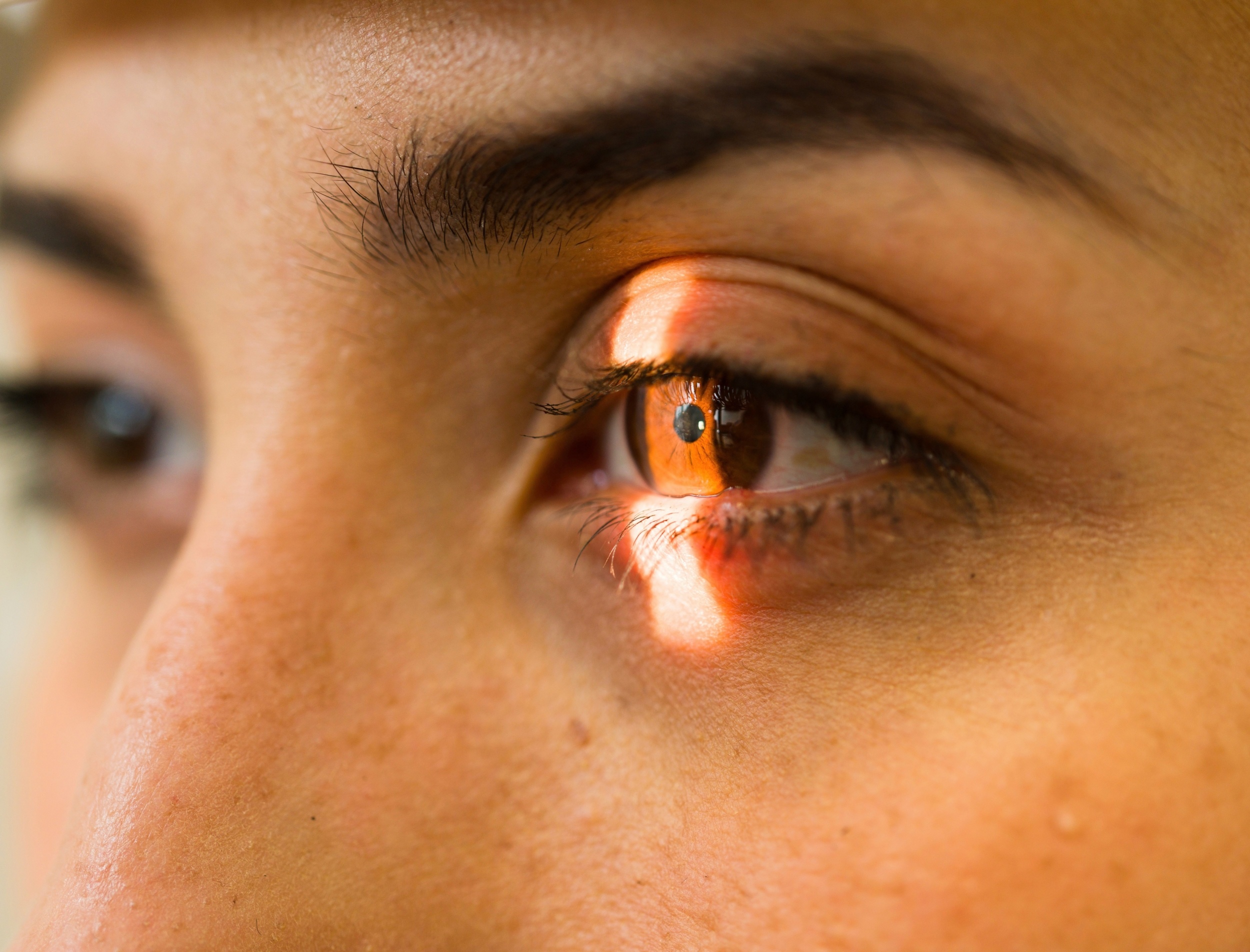
Shining a light into a patient’s eye and watching the pupil shrink takes about two seconds.
Doctors in intensive care have relied on that test for decades – a quick constriction suggests the brain is still responding, while a fixed, unreactive pupil can signal crisis. But constriction is only half of the reflex.
The pupil also widens when the light switches off. That second movement, slower and harder to see, has never been systematically studied in unconscious patients.
Danish researchers just did it – and found something the standard test has been missing.
The reflex doctors rarely measure
When a bright light disappears, the healthy pupil expands again. This is the light-off reflex, a response that leans partly on the nervous system’s stress-related wiring rather than its calming side alone.
The movement is too subtle and too fast to see with the naked eye. Detecting it requires a specialized device.
A group led by Daniel Kondziella, a professor of neurology at Copenhagen University Hospital, Rigshospitalet, set out to test whether that overlooked widening could reveal something about consciousness.
Standard bedside exams focus only on the constriction – the brain’s immediate response to light.
Measuring the darkness response requires a handheld infrared camera called a pupillometer, which films the pupil faster than any blink.
Without that camera, the darkness response stays invisible, which is partly why clinicians have leaned on the light reaction for generations.
What the team measured
The study enrolled 100 people. Half were patients in intensive care after serious brain injury, some deep in a coma and others barely responsive, while the rest were healthy volunteers matched for age and sex.
Researchers darkened each room until it was dimmer than dusk, then held the device to one eye at a time.
A bright light shone for a few seconds, then switched off while the camera continued recording the pupil for several more seconds.
Each recording lasted only seconds per eye – quick enough to fit into a routine bedside round.
That speed is part of the appeal, since the same equipment already sits in many intensive care units.
A stronger signal of consciousness
Healthy pupils expanded by about two-thirds when the light disappeared.
In barely responsive patients that widening dropped to roughly half, and in unresponsive patients it fell to a fifth, sometimes disappearing altogether.
Deeper loss of awareness went with a weaker darkness response, far more tightly than the standard light reaction tracked consciousness.
Clinicians have long read that light reaction to judge brain function after cardiac arrest, but as one study of comatose patients shows, it captures only part of the picture.
One finding stood out. The routine light-reflex score could not separate barely responsive patients from healthy volunteers at all. The darkness reaction managed it cleanly.
Hidden signs of awareness
Some of the most striking results came from patients who looked completely unresponsive.
Most of them, 21 of 25, still showed a working light reflex – the standard reassuring sign – yet only seven had a normal darkness response.
Until this study, no one had charted the darkness response in patients this deeply unconscious, so its meaning was an open question. Of those seven, six could be followed for three months. Five regained awareness.
The first signs of awareness appeared after about nine days on average.
Often, the earliest sign was simply eyes tracking a moving object around the room – a response buried in darkness, quietly flagging a recovery the standard exam had missed.
Doctors increasingly accept that some patients who appear unconscious are quietly aware – a pattern documented in one study that used brain scans and bedside tests.
The darkness response could become a fast, cheap way to flag that same hidden activity.
Why the darkness response matters
Exactly why the darkness response fades alongside lost consciousness is not fully settled.
The widening appears to depend partly on the brain’s arousal systems, which may become less active after severe brain injury.
Sedatives muddy the picture too, because the strong painkillers common in intensive care can dull pupil movement on their own.
Kondziella’s team adjusted statistically for sedation, yet cautioned that the effects of the drugs and of brain damage are hard to fully separate.
Only a handful of unresponsive patients carried the telltale response. Too few to build firm rules around, though the signal is still worth chasing.
Spotting hidden awareness early changes how a case unfolds, as one paper on severe head trauma found.
A bedside test with big potential
What this work adds is concrete. The darkness reaction tracks consciousness more closely than the light reaction that every intensive care unit already measures.
It can reveal faint awareness in patients who otherwise look unresponsive.
Decisions about life support often hinge on evidence that brain function is returning.
A bedside test that exposes hidden recovery gives families and doctors more to weigh before those choices are locked in.
Because many intensive care units already use these cameras, adding the darkness measurement could take only a few extra seconds at the bedside.
Larger studies still need to confirm the pattern, but the tool to run that test is already in the room.
The study is published in the journal Neurocritical Care.
—–
Like what you read? Subscribe to our newsletter for engaging articles, exclusive content, and the latest updates.
Check us out on EarthSnap, a free app brought to you by Eric Ralls and Earth.com.
—–