The BBC reported that Nowak suffered five stab wounds, including injuries to his face and legs and a fatal wound to the chest.
"You have brought shame on your family, your community and your religion," the judge told Digwa, according to The Guardian.
Body-camera footage later released by Hampshire Police showed the severely injured student lying on the ground, repeatedly telling officers that he had been stabbed and could not breathe, the BBC reported.
"We hold Vickrum Digwa solely responsible for the brutal murder of our son," Mark Nowak said, according to The Guardian.
advertisementDigwa's mother, Kiran Kaur, was also convicted of assisting an offender after attempting to hide the murder weapon and is due to be sentenced separately, the BBC reported.
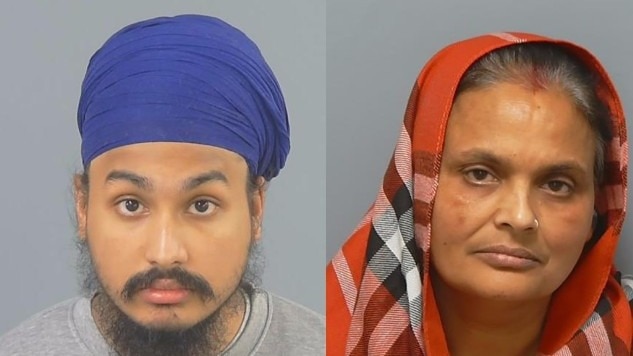
A Sikh man in the UK has been sentenced to life imprisonment for murdering an 18-year-old university student in Southampton with a large-bladed weapon that he claimed to have been carrying for religious reasons, reported the BBC. Vickrum Digwa who is aged 23, was ordered to serve a minimum of 21 years in prison after being convicted of murdering Henry Nowak, a first-year finance student at the University of Southampton.
Read Full Story
The case received global attention due to the conduct of responding police officers, who handcuffed a critically wounded Nowak after Digwa claimed he had been racially abused. Elon Musk, owner of the social media platform X, reacted to the incident, calling it "unconscionable", and stating that, "I am happy to fund a wrongful death lawsuit against these disgusting excuses for law enforcement. They damn well better have been fired".
The Independent Office for Police Conduct, the chief watchdog agency for police in England and Wales, is investigating the incident, reported the UK-based newspaper, The Guardian. Owner of social media platform Elon Musk described the actions of the responding officer as being unconscionable. (X/@elonmusk)
The fatal stabbing took place last year on December 3, 2025, as Nowak was walking home alone after a night out with friends from his university football team. Court proceedings heard that Digwa was carrying a large dagger-like blade that he claimed was connected to his Sikh faith. According to The Guardian report, prosecutors argued that while Sikhs are legally permitted to carry a ceremonial kirpan as an article of faith, the weapon used in the attack went beyond that religious obligation.
Judge William Mousley KC noted that Digwa was already wearing a smaller kirpan beneath his clothing, fulfilling the requirements of his faith, but had also chosen to carry a much larger blade, The Guardian reported. The judge stressed that Sikhism regards the kirpan as a symbol of faith and protection rather than an offensive weapon.
According to evidence presented during the trial, the confrontation between the two men lasted only moments before Digwa launched a sustained attack. The BBC reported that Nowak suffered five stab wounds, including injuries to his face and legs and a fatal wound to the chest.
Neighbours later heard the teenager shouting that he had been stabbed and was dying, according to the BBC. Despite his injuries, Nowak attempted to escape by climbing over a fence before collapsing from blood loss.
advertisement
Following the attack, Digwa falsely claimed he had acted in self-defence after being racially abused and assaulted by Nowak. He told police that the teenager had knocked off his turban and attacked him, according to both the BBC and The Guardian.
Those claims were ultimately rejected by the jury. During sentencing, Judge Mousley said he was satisfied that Nowak had said nothing racist and criticised Digwa for fuelling racial tensions through his false allegations, The Guardian reported.
"You have brought shame on your family, your community and your religion," the judge told Digwa, according to The Guardian.
RESPONDING COPS TREATED NOWAK AS THE SUSPECT, HANDCUFFED HIM
The case attracted national attention because of the actions taken by police after they arrived at the scene. According to the BBC, officers initially believed Digwa's account and treated Nowak as a suspect rather than a victim.
Body-camera footage later released by Hampshire Police showed the severely injured student lying on the ground, repeatedly telling officers that he had been stabbed and could not breathe, the BBC reported. Officers handcuffed him while they assessed the situation. Within minutes, Nowak became unresponsive and later died from his injuries.
advertisement
The footage prompted widespread criticism and led Hampshire Police to refer itself to the Independent Office for Police Conduct (IOPC), which is investigating the force's handling of the incident, according to the BBC. Temporary Deputy Chief Constable Robert France later apologised, saying he was "deeply sorry" that the teenager had been handcuffed and arrested before the true circumstances became clear.
The head of the right-wing political party, Reform UK, Nigel Farage, stated in a post on X that "The fear of being called racist was greater than dealing with Henry Nowak's murder. We should respond to this with pure cold rage. Britain's historic way of life is being thrown away."
Outside court, Henry's father, Mark Nowak, said his son "did not die with dignity" and criticised the way he was treated during his final moments, the BBC reported.
"We hold Vickrum Digwa solely responsible for the brutal murder of our son," Mark Nowak said, according to The Guardian. However, he added that Henry "should not have died on the streets of Southampton in police custody".
Prosecutors described Digwa as a man with a "weapons obsession", The Guardian reported. According to the BBC, police later recovered more than 20 weapons from the family's home, while evidence presented at trial showed Digwa regularly viewed weapon-related material online.
advertisement
Digwa's mother, Kiran Kaur, was also convicted of assisting an offender after attempting to hide the murder weapon and is due to be sentenced separately, the BBC reported.
SIKH GROUPS PUSH BACK AGAINST KIRPAN BAN CALLS
The murder has also sparked debate over the legal right of practising Sikhs in the UK to carry a kirpan, a ceremonial article of faith.
Responding to calls from some commentators and politicians to review the exemption, the City Sikhs Foundation warned against holding an entire community responsible for the actions of one individual.
"Calls to ban the kirpan in response to this murder risk unfairly targeting an entire community for the actions of a single criminal individual," the charity said in a statement.
"The actions of one individual can never and should never be used to define an entire faith community. The British Sikh community is one of the most well-integrated and law-abiding communities in the UK, with a proud history in this country spanning more than 160 years." It reiterated that it "utterly condemns" the murder of Henry Nowak and urged "unity, calm and responsible public discourse" following the case.
advertisement
The trial itself examined the legal boundaries surrounding the carrying of kirpans. According to reports by the BBC, Judge William Mousley noted that UK law permits practising Sikhs to carry a kirpan for religious reasons. However, if a bladed article is used in an act of violence, it loses that protection and is treated as an offensive weapon.
Prosecutor Nicholas Lobbenberg KC underscored that distinction during the trial, telling jurors: "This is not a case about Sikhism. This is not a case about racism. This is a case about murder."
Sikh Federation UK also condemned what it described as the "unlawful killing" and expressed concern that the case had unnecessarily fuelled hostility towards Sikhs.
The organisation said the weapon used by Digwa was not the type of kirpan normally carried by fully practising Sikhs and argued that this distinction had not always been clearly understood during public discussions of the case.
"We want to make absolutely clear the law only provides fully practising Sikhs with a defence under the law to wear a kirpan for religious reasons," the group said. "If a kirpan or a bladed item is used aggressively in an act of violence, the defence under the law for a kirpan does not apply, and it is deemed an offensive weapon."
The case has also prompted political reactions. Reform UK MP Robert Jenrick has written to UK Home Secretary Shabana Mahmood, calling for a review of police anti-racism training programmes and urging authorities to uphold "equality before the law" in their treatment of suspects and victims.
- Ends