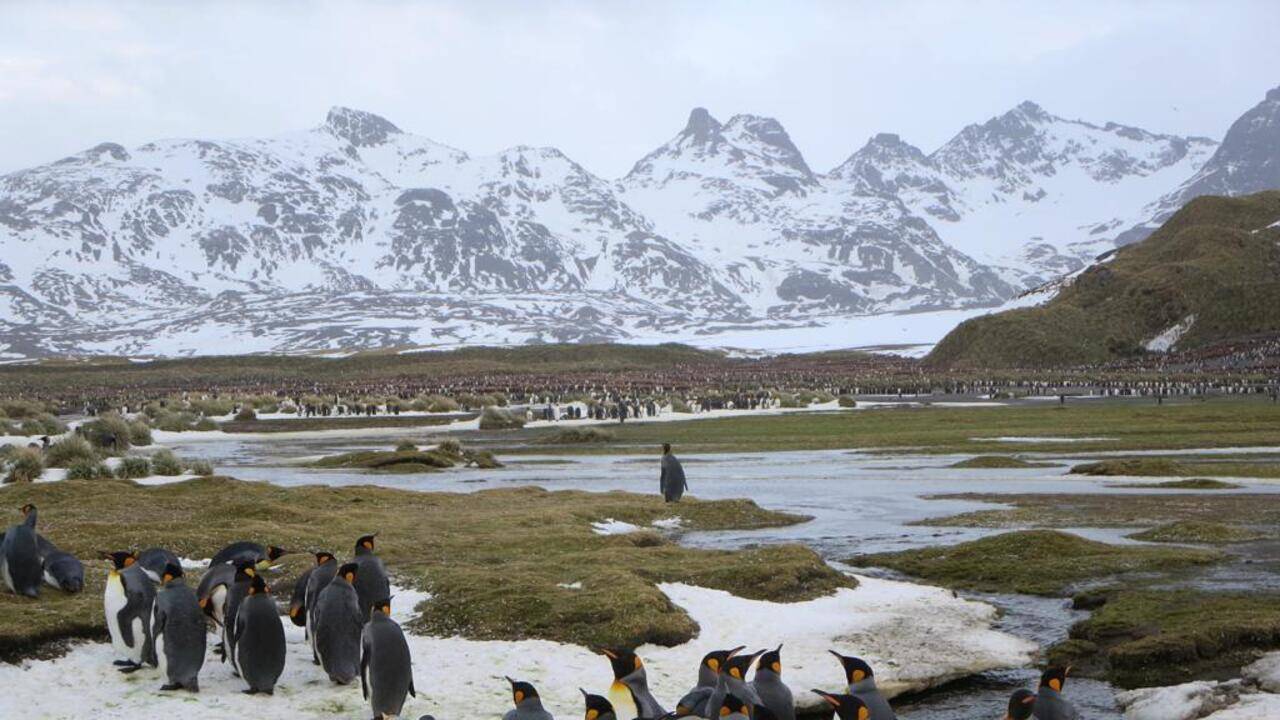
Antarctic penguin colonies are showing dietary shifts, according to new satellite data.
Researchers analysed guano stains to track penguin food sources over decades.
Image Credit: Wikimedia CommonsInterpreting the colourful clues from aboveWarming seas have caused a significant loss of sea ice in certain regions.
But researchers say the region’s food web is changing.Studying the Antarctic ocean has long been difficult for researchers.
Since thousands of penguins gather in large colonies during breeding season, they leave guano stains on the ground.
Antarctic penguin colonies are showing dietary shifts, according to new satellite data. Researchers analysed guano stains to track penguin food sources over decades. Image Credit: Wikimedia Commons
Interpreting the colourful clues from above
Warming seas have caused a significant loss of sea ice in certain regions. This change forces penguins to rely more on krill instead of fish. These observations signal broader changes within the Antarctic marine ecosystem. Image Credit: Wikimedia Commons
Change of diets in a warmer climate
White snowfields stretching endlessly under the sky and imposing icebergs of strikingly blue colour in Antarctica have always been regarded as a symbol of the perfect escape destination, free from the rush and fuss of everyday life in the modern world. But researchers say the region’s food web is changing.Studying the Antarctic ocean has long been difficult for researchers. Traditional expeditions require scientists to battle freezing winds and treacherous seas just to gather a few localised clues. Satellite imagery has given researchers a new way to study the colonies. By utilising advanced eyes in the sky, they are uncovering a decades-long story hidden in an unexpected place.To expose the transformations taking place in this environment, a study was published in the journal Current Biology. The study, led by researchers from Stony Brook University and Clemson University, analysed colour changes in penguin colonies using years of NASA satellite imagery to study Adélie penguins.Scientists track penguin colonies by analysing the guano they leave behind. Since thousands of penguins gather in large colonies during breeding season, they leave guano stains on the ground. Because the droppings are visible from space, researchers can monitor colonies over many years using Landsat satellite data, according to a report published by NASA The colour of penguin guano changes depending on what the birds have been eating during the breeding season. The NASA study notes that when penguins feast primarily on small crustaceans known as krill, their droppings leave behind a distinct pinkish or reddish stain on the landscape. On the other hand, when their diet shifts toward silverfish and other small marine fish, the guano takes on a much lighter, white or greyish hue. By calibrating visible and infrared spectral signatures, the team mapped penguin diets across nearly the species’ entire global range.This non-invasive technique marks a major shift in how scientists monitor the planet. In contrast to the limited information received from the field studies conducted during short periods of time, the scientists had an opportunity to see the trends of three decades in the past by means of analysing the satellite data. The penguins became natural indicators, allowing scientists to see what was happening underwater without disturbing them.The results show how quickly the Southern Ocean is changing as global temperatures rise. In regions of Antarctica where the amount of sea ice did not experience any changes, according to the satellite observations, the penguins preserved their traditional diet based on silverfish. Fish is a nutrient-rich food that gives the birds the energy they need during breeding.However, the story changes in regions where warming seas have caused a significant loss of sea ice. In these sectors, the satellite data showed a clear and steady transition toward a krill-dominated diet. Because the ice platforms that fish rely on for shelter are changing, penguins are forced to rely on krill as their primary alternative food source. While krill are a vital part of the ecosystem, chicks fed more fish tend to be larger and have better survival prospects, meaning a shift to krill can impact long-term population trends.The diet shift reflects changes in the Antarctic food web as sea ice conditions change. Because Adélie penguins are highly specialised feeders, changes in their diet can signal broader environmental shifts. Ultimately, these satellite observations provide a critical indicator of how climate change is reshaping the marine ecosystem over long periods.