Researchers at the French National Center of Scientific Research have become the first to observe the formation of the Earth’s crust inside the ocean.
Rather, they were looking to measure the steady stretching of a ridge that builds up stress between crust formation events.
Along the ocean floor that stretches for thousands of miles, Earth’s tectonic plates meet at the mid-ocean ridges.
Even once in a while, from under the ocean floor, hot magma erupts through the gaps and then cools down to form new planetary crust.
According to Royer, in the last 16 days of April 2024, the ridge axis failed, sending magma into the oceanic crust.
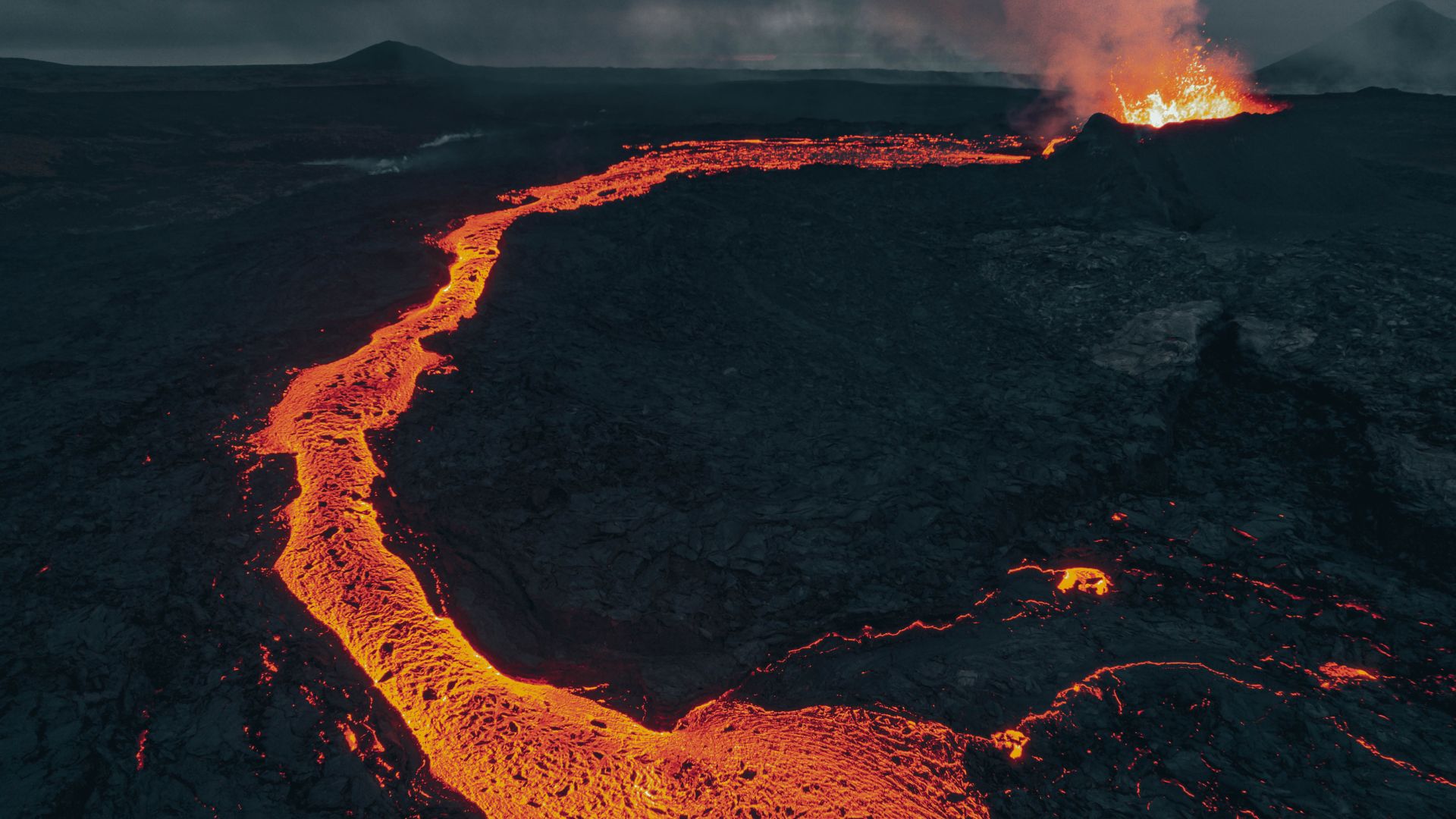
Researchers at the French National Center of Scientific Research have become the first to observe the formation of the Earth’s crust inside the ocean. The process that takes place inside the oceans and seas has stayed away from human observation for millennia, until a team led by geophysicist Jean-Yves Royer took an audacious step to record it. The researchers did not set out to record the entire event. Rather, they were looking to measure the steady stretching of a ridge that builds up stress between crust formation events. This stretch extends only a few centimeters but builds up stress like a loaded spring, resulting in major changes in very little time.
Along the ocean floor that stretches for thousands of miles, Earth’s tectonic plates meet at the mid-ocean ridges. Even once in a while, from under the ocean floor, hot magma erupts through the gaps and then cools down to form new planetary crust. These areas of tectonic boundaries where the new crust forms are at ocean depths that humans cannot safely explore. But science instruments did the hard work in this case. Underwater observatory Royer and his colleagues at the French National Center of Scientific Research set up the Observatory with Hydro-Acoustics and Geodesy near Amsterdam Island (OHA-GEODAMS) in the Southeast Indian Ridge in February 2024. Located between Australia and Antarctica, the experiment had been in the works for years so that it could catch smaller movements prior to a major event. Scientists refer to these movements as ‘quantum’ events because they are very discrete episodes when compared to the large violent bursts that happen during seafloor spreading after tectonic tensions have built up over decades.
OHA-GEODAMS experiment consisted of five autonomous hydrophones positioned in such a way that they cover the entire Saint Paul-Amsterdam volcanic plateau and no quantum event is missed out. The researchers waited for months to hear something and then a mega event occurred. How was the new crust formed? According to Royer, in the last 16 days of April 2024, the ridge axis failed, sending magma into the oceanic crust. Over a relatively short period of two hours, an estimated 5.3 billion cubic feet (150 million cubic meters) vast amounts of magma, known as dikes, tore through the crust on the ocean floor. As the dikes spread, the region faced earthquakes and brought back into action long dormant faults, draining the magma beneath the ridge. This caused the seafloor to collapse very quickly. As the the dikes reached the seafloor, lava erupted onto the ocean floor, while continuing to drain the magma reservoir, causing the seafloor to collapse further, the researchers told ScienceAlert.
Overall, the floor of the valley collapsed by 13.8 feet (4.2 meters), slipping below its bordering faults. What makes the event even rarer is that human observers were there to measure it hourly. At mid-ocean ridges, the seafloor is estimated to spread at a rate of 2.5 inches (6.3 cm) per year, if the movement is continuous. However, at the peak of the event, the ridge was pulling apart a 5 cm each minute, nearly half a million times over its long term average. This shows that seafloor spreading is not a continuous event but occurs in giant lurches. While earthquakes accompanied the event, the researchers also found that most movement occurred aseismically, i.e., without generating strong seismic waves. This explains the difference between the actual movement of the faults and that suggested by the measurement of earthquakes, opening new horizons for marine geophysicists.
The research findings were published in the journal Nature.