Rubio, in turn, called India’s External Affairs Minister S Jaishankar to convey that Pakistan wanted the fighting to stop.India’s response was that it would not accept mediation from another country, Gokhale recounted.
He said the MEA also told him that the Pakistanis were “frantically trying to call.”“Murphy’s law also played a role.
“By then, we had taken a decision that there’s no harm in hearing what the Pakistani DGMO had to say.”The two officers eventually spoke at around 3:30 pm.“Usually, the person who asks for the call speaks first.
So, Maj Gen Kashif Abdullah, the Pakistani DGMO, started as per that tradition,” Ghai said.According to his account, it didn’t take Abdullah long to say that Pakistan wanted a ceasefire.
“India can take risks, India can hit hard irrespective of the consequences.”
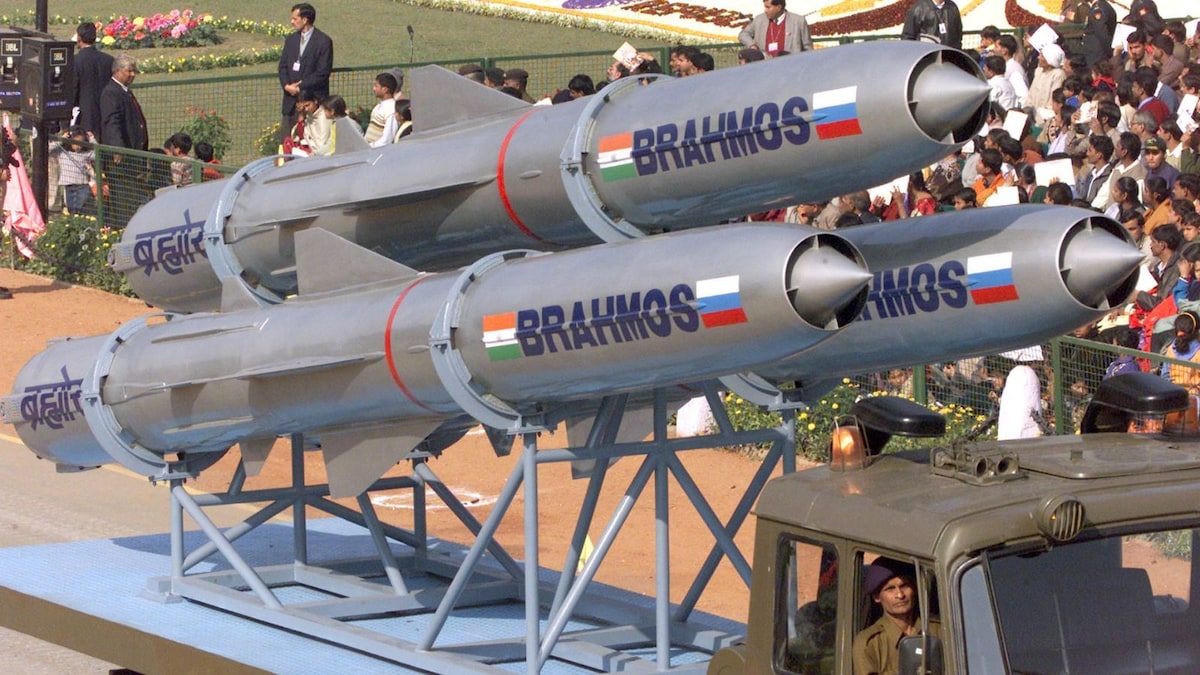
More than 71 hours into the May 2025 standoff between India and Pakistan, Islamabad launched a high-speed missile towards Delhi, triggering India’s final and most intense attack on Pakistan, according to a new documentary on Operation Sindoor.The missile was intercepted over Sirsa in Haryana at around 1:30 am on May 10, national security analyst Nitin Gokhale said in Discovery’s two-part docuseries, Declassified: Operation Sindoor. The documentary, released at 9 pm on August 15, offers a detailed account of the events that led up to and followed India’s Operation Sindoor.“At about 1:30 or 1:45, one high-speed missile was launched by Pakistan, aimed at Delhi, which was intercepted at Sirsa in Haryana,” Gokhale said.The Ministry of Defence had previously said that on May 10 at approximately 1:30 am, Pakistan launched “a massive attack on Indian Air Force bases, Army ammunition depots, airports and military cantonments using missiles, drones, rockets, and other long-range weapons.” It has not, however, publicly identified Delhi as the intended target of one of the missiles.Indians woke up on May 10, 2025, to widely circulating videos of the debris of the intercepted missile lying in a field in Sirsa. Subsequent reports suggested that the threat had been neutralised using the Barak-8 surface-to-air missile system by an Indian Air Force unit stationed in Sirsa.This attack targeting India’s national capital, Gokhale said, was the signal for India to launch its “final retaliatory attack.”“This time the full responsibility was given to the Air Force to launch the BrahMos Cruise Missiles,” he said.Shortly after Pakistan’s attempted strikes on India, the Indian Air Force struck airfields, radar sites, and command-and-control centres in Pakistan. This marked India’s first major strike on Pakistani airbases.The initial phase of the attack hit Pakistan’s Rafiqui, Sukkur, Rahim Yar Khan and Nur Khan airbases, while bases such as Sargodha, Bholari and Jacobabad were struck in the second wave. Within hours, India had struck 11 Pakistani bases.“The intent was to keep it calibrated and measured and drive home a message that, look, we can hit you at will and you have no answer to it,” Air Marshal Awadesh Bharti, SYSM, AVSM, VM, said.Senior officers in the docuseries detailed significant damage to Pakistani airbases, including runways, hangars and parked aircraft.Pakistan Prime Minister Shehbaz Sharif, speaking at the Pakistan-Türkiye-Azerbaijan summit in Lachin, Azerbaijan, in late May 2025, had also acknowledged the damage caused by India’s missile and BrahMos attacks at various locations, including the Rawalpindi airport.“We engaged them on a front of almost 1,200 kilometres, almost 200 kilometres deep inside his territory,” Air Chief Marshal AP Singh, PVSM, AVSM, said. “Things were really happening the way we wanted it to… All our weapons were reaching the correct places.”The BrahMos-A cruise missiles were at the centre of this salvo.“BrahMos has a very high speed of attack. The chances of it getting intercepted are less. The damage it creates is much more than any other smaller speed weapon,” Singh said. “The best part was that it was a home-grown weapon.”Within hours of the Indian strikes, Pakistani officials began seeking contact with New Delhi, according to the series.Gokhale said that by the morning, Pakistani officials were attempting to reach the Indian establishment, with Pakistan Army chief Field Marshal Asim Munir also contacting US Secretary of State Marco Rubio. Rubio, in turn, called India’s External Affairs Minister S Jaishankar to convey that Pakistan wanted the fighting to stop.India’s response was that it would not accept mediation from another country, Gokhale recounted. Rubio was told that Pakistan’s Director General of Military Operations should contact the Indian DGMO through the designated channel for military communication between the two countries.Lt Gen Rajiv Ghai, SYSM, UYSM, AVSM, SM***, India’s DGMO during Operation Sindoor, said he received a message at around 9 am informing him that his Pakistani counterpart wanted to speak with him. He said the MEA also told him that the Pakistanis were “frantically trying to call.”“Murphy’s law also played a role. There was a little snag in the hotline. We got the line rectified. That took maybe an hour or so,” Ghai said. “By then, we had taken a decision that there’s no harm in hearing what the Pakistani DGMO had to say.”The two officers eventually spoke at around 3:30 pm.“Usually, the person who asks for the call speaks first. So, Maj Gen Kashif Abdullah, the Pakistani DGMO, started as per that tradition,” Ghai said.According to his account, it didn’t take Abdullah long to say that Pakistan wanted a ceasefire. He recalled the Pakistani DGMO telling him: “Sir, having hit so many BrahMos missiles at us, you should now be satisfied, and we can bring this to a stop.”“Once they asked, and repeatedly asked, saying, ‘Now it’s enough, you’ve done enough damage, now let’s have a ceasefire,’ we conceded to their request,” India’s National Security Advisor Ajit Doval said. “We were also very clear that we don't have to linger it on.”Finally, it was agreed that by 5:30 pm on May 10, both sides would cease hostilities.While the conflict eventually ended, Doval said India had conveyed a clear message to the world.“India’s generosity or India being more tolerant should not be mistaken for its weakness,” he said. “India can take risks, India can hit hard irrespective of the consequences.”