News explainers ‘No Matter Whether I Vote Or Not, Same Person Will Win’: Why Most US Midterm House Races Are Barely Contested‘No Matter Whether I Vote Or Not, Same Person Will Win’: Why Most US Midterm House Races Are Barely ContestedPublished By :,Last Updated: October 26, 2026, 14:32 ISTAll 435 US House seats are up for grabs on November 3, but in most districts, the real contest may be over before voters reach the ballot box.
House members serve two-year terms, so every seat is contested in each congressional election cycle.
Fewer than 5% of the 435 House races are considered true toss-ups ahead of the midterms, according to the nonpartisan Cook Political Report with Amy Walter.
House Races Among The Least Competitive In DecadesThe proportion of competitive House races in 2026 is among the lowest recorded over the past three decades, according to Cook Political Report ratings cited by the Ohio Capital Journal.
A look at historical ratings shows that just 11% of House races were considered toss-ups or lean races in 2026, compared with 10% in 2024, 15% in 2022 and 17% in 2018.
News explainers ‘No Matter Whether I Vote Or Not, Same Person Will Win’: Why Most US Midterm House Races Are Barely Contested
‘No Matter Whether I Vote Or Not, Same Person Will Win’: Why Most US Midterm House Races Are Barely Contested
Published By :
,
Last Updated: October 26, 2026, 14:32 IST
All 435 US House seats are up for grabs on November 3, but in most districts, the real contest may be over before voters reach the ballot box.
Rapid Read
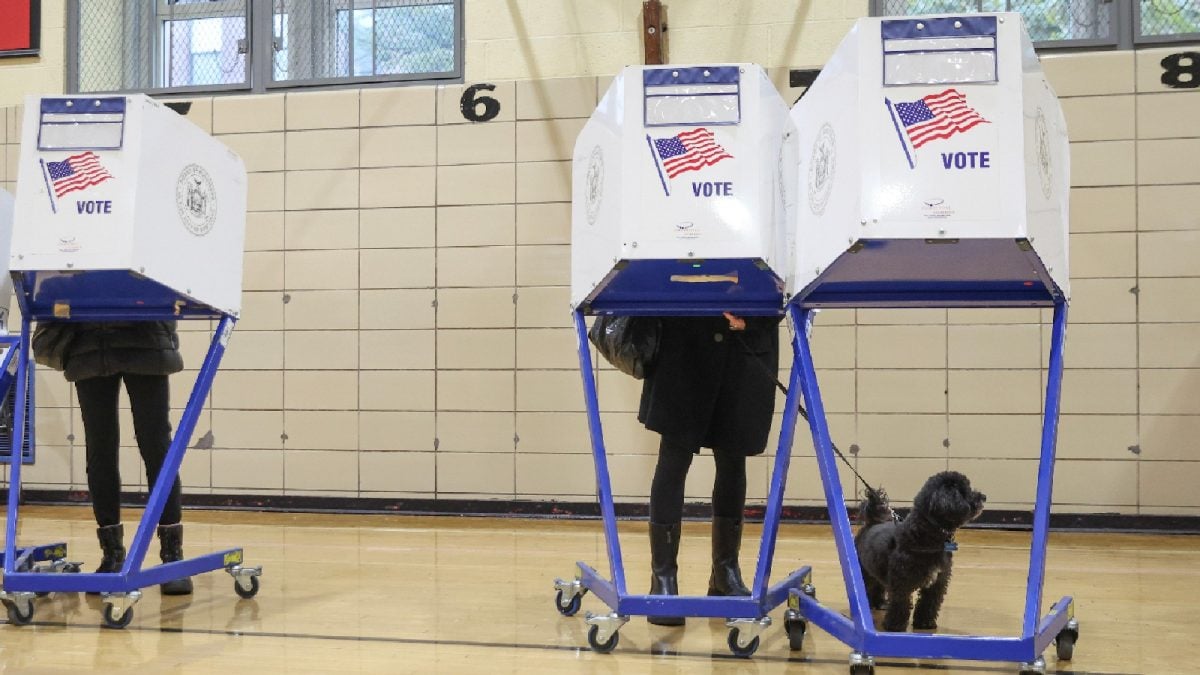
People cast their votes on the first day of early voting, Saturday, Oct. 24, 2026, in New York. (IMAGE: AP Photo)
As the world tunes into American political coverage ahead of the midterm elections, much of the attention is focused on Senate contests and a handful of closely watched gubernatorial races. That raises a question for readers watching from outside the United States: why do so few races for the House of Representatives command the same attention?
Even US presidents are frequently seen campaigning for Senate and gubernatorial candidates. For Indians, the contrast may bring to mind the intense coverage of Lok Sabha and state Assembly elections, although the comparison is not exact. Rajya Sabha and state Legislative Council elections work differently, while even some bypolls in India have become nail-biting contests. In the US House, however, the question in many districts is not whether the incumbent will win, but whether the contest is competitive at all.
On November 3, all 435 voting seats in the US House of Representatives will be up for election. House members serve two-year terms, so every seat is contested in each congressional election cycle. The results will determine which party controls the chamber for the next two years. Yet, despite every seat being on the ballot, only a fraction are expected to be genuinely competitive.
Fewer than 5% of the 435 House races are considered true toss-ups ahead of the midterms, according to the nonpartisan Cook Political Report with Amy Walter.
As of October 22, the organisation rated just 21 seats as toss-ups, meaning either the Democratic or Republican candidate had a realistic chance of winning. Another 12 seats leaned towards the Democrats and 13 towards the Republicans. The remaining 89% of races were rated as likely or solid wins for one party or the other, according to the Ohio Capital Journal.
These ratings are not election results, and upsets remain possible. They indicate, however, that in most congressional districts, one party enters the contest with a substantial advantage.
Why Party Primaries Matter So Much
One reason for this dynamic lies in how candidates are nominated. Democrats and Republicans generally select their candidates through primary elections before facing each other in the general election. The rules vary by state: some primaries are restricted to voters registered with the relevant party, while others allow independents or voters from outside the party to participate.
In a district where one party has a strong electoral advantage, the primary can effectively become the decisive contest. In a heavily Republican district, for instance, a Republican incumbent may face a greater threat from a challenger within the party than from the Democratic nominee in November.
That changes the incentives for lawmakers. Appealing to moderate voters across the political divide may matter less than keeping the party’s most committed supporters onside, particularly if they could back a challenger in the next primary.
“For a lot of candidates it’s that primary which is particularly important. And so that obviously creates very different incentives for how they behave in Congress than if they were concerned with the general election," Zachary Peskowitz, a professor of political science at Emory University in Georgia, told States Newsroom.
The result can be a Congress in which political survival depends less on winning over a broad cross-section of voters and more on demonstrating loyalty to a party’s core supporters.
House Races Among The Least Competitive In Decades
The proportion of competitive House races in 2026 is among the lowest recorded over the past three decades, according to Cook Political Report ratings cited by the Ohio Capital Journal.
A look at historical ratings shows that just 11% of House races were considered toss-ups or lean races in 2026, compared with 10% in 2024, 15% in 2022 and 17% in 2018. The proportion was considerably higher in some earlier election cycles, reaching 27% in 1996 and 23% in 2010. In 2016 and 2014, it stood at just 9%.
The figures show that the current lack of competition is not unprecedented. But with relatively few seats likely to change hands, even a small shift in the balance of power can have major consequences.
A narrow House majority can also give a small group of lawmakers considerable leverage. When their party can afford to lose only a handful of votes, even a few dissenters can obstruct legislation or demand concessions from party leaders.
Sean M. Theriault, a professor of congressional studies at the University of Texas at Austin, told States Newsroom that narrow majorities can allow a few lawmakers to “hold the rest of the majority party hostage until they get what they want".
Gerrymandering And Safe Seats Weaken Accountability
The lack of competitive races is also linked to how congressional districts are drawn. After each US census, states redraw district boundaries to account for population changes. This process, known as redistricting, can become politically contentious when the party in control seeks to improve its chances of winning seats. The deliberate manipulation of boundaries for political advantage is known as gerrymandering. It can give one party a built-in advantage, making it difficult for the opposition to win even with a credible candidate.
But gerrymandering is not the only explanation. Peskowitz told States Newsroom that voters’ tendency to prioritise party affiliation over a candidate’s individual qualities or policy proposals also contributes to the lack of competition.
The consequences are particularly apparent when it comes to electoral accountability. In a competitive race, an incumbent who has failed to deliver on campaign promises or become embroiled in an ethics scandal may face a serious risk of losing office. In a safe seat, the same lawmaker may remain well placed to win as long as they retain support among their party’s voters.
Theriault said the scarcity of competitive races makes it considerably harder for voters to hold their representatives accountable in general elections, when voters can participate regardless of party registration.
Safe seats can also discourage voter turnout. When the outcome of a congressional race appears predictable, some voters may see little reason to cast a ballot. Jonathan Hanson, a lecturer in public policy at the University of Michigan, described it as “a sad fact in the American political system that most of the congressional seats" are not competitive in general elections.
“It’s pretty clear that voters turn out at higher rates when there’s a close election, especially a high-profile election," Hanson was quoted as saying by the States Newsroom.
In a district where the result appears all but settled, voters may conclude that their participation will make little difference. Hanson illustrated the thinking this can produce: “You know what? In my sleepy congressional race, it’s really not going to matter whether I vote or not. The same person is going to win."
News18 Newsletter Handpicked stories, in your inbox A newsletter with the best of our journalism submit
Quick Answers Powered by Ask News18 What percentage of US House races are considered true toss-ups for the upcoming midterm elections? Ahead of the midterms, fewer than 5% of the 435 House races are considered true toss-ups, with the Cook Political Report rating just 21 seats as toss-ups as of October 22. Why do party primaries matter so much in non-competitive US House districts? In districts where one party holds a strong electoral advantage, the primary can effectively become the decisive contest. This means candidates often face a greater threat from within their own party than from the opposing party in November, altering their behavioral incentives. How do redistricting and gerrymandering affect competition in US congressional races? States redraw district boundaries after each census, and the deliberate manipulation of these boundaries for political advantage is known as gerrymandering. This process can provide one party with a built-in advantage, making it difficult for the opposition to win and reducing overall electoral accountability. Powered by Ask News18
About the Author Shankhyaneel Sarkar Shankhyaneel Sarkar is a chief sub editor at News18. He covers international affairs, where he focuses on breaking news to in-depth analyses. He has over seven years of experience during which he has ... Read More
ADD YOUR COMMENT
Location : Washington D.C., United States of America (USA)
First Published: October 26, 2026, 14:29 IST
Disclaimer: Comments reflect users’ views, not News18’s. Please keep discussions respectful and constructive. Abusive, defamatory, or illegal comments will be removed. News18 may disable any comment at its discretion. By posting, you agree to our Terms of Use and Privacy Policy Loading comments...