The original judicial and technical members of the Delhi bench differed on the repayment plan.
The voting record in the order copy shows several creditors opposing the repayment plan, including HDFC Bank, Axis Bank, Canara Bank, RBL Bank and Union Bank of India.
He also pointed out that Indian Bankruptcy Code (IBC) does not make a forensic audit a mandatory requirement before a repayment plan can be considered.
Under the Insolvency and Bankruptcy Code (IBC), the NCLT approves the repayment plan under Section 114, and the approved plan becomes binding on creditors under Section 115.
Chandra argued NCLT had no power to rule on an individual's insolvency, but the tribunal disagreed in May 2022 and appointed a resolution professional.
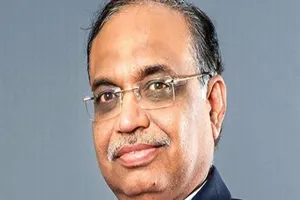
Mumbai: The National Company Law Tribunal (NCLT)’s special bench on Tuesday approved a repayment plan proposed by Zee group’s founder and chairman Subhash Chandra in which he will pay just ₹6.5 crore against admitted creditor claims of about ₹22,006.57 crore, giving creditors a recovery of only around 0.03% of their admitted dues.
The approval has come from a third judicial member of the insolvency court—Nilesh Sharma—who was included in February 2026 by the NCLT president to only decide on the issues on which the original two members disagreed.
The original judicial and technical members of the Delhi bench differed on the repayment plan. Sharma has given his opinion approving the plan stating the matter for “Regular Bench for appropriate consequential and implementation directions.”
According to the 144-page order copy seen by Mint, LIC Housing Finance who was one of several creditors who voted against the repayment plan told the insolvency court that its own admitted claim is of ₹1,322.39 crore, it would receive a mere ₹38,09,294, working out to about 0.028% of its dues.
Replying to queries sent by Mint over email Subhash Chandra's office said, "We would not like to offer any comments on this matter since the matter is under judicial scrutiny. The matter will go through the due process in the judicial system. We advise and request you to not arrive at any inference before the final order is issued."
The repayment plan was put to a vote of creditors in November 2024 and cleared with 80.814% of the voting share in favour, including from entities such as World Crest Advisors, Lemonade Capital Advisors, Corpcall Capital Advisors and Veena Investments.
The voting record in the order copy shows several creditors opposing the repayment plan, including HDFC Bank, Axis Bank, Canara Bank, RBL Bank and Union Bank of India.
Objecting creditors also alleged that many of the votes that went in favour of Chandra were from related-party entities. “Veena Investments Pvt. Ltd., Direct Media Distribution Ventures Pvt. Ltd., World Crest Advisors LLP, Lemonade Capital Advisors LLP and Corpcall Capital Advisors LLP fall in the category of associates of the debtor and their vote share cannot be taken into account while counting the vote share in favour of the Repayment Plan,” according to the order copy.
Another objection raised by the creditors was that the resolution professional had not carried out a forensic investigation into Chandra’s assets. Creditors pointed to a large difference between his historical and current net worth. A 2018 certificate had assessed his net worth at ₹40,562 crore, while his present disclosed net worth was around ₹31.79 crore. Another certificate from 2017 had put it at approximately ₹45,888 crore.
Also Read | Bankruptcy bottleneck: 380 resolution plans approved by lenders await NCLT nod
Sharma acknowledged that the difference was significant and gave creditors a legitimate reason to seek clarification. He also pointed out that Indian Bankruptcy Code (IBC) does not make a forensic audit a mandatory requirement before a repayment plan can be considered. The order stated “no provision of the Code or the applicable Regulations has been brought to the notice of this Tribunal which makes such an exercise a mandatory precondition for consideration of a repayment plan under Section 114”.
Under the Insolvency and Bankruptcy Code (IBC), the NCLT approves the repayment plan under Section 114, and the approved plan becomes binding on creditors under Section 115. This would allow Chandra to exit the personal insolvency process after successfully implementing the plan.
What was the case? In April 2024, NCLT admitted a personal insolvency plea made by Indiabulls Housing Finance, where Chandra was the personal guarantor for a ₹170-crore crore loan to Vivek Infracon that had gone bad. Indiabulls Housing Finance Ltd changed its name to Sammaan Capital Ltd in 2024.
Indiabulls first filed the case in 2022. Chandra argued NCLT had no power to rule on an individual's insolvency, but the tribunal disagreed in May 2022 and appointed a resolution professional. Chandra then challenged this at NCLAT, which closed the matter after Indiabulls said a settlement had been reached. Around the same time, the Supreme Court stayed personal guarantee insolvency cases while it examined whether the law gave guarantors a fair chance to be heard.