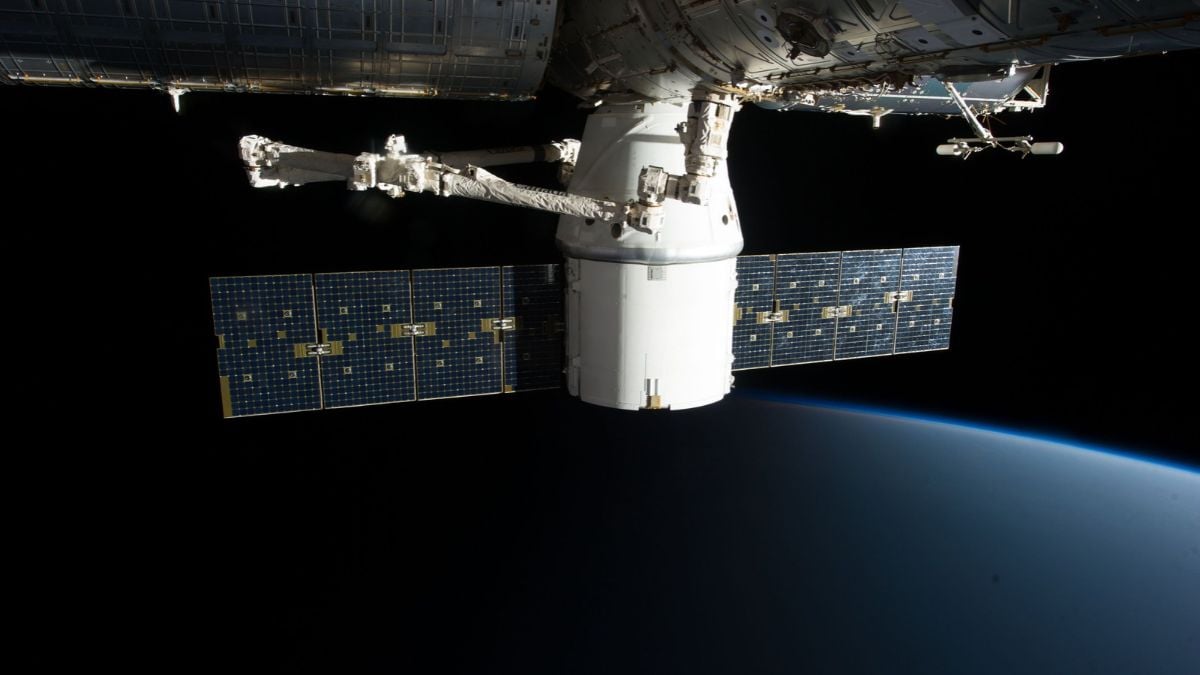
New Delhi: NASA’s Neil Gehrels Swift Observatory sent its final observations on 20 October and will soon re-enter the atmosphere in a few weeks.
Why satellites and nuclear reactors need themA glimpse into gamma-ray burstsOver the years, Swift observed over 2,000 gamma-ray bursts, the most powerful known explosions in the cosmos.
This typically took Swift about a minute to do,” said S Bradley Cenko, the mission’s principal investigator at NASA’s Goddard Space Flight Center.
During its 22 years in space, Swift created an archive that now contains brightness measures of all kinds of cosmic outburst.
The Swift archive has over 1.5 million images taken from its ultraviolet or optical telescope.
“Swift played a major role in advancing our understanding of the changing universe and was part of a revolution in astrophysics that showed how critical rapid-response observations are to the entire community. To support rapid response to cosmic events in a post-Swift world, we’re exploring our ability to use and augment NASA’s fleet of existing space telescopes, from fast-to-orbit commercial capabilities to efficient, innovative new missions. And Swift leaves us with an extraordinary archive of multiwavelength observations that will fuel new discoveries for decades more,” Domagal-Goldman said in a NASA statement .
New Delhi: NASA’s Neil Gehrels Swift Observatory sent its final observations on 20 October and will soon re-enter the atmosphere in a few weeks. Swift was initially designed as a 2 year mission launched in 2004, but remained active for over 20 years.
Also read: What are rad-hard materials? Why satellites and nuclear reactors need them
A glimpse into gamma-ray bursts
Over the years, Swift observed over 2,000 gamma-ray bursts, the most powerful known explosions in the cosmos. Thanks to Swift, scientists could study more than 1,400 supernova explosions, witness stars that were being “shredded by blackholes”, conduct X rays in the sky, survey asteroids and comments, and even monitor active galaxies.
“Swift was designed as a satellite dedicated to studying gamma-ray bursts, outbursts that came and went so quickly that no one could target them with large telescopes to learn more. Swift needed to detect and locate gamma-ray bursts, communicate their position to other observatories, and then swing its telescopes around to image the burst locations before their afterglows faded out. This typically took Swift about a minute to do,” said S Bradley Cenko, the mission’s principal investigator at NASA’s Goddard Space Flight Center.
In 2004, led by its first principal investigator Neil Gehrels, Swift was designed with aligned Optical/Ultraviolet and X-ray telescopes that could capture an image and calculate its position quickly. Before Swift, humanity had never managed to capture the short gamma-ray bursts that reach their peak brightness in less than two seconds and then fade away. In 2018, when Gehrels died, NASA renamed the mission to honour him.
During its 22 years in space, Swift created an archive that now contains brightness measures of all kinds of cosmic outburst. The Swift archive has over 1.5 million images taken from its ultraviolet or optical telescope. The entire dataset is available to the public and is nearly 12 terabytes heavy.