Pakistan’s military has denied viral rumours that jailed former Prime Minister Imran Khan died in Rawalpindi’s Adiala Jail.
The crisis erupted following a two-part video broadcast published by US-based Pakistani investigative journalist Wajahat Saeed Khan, titled "Is Khan still with us" and "What happens after Khan".
The journalist subsequently issued a broadcast walking back the assertion that Khan's death was a confirmed fact.
How the Pakistan military respondedFaced with escalating domestic instability, ISPR issued a formal rebuttal dismissing the rumours as entirely false, fabricated, and part of a coordinated campaign of misinformation.
AdvertisementReports also indicate that security arrangements at Adiala Jail have undergone intense militarisation, with specialised military intelligence units overseeing prison operations and advanced surveillance equipment installed around the perimeter.
Pakistan’s military has denied viral rumours that jailed former Prime Minister Imran Khan died in Rawalpindi’s Adiala Jail. The remark came after an explosive claim by Pakistani journalist Wajahat Saeed Khan, who later walked back on it
A statement issued by the Pakistan Armed Forces' media wing, Inter-Services Public Relations (ISPR), firmly denied viral claims that jailed former Prime Minister Imran Khan had died while in custody at Rawalpindi's Adiala Jail.
The military's direct refutation marked a rare public intervention into the fate of the 73-year-old opposition leader, following 24 hours of severe political unrest and widespread public anxiety across Pakistan.
'Is Khan still with us?'
The crisis erupted following a two-part video broadcast published by US-based Pakistani investigative journalist Wajahat Saeed Khan, titled "Is Khan still with us" and "What happens after Khan".
In the reports, the journalist cited conversations with three senior military officers stationed at the Pakistan Army's General Headquarters (GHQ) in Rawalpindi — specifically within the General Staff Directorate, Military Intelligence, and the Command, Control, Communication, and Intelligence (C4I) Directorates.
Advertisement
The initial reporting suggested that senior officers feared Khan was "no longer alive" inside his cell.
The claims spread rapidly across international news outlets and social media, prompting immediate, volatile reactions from supporters of Khan’s party, the Pakistan Tehreek-e-Insaf (PTI).
The journalist subsequently issued a broadcast walking back the assertion that Khan's death was a confirmed fact.
Clarifying his findings, he explained that his GHQ sources had not provided documented or authenticated evidence of Khan’s demise, but had instead communicated a "profound, paralysing fear that the worst may have happened or is likely to happen" due to the extreme secrecy surrounding his detention.
He stated that the military operation governing Khan's imprisonment was being run by an exceptionally small, highly secretive crew of intelligence operatives reporting directly to top military command, leaving even senior GHQ personnel in the dark.
The journalist maintained that the primary objective of his reporting was to challenge the official narrative and force the military establishment to provide transparent "proof of life".
How the Pakistan military responded
Faced with escalating domestic instability, ISPR issued a formal rebuttal dismissing the rumours as entirely false, fabricated, and part of a coordinated campaign of misinformation. The military affirmed that the former Pakistan prime minister remained alive and in custody at Adiala Jail.
Advertisement
Confirmation also emerged from Khan’s family circle. Relatives of his wife, Bushra Bibi, stated that during a controlled visit to Adiala Jail, they were permitted to view internal closed-circuit television (CCTV) monitors showing Khan walking on his own feet within the facility.
While this visual confirmation quelled immediate fears of his death, it did little to alleviate growing alarms regarding his physical health.
How Khan's health has been under the scanner
Concerns over Khan’s health have escalated dramatically due to strict isolation measures imposed by prison authorities and intelligence personnel overseeing the facility.
Family members and legal representatives report that Khan is suffering from severe, unmanaged blood pressure spikes and significant loss of vision in one eye. A court-appointed amicus curiae who visited Khan previously confirmed substantial visual impairment, which formed the basis of formal petitions seeking suspension of his sentences on medical grounds.
Khan has been held in effective solitary confinement, with regular access to his family, personal physicians, and legal team systematically cut off. Both Khan and Bushra Bibi have faced prolonged blocks on legal visitation.
Advertisement
Reports also indicate that security arrangements at Adiala Jail have undergone intense militarisation, with specialised military intelligence units overseeing prison operations and advanced surveillance equipment installed around the perimeter.
The United Nations Special Rapporteur has also previously characterised Khan's detention conditions as inhumane, while Amnesty International issued statements criticising his prolonged solitary confinement, denial of fair trial rights, and lack of independent medical care.
How PTI reacted
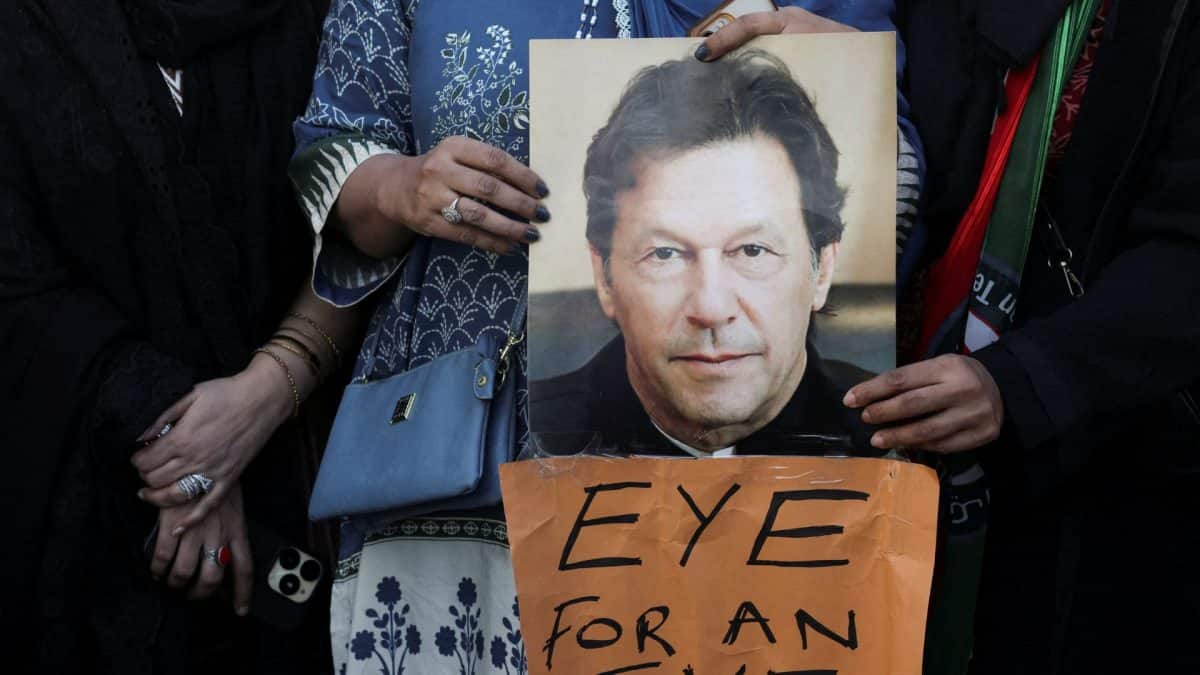
The rumour cycle triggered fierce condemnation from PTI leadership, who accused the government and military authorities of playing a dangerous game by maintaining an information blackout.
PTI Central Information Secretary Sheikh Waqas Akram asserted that Khan's health and life were not subjects for speculation, demanding that state authorities immediately allow his personal doctors, sisters, and lawyers to conduct an unhindered examination.
Party officials warned that continued denial of access could spark uncontrollable nationwide protests, with senior figures asserting that millions of supporters were prepared to march toward Rawalpindi if his safety was not publicly verified by independent medical boards.
In response to the crisis, PTI legal counsel met with the Supreme Court registrar to demand urgent hearings on pending petitions regarding medical access and human rights violations within the jail.
How Khan found himself in Adiala Jail
Imran Khan’s incarceration marks the culmination of a protracted struggle between his populist political movement and Pakistan’s powerful military establishment:
Parliamentary ouster (April 2022): Khan was removed from office through a parliamentary vote of no confidence following a publicly acknowledged fallout with top military leadership over key intelligence and military appointments.
May 9 Unrest (2023): Following his brief initial arrest in May 2023, widespread violent protests broke out across Pakistan, during which PTI supporters targeted military installations, including the Army General Headquarters in Rawalpindi and the Corps Commander's House in Lahore.
The state responded with a sweeping crackdown, arresting thousands of party workers and putting top leadership on trial under anti-terrorism laws.
Imprisonment and cumulative sentences (August 2023-present): Khan was formally taken into custody on August 5, 2023, after being convicted in the Toshakhana state gifts case.
Since then, he has faced scores of legal cases, resulting in multiple major convictions — including a 14-year sentence in the £190 million Al-Qadir Trust corruption case and a 17-year sentence in a secondary state-gifts case.
Judicial stalemate: Although appellate courts have granted Khan bail or acquitted him in several peripheral charges — such as political protest cases and unlawful marriage allegations — his primary corruption convictions remain intact on appeal, preventing his release.
The military’s statement has temporarily subdued rumours of Khan's death, but the broader political crisis remains unresolved.
Discussions surrounding a potential release on medical grounds have begun circulating among political and legal circles, drawing comparisons to the 2019 medical bail granted to former Prime Minister Nawaz Sharif.
However, with core corruption convictions still actively upheld and military oversight at Adiala Jail at an all-time high, any meaningful shift in Khan's situation will depend on formal judicial interventions by the Supreme Court or high-level political negotiations.
With inputs from agencies