The hidden carbon in ancient martian mudstonesWhy carbon matters in the hunt for lifeDid NASA just prove there *was* life on Mars ?
For now, though, researchers are careful: these are huge clues, but they’re not proof of ancient Martian life — at least, not yet.Per Space.
Piece by piece, past Mars looks more and more like a world that could support life.Not quite — but it’s a powerful hint.The macromolecular carbon Perseverance found could absolutely come from fossilized microbes.
On Earth, river deltas are great at locking in ancient organic stuff.
Ancient water, complex carbon, energy sources, buried organic molecules — all the basic parts of habitability were in place.Were these compounds made by Martian microbes, strange geology, or something we haven’t even imagined yet?
What happened at Mars?
The hidden carbon in ancient martian mudstones
Why carbon matters in the hunt for life
Did NASA just prove there *was* life on Mars ?
Jezero Crater: Mars’ secret history book
The real answers are still waiting back on Earth
What this means for humanity’s future on Mars
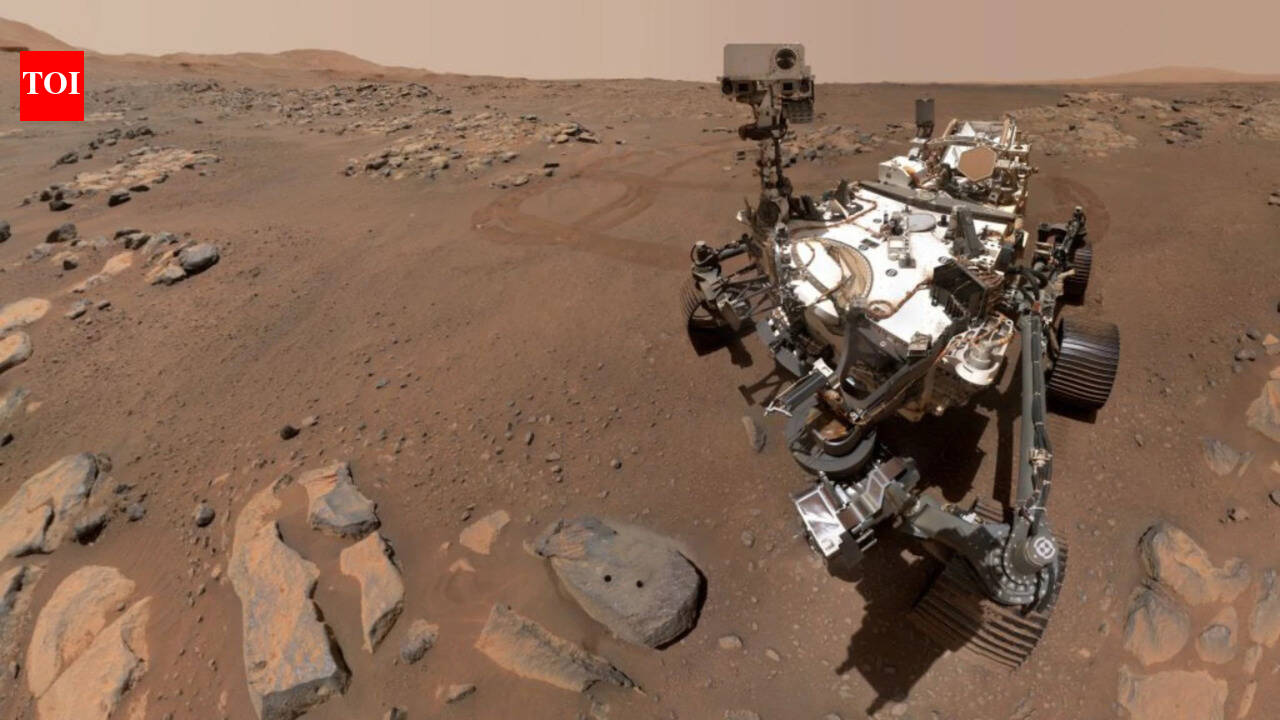
For years, Mars has felt like our best shot at a second home. It’s the most Earth-like planet nearby with carved riverbeds, dry lake bottoms, ice caps at the poles. More and more evidence suggests it was once warm, wet, and maybe even alive.But before anyone starts planning their Martian housewarming party, scientists are wrestling with a more fundamental question: Did life ever call Mars home?A brand new discovery from NASA’s Perseverance rover brings that possibility a little closer.Per a new paper published in the journal Science Advances , scientists have found complex, carbon-rich compounds locked inside rocks in Jezero Crater — an area long suspected to have hosted a massive lake and river system, billions of years ago. These results show that Mars holds some of the most promising organic material ever discovered there. For now, though, researchers are careful: these are huge clues, but they’re not proof of ancient Martian life — at least, not yet.Per Space. com , this breakthrough comes from a spot called Bright Angel, part of the old Neretva Vallis river system (that once carried water into Jezero Crater). Using a gadget called SHERLOC (an ultraviolet spectrometer bolted onto Perseverance’s arm), scientists detected something called macromolecular carbon (MMC) inside ancient mudstones.Turns out, macromolecular carbon is a big deal. On Earth, you find it in fossilized organic matter, microbial mats, coal deposits, and other biologically derived materials. It's tough and stable and can survive for billions of years.But here’s the catch: geology alone, without any life, can also form it.So, the real excitement isn’t just the carbon. It’s where the carbon showed up, how complicated it is, and what it hints about Jezero’s history. Scientists found these compounds in rocks already known for their weird textures and minerals. In fact, some believe these could be “biosignatures,” possible signs of past life.For starters, all life, as far as we know, is built on carbon.Every creature on Earth, from bacteria to birch trees, needs it. It’s in our DNA, our proteins, our sugars. Finding carbon on Mars, especially rich and complex forms, is a major boost for hopes that Mars once hosted life.Now, these compounds are way more complicated than other organics Perseverance or Curiosity has found before. For astrobiologists, that’s a big deal, as rich chemistry means plenty of opportunity for life-like processes. Though complexity alone isn’t proof of biology, it sure beats finding just methane or basic organics.And this all builds on previous Mars missions that spotted simpler organic molecules, curious methane burps, old lake beds, and minerals showing water was once everywhere. Piece by piece, past Mars looks more and more like a world that could support life.Not quite — but it’s a powerful hint.The macromolecular carbon Perseverance found could absolutely come from fossilized microbes. But it’s just as possible, for now, that this stuff formed through non-biological reactions: rocks and water mixing, hydrothermal events, or ancient meteorites dropping off complex carbon.As reported by The Guardian, Dr. Ashley Murphy, from the Planetary Science Institute, sums it up: macromolecular carbon pops up through both living and purely geological paths, saying, “It may originate from biological sources such as fossilised organic matter found in microbial mats and coal.” At the moment, there's no way to tell which happened here.That’s why researchers always hedge, using phrases like “potential biosignatures.” They aren’t ready to declare that Mars was once alive.Truth to be told, NASA is pretty strict about this. In 2025, when Perseverance found more intriguing rocks with possible biosignatures, they called it “the strongest indication yet,” but stopped miles short of calling it proof.And yet, this new discovery cements Jezero Crater’s status as the most interesting spot Perseverance has ever roamed.NASA picked Jezero because satellite photos showed gleaming proof of a vanished lake and complex river systems. On Earth, river deltas are great at locking in ancient organic stuff. Sediments pile up, sealing away life’s traces for eons.Perseverance’s science team says the crater has already served up evidence of water, wild mineral diversity, and ancient habitats you'd call "life-friendly" anywhere else. Finding such a complex carbon compound here just adds more fuel to the Martian mystery.Despite all these advancements, there's a problem, though: Perseverance can’t do everything from 200 million kilometers away.The rover’s SHERLOC is fantastic for scouting, but only Earth-based labs can truly untangle carbon made by life from carbon made by rocks. That’s why, quietly and steadily, Perseverance has been sealing samples in tiny tubes, prepping them for a future mission to pick up and haul home. NASA’s timeline for this “Mars Sample Return” is in flux, but pretty much every researcher agrees: real proof about life on Mars will only come when those rocks get on an Earthly lab bench.Right now, scientists don’t claim they’ve found Martian life, but the case keeps getting stronger that Mars was once “friendly” toward life. Ancient water, complex carbon, energy sources, buried organic molecules — all the basic parts of habitability were in place.Were these compounds made by Martian microbes, strange geology, or something we haven’t even imagined yet? No one knows. But each new find by Perseverance brings us closer to an answer, and reminds us how much Mars and Earth once had in common.If one day we call Mars home, future settlers may ask a haunting question: Not “can we survive here,” but “has something already lived here before us?”Only time (and a return ticket for those rock samples) will tell.