Sriramyachandra told AFP, adding with a smile that she might one day own one of the very robots she is helping train.
As reported by AFP, workers involved in this process use a variety of devices, including head-mounted cameras, motion sensors and smart glasses.
She sends the footage through a dedicated application to an AI data company with offices in India and the United States.
India has emerged as a major hub for the creation, processing and annotation of AI data, with thousands of workers contributing to the rapidly expanding ecosystem.
"The next generation ... who might have to do work similar to mine, they will face a problem," she told AFP.
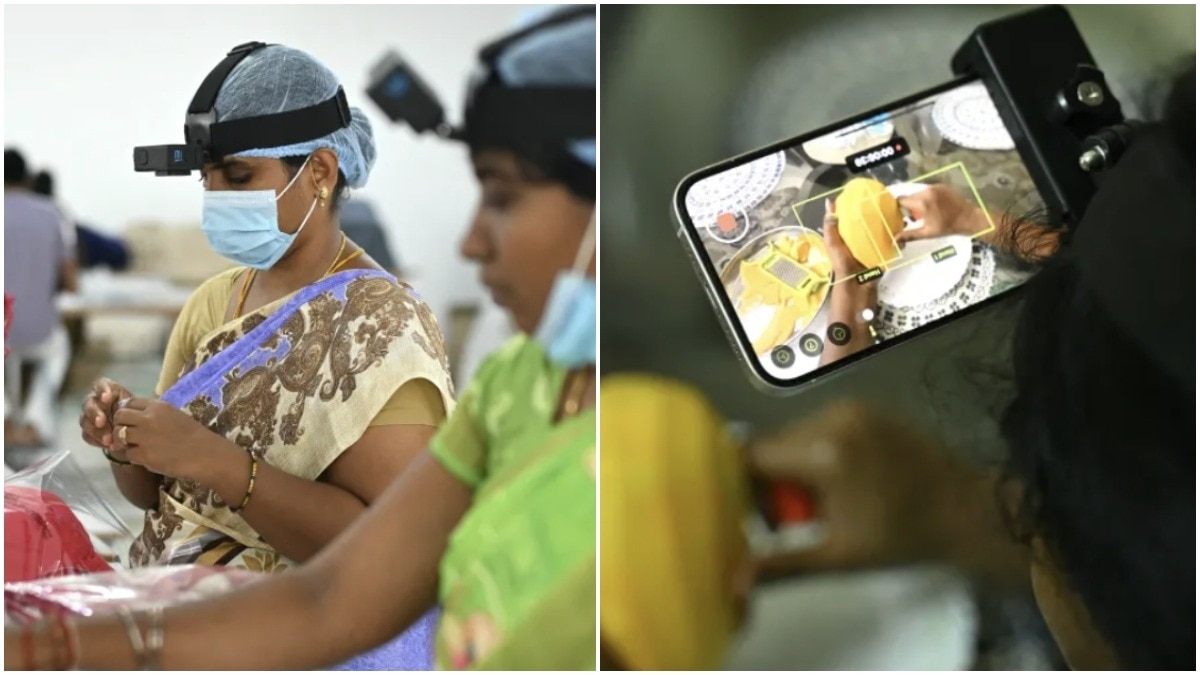
Indian homemakers and factory workers are strapping smartphones to their heads and filming everyday chores, from slicing mangoes to making flower garlands, as part of a growing effort to train artificial intelligence-powered robots that could one day replicate human actions, according to a report by AFP.
Among them is 25-year-old Nagireddy Sriramyachandra from Chennai, who spends an hour recording herself performing household tasks in exchange for Rs 250. Wearing a smartphone mounted on her head, she captures first-person footage of activities such as cutting fruits and working in the kitchen, data that is later used to teach robots how humans interact with the physical world.
Read Full Story
Watch the video here:
"Who else will give you 250 rupees an hour just for doing housework?" Sriramyachandra told AFP, adding with a smile that she might one day own one of the very robots she is helping train.
Unlike AI chatbots and image generators that rely on huge amounts of digital information, robots designed to navigate homes, factories and workplaces need something more, an understanding of how people move, grasp objects and perform tasks in real life. To bridge that gap, technology companies are increasingly turning to what is known as "egocentric data," videos captured from a person's perspective.
As reported by AFP, workers involved in this process use a variety of devices, including head-mounted cameras, motion sensors and smart glasses. Sriramyachandra said her recording setup even warns her whenever her hands are not properly visible in the frame.
She sends the footage through a dedicated application to an AI data company with offices in India and the United States. The firm counts several Fortune 500 corporations among its clients.
India has emerged as a major hub for the creation, processing and annotation of AI data, with thousands of workers contributing to the rapidly expanding ecosystem.
Experts believe demand for such services is likely to grow alongside the booming humanoid robot market, which is projected to have more than one billion robots in operation by 2050, primarily for industrial and commercial applications.
Digital labour expert Aditi Surie of the Indian Institute for Human Settlements in Bengaluru told AFP that data collection services linked to AI are expected to increase in the years ahead.
However, the rise of automation has also sparked concerns about its impact on employment.
India's government think tank NITI Aayog recently noted that conversations surrounding artificial intelligence and jobs tend to focus heavily on white-collar professionals and the possibility of job losses, while often overlooking the country's nearly 490 million informal workers.
Among those informal workers is 55-year-old Ponni, who has spent the past decade making flower garlands by the roadside in Bengaluru. According to AFP, she too has participated in the data collection effort, wearing a camera attached to her forehead while carrying out her craft.
advertisement
Ponni admitted that the technological shift worries her.
"The next generation ... who might have to do work similar to mine, they will face a problem," she told AFP.
The images of Indians going about ordinary tasks while wearing cameras may seem unusual today, but they represent a growing reality in the age of AI, one in which the routines of millions of workers are quietly becoming the blueprint for the robots of tomorrow.
- Ends