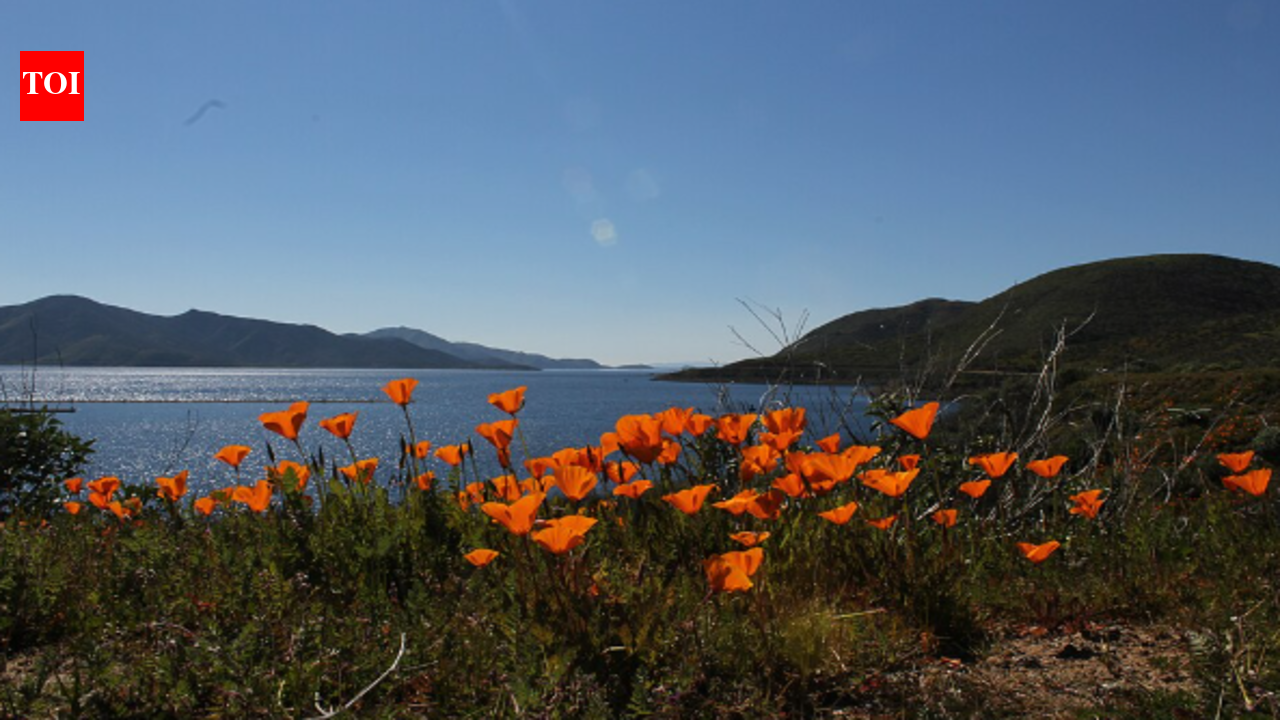
View of Diamond Valley Lake in Helmet, California.
Diamond Valley Lake's full capacity is 800,000 acre-feet, or about 264 billion gallons, nearly 1 trillion liters.
Diamond Valley Lake also assists the region in dealing with drought years.
There is also an Inland Feeder that supplies water from the State Water Project to the Diamond Valley Lake.
Beyond water security, Diamond Valley Lake is also a popular fishing spot.
View of Diamond Valley Lake in Helmet, California. Image credits: Wikimedia Commons
Site selection
A massive earthworks effort
Filling the reservoir
Need for the region
A reservoir built for long-term use
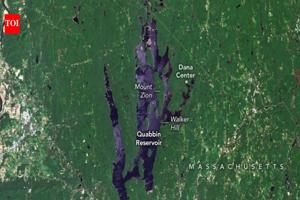
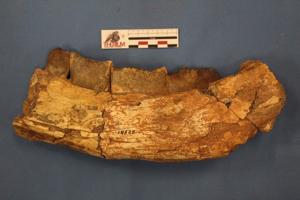
In 1995, the Metropolitan Water District of Southern California began construction on a reservoir project unlike anything the region had attempted before, as described in a NASA Jet Propulsion Laboratory feature on the creation of Southern California’s largest reservoir. The goal was straightforward: create enough water storage to protect nearly 19 million people across six counties from drought, earthquakes, and prolonged interruptions to the region’s imported water supply, according to the Metropolitan Water District and NASA’s overview of the project. What emerged from that effort, tucked between the Domenigoni and Diamond valleys near Hemet, became Southern California’s largest reservoir and one of the biggest earthworks projects in United States history.The process of selecting the site took more than four years and considered thirteen possible sites before finally choosing the Domenigoni and Diamond Valleys, which lie about 90 miles southeast of Los Angeles, as stated in the Metropolitan Water District. There were many advantages to this site. The site was almost equidistant from Los Angeles and San Diego, making it centrally located within the Metropolitan Water District's service area.The elevation of the site allowed water to move by gravity in some places, reducing energy costs and creating the possibility of future hydroelectric power. Most significantly, the surrounding terrain had enough soil and rock to build the dams needed to enclose the valley.Once construction began, the scale of the undertaking became clear. Crews excavated more than 40 million cubic yards of foundation material and moved an additional 110 million cubic yards of earth and rock to build embankments, work described by the Metropolitan Water District as one of the largest earthwork projects ever completed in the country. This material was used to construct three separate earthfill dams: the East Dam, the West Dam, and a smaller Saddle Dam on the north rim of the valley, as per the Metropolitan Water District. The East Dam alone rises 284 feet and stretches more than two miles. The project used two rock-processing plants that produced more material than any other commercial operation in California at the time. At the peak of construction in 1997 and 1998, about 1,800 people worked at the site each day, and at times the number topped 1,900.Excavation also led to an unusual scientific discovery. While digging the valley floor, workers found bones of mastodons, mammoths, giant long-horned bison, and North American lions. These animals were not previously known to have lived in the area. The discovery was so important that the Western Science Center was later built here.By 1999, most of the dams had been built, and water was being pumped into the basin from the Colorado River Aqueduct. Images taken by NASA's Terra satellite showed the reservoir's changing shape. A NASA Jet Propulsion Laboratory image from March 2000 shows the newly filling lake as a dark patch against the surrounding land, while a follow-up image from March 2001, six years after construction began, shows a marked increase in water coverage. According to NASA's caption, the lake's planned capacity was nearly a trillion liters, and the reservoir was already approaching that level.The lake would not attain its total capacity until 2003, as it required additional deliveries from the State Water Project to supplement the water received from the Colorado River Aqueduct. Diamond Valley Lake's full capacity is 800,000 acre-feet, or about 264 billion gallons, nearly 1 trillion liters. That amount alone would nearly double Southern California's above-ground surface storage capacity. Today, the reservoir's storage levels are tracked in real time by California's Department of Water Resources , which lists it among the state's major water storage facilities.Diamond Valley Lake has not been created just for regular daily supply. It was built to provide about six months of emergency water in case earthquakes or other disasters disrupt aqueduct deliveries from the Colorado River and Northern California. Diamond Valley Lake also assists the region in dealing with drought years. The reservoir helps reduce the need to pump water over the Tehachapi Mountains, especially during summer. Water supplied to the lake comes not only from the Colorado River Aqueduct. There is also an Inland Feeder that supplies water from the State Water Project to the Diamond Valley Lake. Construction of the Inland Feeder began in 1997 and ended in 2010.Almost three decades since the construction of the reservoir began, Diamond Valley Lake is still significant in terms of how the Metropolitan Water District handles risks within its region. Beyond water security, Diamond Valley Lake is also a popular fishing spot. It is home to fish species such as largemouth bass, rainbow trout, and bluegill. The reservoir's creation has also changed the landscape. It transformed two dry valleys into a lake 4.5 miles long and as deep as 250 feet. It began in 1995, when engineers set out to determine how to store enough water to protect millions of people during a prolonged emergency.