The two sides also agreed on a defence industrial roadmap for co-development and co-production of military platforms, and reaffirmed their goal of expanding bilateral trade.
The new framework builds on earlier strategic engagement and is designed to ensure structured, regular review mechanisms through ministerial-level dialogue.
The leaders emphasised strengthening supply chain resilience and encouraging collaboration between SMEs, financial institutions and venture capital ecosystems.
Both sides also agreed to set up an India–Italy Innovation Centre to connect startups, research institutions and industry.
They also reaffirmed commitment to the India–Middle East–Europe Economic Corridor (IMEC) and agreed to enhance cooperation on maritime security, including through a new structured dialogue mechanism.
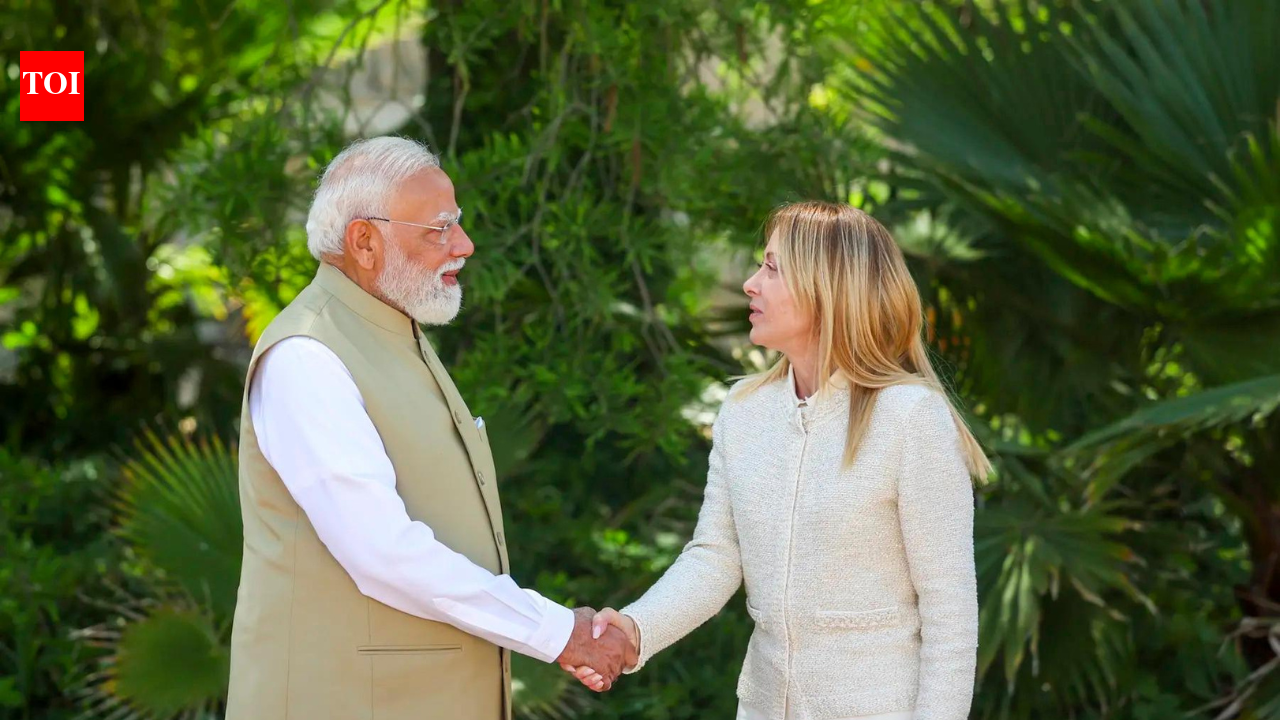
Modi and Meloni meeting
Key takeaways
Elevation to Special Strategic Partnership
Defence cooperation and security architecture strengthened
Trade target set, investment and supply chains expanded
Key MoUs signed
Technology, innovation and critical sectors push
Mobility, education and people-to-people links expanded
Global issues, connectivity and maritime security cooperation
India and Italy on Wednesday elevated their relationship to a Special Strategic Partnership as Prime Minister Narendra Modi and Italian Prime Minister Giorgia Meloni held extensive talks in Rome. The two sides also agreed on a defence industrial roadmap for co-development and co-production of military platforms, and reaffirmed their goal of expanding bilateral trade. The discussions focused on strengthening cooperation across defence, technology, trade, mobility and global security amid rising geopolitical uncertainty.The leaders reviewed progress under the India–Italy Joint Strategic Action Plan 2025–29 and agreed to establish a Foreign Ministers-led mechanism to periodically monitor its implementation. They also exchanged views on global conflicts, including West Asia and Ukraine, and called for dialogue and diplomacy while underlining the importance of maritime security and freedom of navigation.India and Italy formally upgraded their relationship to a Special Strategic Partnership, marking a higher institutional and political commitment to bilateral ties. The new framework builds on earlier strategic engagement and is designed to ensure structured, regular review mechanisms through ministerial-level dialogue. The decision comes in backdrop of growing convergence on global issues and increasing frequency of leadership-level interactions over recent years.Both sides described the upgraded status as a step that will give sharper direction to cooperation across priority sectors.India and Italy adopted a Defence Industrial Roadmap that lays the foundation for co-development and co-production of military platforms. The cooperation will focus on helicopters, naval platforms, marine armament and electronic warfare systems. Both sides also agreed to deepen defence industry collaboration and expand structured military-to-military engagement, including exchanges and joint initiatives.Both countries set an ambitious target of €20 billion in bilateral trade by 2029, backed by efforts to enhance investment flows and industrial partnerships. The leaders emphasised strengthening supply chain resilience and encouraging collaboration between SMEs, financial institutions and venture capital ecosystems. They also welcomed growing business engagement through multiple high-level business forums.India and Italy inked 10 MoUs spanning critical minerals, agriculture, maritime transport and marine products, alongside agreements on developing the National Maritime Heritage Complex at Lothal and cooperation on recruitment of Indian nurses.Cooperation was expanded in emerging technologies, including artificial intelligence, quantum computing, semiconductors, space and digital infrastructure. Both sides also agreed to set up an India–Italy Innovation Centre to connect startups, research institutions and industry. The focus will also extend to clean energy, critical minerals and advanced manufacturing.New frameworks were agreed for the mobility of students, researchers and skilled professionals, particularly in STEM fields. A specific mechanism for the facilitation of mobility of Indian nurses to Italy was also announced. Both sides also highlighted expanded academic cooperation and university partnerships under the broader innovation and education agenda.Both leaders expressed concern over conflicts in West Asia and Ukraine and reiterated support for resolution through dialogue and diplomacy. They also reaffirmed commitment to the India–Middle East–Europe Economic Corridor (IMEC) and agreed to enhance cooperation on maritime security, including through a new structured dialogue mechanism.