WHAT IS EL NINO?
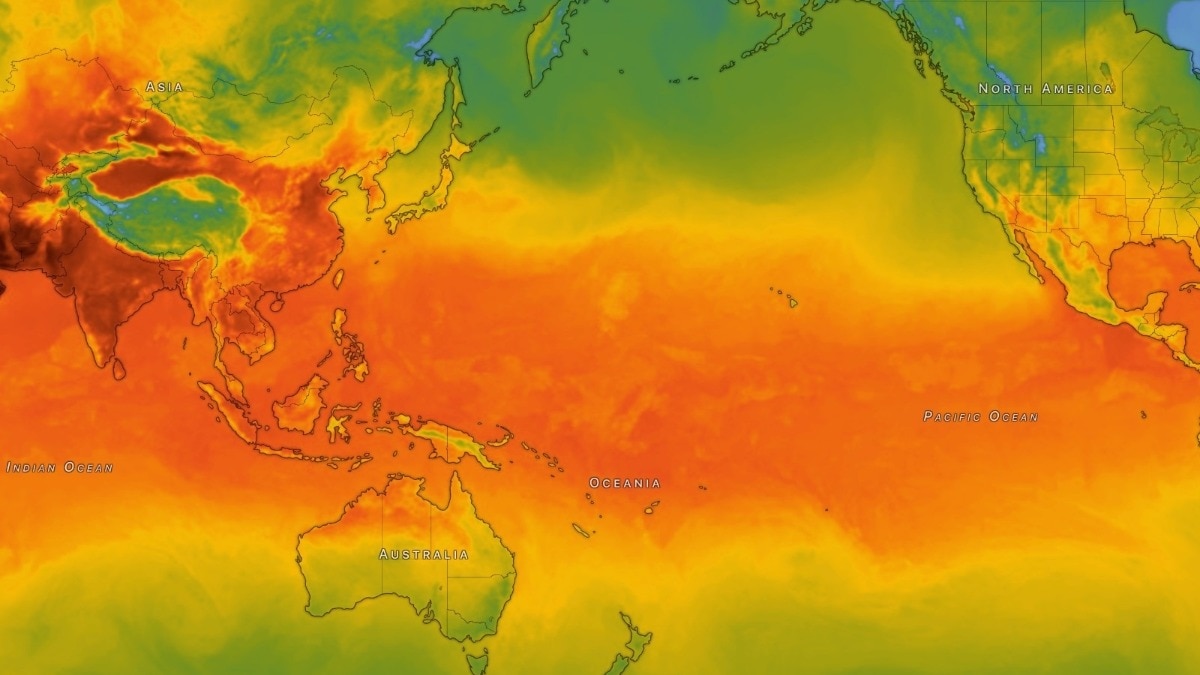
Pacific Ocean temperatures have crossed the critical El Nino threshold.
THE INDIAN MONSOON CONNECTIONFor us in India, the onset of El Nino is rarely a welcome development for the monsoon season.
El Nino pushes the Pacific jet stream, which is the fast-moving river of air high above the Earth, southward and further east.
As the season progresses, scientists will be monitoring how this Pacific warming interacts with other atmospheric drivers.
The Pacific Ocean is currently undergoing a significant transformation that has caught the attention of climate scientists worldwide.
According to the latest update from the European Centre for Medium-Range Weather Forecasts, or ECMWF, the tropical Pacific has officially crossed the critical temperature threshold that signals the onset of El Nino.
Notably, the European Space Agency, which collaborates closely with international meteorological organisations to monitor sea surface temperatures and atmospheric anomalies via its advanced satellite network, has been instrumental in providing the high-resolution data that confirms these warming trends.
Read Full Story
This climate pattern, which is known to influence global weather systems, is now firmly on the radar of meteorologists and disaster management agencies alike.
WHAT IS EL NINO?
To understand this phenomenon, one must think of the Pacific Ocean as a colossal, heat-distributing engine that regulates the Earth’s climate.
Under normal circumstances, trade winds, which are steady, prevailing winds blowing from east to west, push warm surface water towards Asia and Australia.
This movement creates a vacuum that allows cooler, nutrient-rich water to rise from the depths near the coast of South America, a process known to scientists as upwelling. Pacific Ocean temperatures have crossed the critical El Nino threshold. (Photo: Noaa)
El Nino, a Spanish term meaning little boy, represents a dramatic disruption of this cycle. During an El Nino event, these trade winds weaken or sometimes reverse direction entirely.
Consequently, the warm water that is usually confined to the western Pacific begins to surge back towards the Americas. This redistribution of heat acts like an enormous thermostat adjustment, which can alter rainfall patterns and temperature profiles across the entire planet.
THE INDIAN MONSOON CONNECTION
For us in India, the onset of El Nino is rarely a welcome development for the monsoon season. Historically, this climate pattern is strongly correlated with a weaker-than-normal monsoon, which can lead to reduced rainfall and significant challenges for our agricultural sector.
The timing of this year's development is particularly critical. As noted in the update, the monsoon reached the Kerala coast on June 4, which is three days later than the usual June 1 arrival date.
While veteran meteorologists like M Rajeevan have pointed out that atmospheric shifts associated with El Nino are already manifesting, an official declaration typically requires these conditions to persist for a period of at least three months.
Data from the Australian Bureau of Meteorology confirms that the Nino 3.4 region, a specific section of the central equatorial Pacific that serves as the primary gauge for these events, has seen temperatures rise above the 0.5 degrees Celsius threshold. El Nino pushes the Pacific jet stream, which is the fast-moving river of air high above the Earth, southward and further east. This shift brings wetter winters to the southern United States while leaving the north warmer and drier than usual.
This warming trend is a key indicator for potential climate volatility in the coming months.
The India Meteorological Department, or IMD, has already projected a below-normal monsoon this year, with expected rainfall at 90 per cent of the long-period average.
As the season progresses, scientists will be monitoring how this Pacific warming interacts with other atmospheric drivers.
The goal remains to provide accurate, timely information to help the country prepare for the potential heat and rainfall variations that often accompany El Nino.
- Ends