According to the report, dinosaur skeletons have emerged as a new alternative asset class, joining the ranks of rare artworks, sports franchises, and Fabergé eggs.
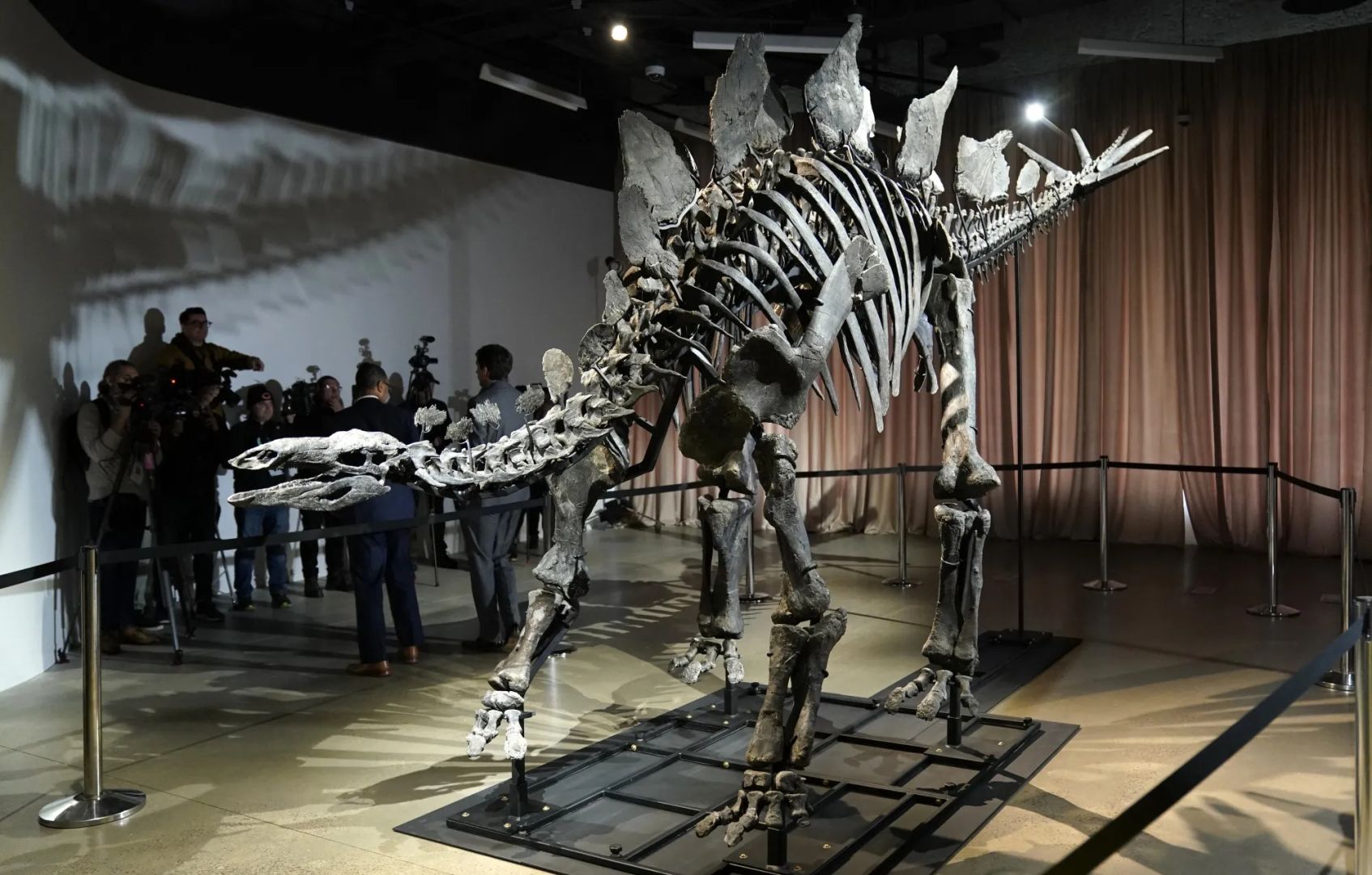
One of the most notable examples is Shen, a reconstructed dinosaur whose name means "godlike" in Chinese.
Bloomberg notes that value of a dinosaur fossil depends on a combination of provenance, authenticity, rarity, and buyer demand.
The report also highlights the rapid expansion of the fossil market over recent decades.
Wealthy investors are increasingly viewing dinosaur remains as investment assets in a market that remains largely unregulated.
18 July 2026 18:12 (UTC+04:00)
Ulviyya Poladova Read more
Dinosaur skeletons have become one of the world's most sought-after luxury collectibles, attracting billionaires, celebrities, and private investors willing to spend tens of millions of dollars on prehistoric fossils, AzerNEWS reports, citing Bloomberg.
According to the report, dinosaur skeletons have emerged as a new alternative asset class, joining the ranks of rare artworks, sports franchises, and Fabergé eggs.
One of the most notable examples is Shen, a reconstructed dinosaur whose name means "godlike" in Chinese. Estimated to be tens of millions of years old and longer than a city bus, the fossil was auctioned by Christie's in November 2022 alongside works by Pablo Picasso. The skeleton was expected to fetch between $15 million and $25 million.
Interest in dinosaur fossils had already surged before Shen's auction. In 2020, Christie's sold the famous Tyrannosaurus rex "Stan" for $31.8 million. Two years later, billionaire hedge fund manager Ken Griffin paid a record $44.6 million for the stegosaurus known as "Apex."
Bloomberg notes that value of a dinosaur fossil depends on a combination of provenance, authenticity, rarity, and buyer demand. The report also highlights the rapid expansion of the fossil market over recent decades. Wealthy investors are increasingly viewing dinosaur remains as investment assets in a market that remains largely unregulated. As private collectors dominate high-profile auctions, universities and museums often struggle to compete financially, leaving many scientifically important specimens outside the public domain.
Image: Timothy A. Clary/AFP/Getty Images