English NewsInternationalBangladesh Measles Outbreak: WHO & Unicef Warning | Children DeathsBangladesh measles outbreak kills over 1,000 children: Cases cross 1.94 lakh and rising despite mass vaccination drive12 hours agoCopy linkMeasles infected children receives treatment at the Infectious Diseases Hospital in DhakaAmist the worsening measles outbreak in Bangladesh more than 1,000 children have lost their lives, even as authorities race to contain the disease through one of the country's largest emergency immunisation campaigns, according to a BBC report citing government, World Health Organisation (WHO) and Unicef data.
A woman carries a child, who suffers from measles, for treatment at a hospital in Dhaka, Bangladesh, September 7, 2026.
A child suffering from measles receives treatment at a hospital in Dhaka, Bangladesh, September 7, 2026.
A woman sits with a girl infected with dengue who receives treatment at a hospital in Dhaka, Bangladesh, September 7, 2026.
A woman feeds a boy infected with dengue, while he receives treatment at a hospital in Dhaka, Bangladesh, September 7, 2026.
English News
International
Bangladesh Measles Outbreak: WHO & Unicef Warning | Children Deaths
Bangladesh measles outbreak kills over 1,000 children: Cases cross 1.94 lakh and rising despite mass vaccination drive
12 hours ago
Copy link
Measles infected children receives treatment at the Infectious Diseases Hospital in Dhaka
Amist the worsening measles outbreak in Bangladesh more than 1,000 children have lost their lives, even as authorities race to contain the disease through one of the country's largest emergency immunisation campaigns, according to a BBC report citing government, World Health Organisation (WHO) and Unicef data.
The outbreak, which surged in March 2026, has now infected more than 194,000 people, making Bangladesh the country with the highest number of reported measles cases in the world this year, according to WHO figures.
Health authorities continue to record around 1,000 new suspected cases every day, highlighting the scale of the challenge despite significant vaccination efforts.
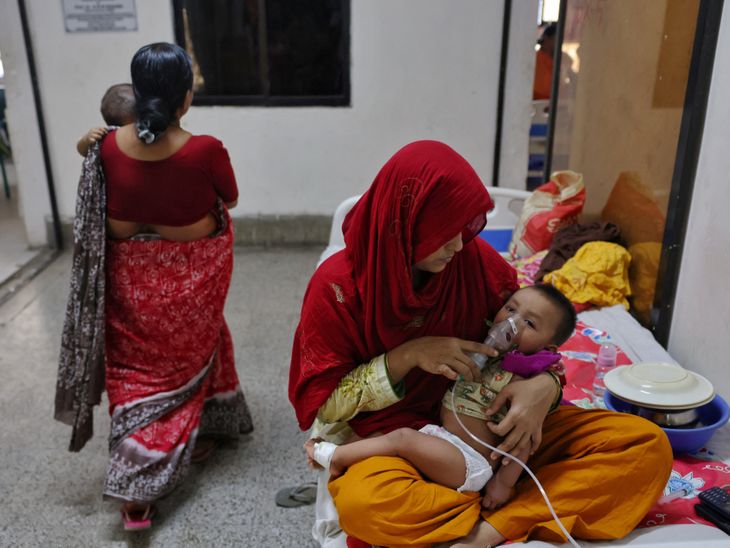
A woman carries a child, who suffers from measles, for treatment at a hospital in Dhaka, Bangladesh, September 7, 2026. REUTERS
Emergency campaign reaches nearly 2 core children
Bangladesh has already vaccinated more than 1.98 crore children as part of an emergency response programme. However, officials say the campaign has yet to reach all vulnerable children, allowing transmission to continue across the country.
According to Unicef, the government is preparing to enter an "intensified phase" of the vaccination drive on 26 September, with a renewed focus on children who remain unvaccinated.
The campaign comes after Bangladesh had been considered a success story in measles control. The WHO noted that the country had made "substantial progress" towards eliminating the disease until earlier this year.
That progress has now been reversed by an outbreak that has spread nationwide.
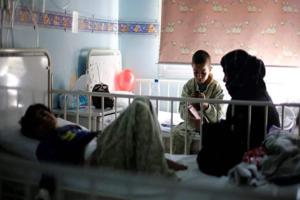
A child suffering from measles receives treatment at a hospital in Dhaka, Bangladesh, September 7, 2026. REUTERS
Eight more deaths reported in a single day
The human toll continues to mount. Government figures show that eight people with suspected measles died on Tuesday alone.
The outbreak has primarily affected children who have not received the measles vaccine. According to the WHO, around 83% of confirmed cases have been recorded among unvaccinated children.
A further 10% of cases involve infants younger than six months, a group that remains highly vulnerable during outbreaks because they are too young to receive routine vaccination.
A woman sits with a girl infected with dengue who receives treatment at a hospital in Dhaka, Bangladesh, September 7, 2026. REUTERS
Questions over vaccine supply
Unicef previously described the crisis as the result of a "perfect storm" of factors, including Bangladesh's dense population and disruptions to routine immunisation programmes during the Covid-19 pandemic.
The UN agency has also argued that the government led by Muhammad Yunus, Bangladesh's former interim leader, delayed vaccine procurement last year.
According to the BBC report, Unicef claimed the interim administration considered bringing in new suppliers despite warnings about the risks, resulting in vaccine shortages.
However, Yunus's former senior health ministry official rejected suggestions that there had been any shortage of vaccines.
A woman feeds a boy infected with dengue, while he receives treatment at a hospital in Dhaka, Bangladesh, September 7, 2026. REUTERS
Political turmoil forms backdrop
The outbreak has unfolded against a period of significant political upheaval in Bangladesh.
The country has experienced years of instability, culminating in student-led protests in 2024 that removed former Prime Minister Sheikh Hasina from power.
While health agencies have focused on vaccination and disease control, questions over administrative decisions during the political transition have added another dimension to the crisis.
Patients infected with dengue receive treatment at a hospital in Dhaka, Bangladesh, September 7, 2026. REUTERS
Hospitals under severe strain
The surge in infections has placed enormous pressure on Bangladesh's healthcare system.
According to BBC report, hospitals are struggling to cope with patient numbers. Families were seen lying on blankets on hospital floors, while one hospital reported operating at more than double its intended capacity.
At the time, Bangladesh's health minister acknowledged the strain but argued that such pressure was inevitable in a country with a population exceeding 170 million people. He said the government had already met the challenge and that case numbers were beginning to decline.
Since those remarks, however, a further 300 children have died.
WHO says outbreak spread before vaccination campaign
The WHO has defended the vaccination programme, describing it as successful overall while acknowledging important gaps. It also noted that some children targeted by the campaign were not reached.
Bangladesh is not alone in facing a resurgence of the disease. The United Kingdom, which had previously achieved measles-elimination status, lost that designation this year, while the United States has also recorded rising case numbers in recent years.
In both countries, vaccination rates among children under five remain below the 95% threshold required for herd immunity, a reminder that measles remains a global public health threat despite the availability of effective vaccines.