Scientists studying some of the oldest volcanic rocks on Earth have uncovered evidence that surface water was already sinking deep into the mantle more than 3 billion years ago.
Ancient rocks beat the oddsThe rocks lie in the Pilbara Craton, a slice of Western Australia containing some of the oldest crust on Earth.
Three kinds of lavaThe lavas sort into three chemical families, and together they resemble the mix erupted at modern volcanic arcs.
The models found that Whundo’s mantle contained water in the same range as the mantle beneath modern subduction zones.
Surface water was reaching the deep Earth 3.1 billion years ago, without the steady conveyor of plate tectonics to carry it downward.
Long before Earth’s tectonic plates began shuttling water into the deep interior, the young planet appears to have found another way.
Scientists studying some of the oldest volcanic rocks on Earth have uncovered evidence that surface water was already sinking deep into the mantle more than 3 billion years ago.
Instead of modern plate tectonics, the process may have relied on dense slabs of crust slowly dripping into the hot interior.
The findings suggest Earth’s surface and mantle began exchanging water and other materials far earlier than many researchers had thought.
That early exchange may have laid the groundwork for the volcanic activity and continental growth that still shape the planet today.
Ancient rocks beat the odds
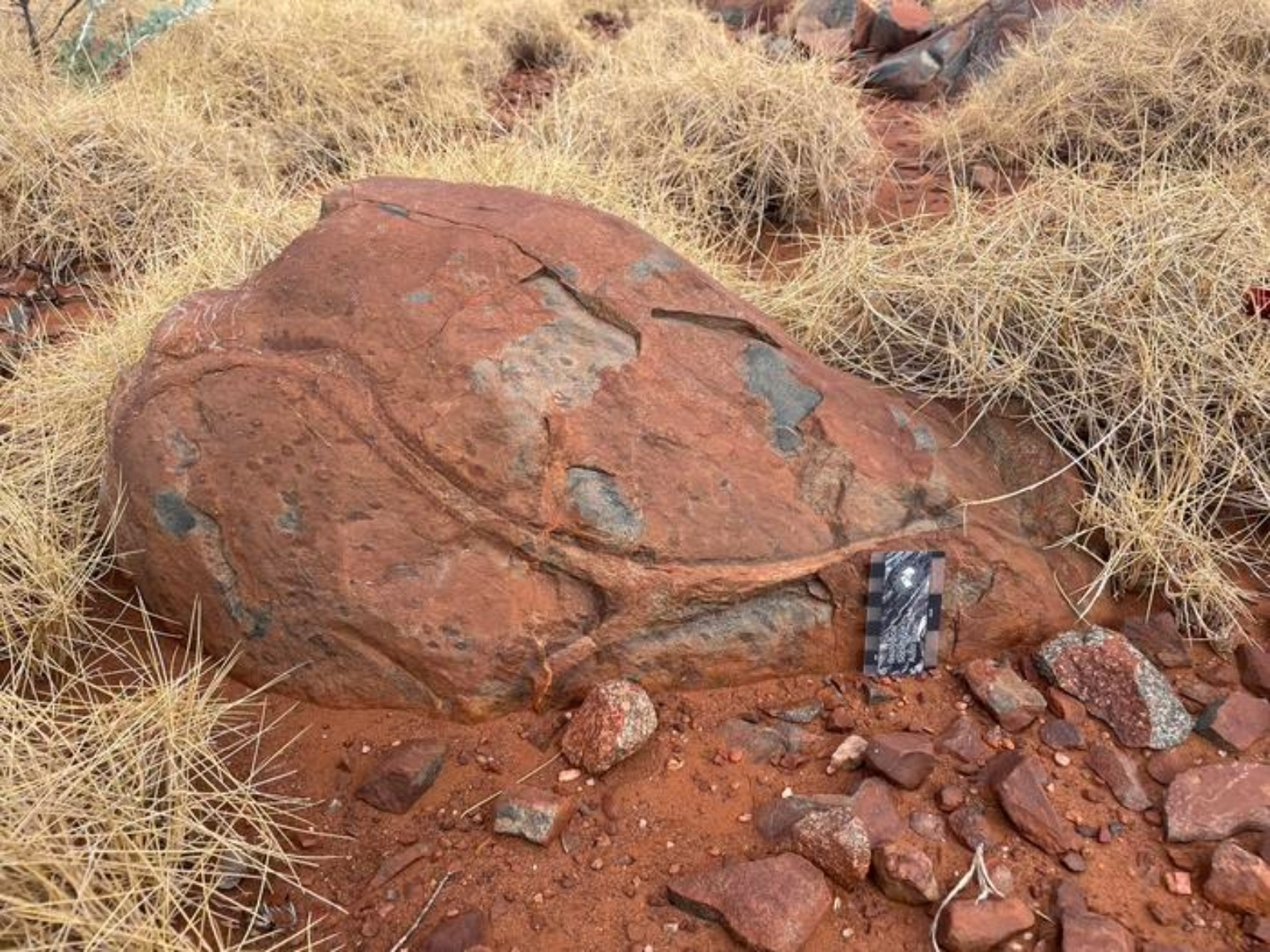
The rocks lie in the Pilbara Craton, a slice of Western Australia containing some of the oldest crust on Earth.
Very little rock from this early period has survived because later heat and pressure baked and crushed most of it, scrambling its original chemistry.
The Whundo Group, the sequence of ancient lava studied here, escaped much of that damage. Its basalts still preserve the crystals and glassy textures they formed with as they cooled.
One clue stands out. Rounded pillows of lava are speckled with dark spots that form only when the lava is rich in water.
Clues from the ancient crust
Dr. Eric Vandenburg, a geochemist at Adelaide University who led the international team, has spent years piecing together how the Pilbara formed.
His group sampled a stack of these lavas more than 6 miles thick. Deposited over roughly 20 to 30 million years, the rocks preserved the chemistry needed to reconstruct what was happening far below the surface.
The preservation still amazes him. In an email to Earth.com, Vandenburg said, “I’ve seen rocks younger than the extinction of the dinosaurs that have poorer preservation.”
Earth was a very different place when these rocks formed. The planet was hotter, its outer shell was weaker, and the rigid plates that now slide over the mantle had not yet developed.
Three kinds of lava
The lavas sort into three chemical families, and together they resemble the mix erupted at modern volcanic arcs.
These are chains of volcanoes, like those ringing the Pacific, that form where one slab of crust dives beneath another and sinks into the mantle.
During subduction, Earth’s crust plunges into the mantle, carrying surface water deep into the planet’s interior.
Two of the three lava types – one ordinary basalt and one water-rich variety typical of volcanic arcs -showed the team that water-driven melting helped produce them.
Arc-like chemistry on its own has long been a shaky guide to early Earth tectonics because similar signatures can form without any subduction at all.
Recent experiments on 3.5-billion-year-old Pilbara rocks found that the planet’s oldest continental crust could have grown in shallow settings just as readily as in subduction-like ones.
The third family is the most revealing. Called boninites, these unusual lavas form during the early stages of a subduction zone.
There, water is forced into hot mantle rock. The Whundo examples make up the oldest widespread deposit of boninites known on Earth.
How water reached the mantle
The harder question was how the water reached the mantle at all, since subduction as we know it could not yet operate on the hotter, softer early Earth.
An earlier study of these same rocks interpreted them as clear evidence of modern-style subduction. But a hotter planet would have made it difficult for rigid plates to sink into the mantle.
The team’s answer is a process they call dripduction. Instead of long plates sliding steadily beneath one another, dense slabs of cool, waterlogged crust sagged and dripped into the hotter mantle in short bursts.
No lasting plate boundaries formed, and the sinking crust repeatedly broke apart as it descended.
In the model, each sinking drip released its water into the surrounding mantle. That water lowered the rock’s melting point and triggered the melting that produced the arc-like magmas.
By the team’s reckoning, the sinking crust supplied up to 90 percent of some of the chemical ingredients in the melting mantle.
The mantle held more water
What makes the result stand out is the sheer amount of water involved. The models found that Whundo’s mantle contained water in the same range as the mantle beneath modern subduction zones.
That was unexpected. Most ancient volcanic rocks formed from a much drier mantle. The overlap with modern volcanic arcs strengthens the team’s case.
Asked by Earth.com how much water that required, Vandenburg said, “To generate the lavas we studied, the mantle beneath this part of the Pilbara had to be about as water-rich as the mantle beneath modern volcanic arcs. That was the surprising part.”
Surface water reached deep Earth
Whatever exactly drove the drips, the takeaway is clear. Surface water was reaching the deep Earth 3.1 billion years ago, without the steady conveyor of plate tectonics to carry it downward.
That complicates a long-running debate. Some researchers, using computer modeling of other ancient Pilbara rocks, have argued that Earth’s first stable continents grew without subduction, beneath a single unbroken shell.
The water-carrying drips offer a middle ground, suggesting that the surface and deep interior were already exchanging material long before modern plate tectonics emerged.
Rewriting Earth’s early history
The idea reaches well beyond one Australian outcrop. Water moving into the mantle helps drive volcanic eruptions, fuels the slow growth of continents, and cycles the chemical ingredients that living things rely on.
It may also help explain what happened to much of Earth’s early evolved crust. Thin, water-rich crust like Whundo’s is easily dragged back into the mantle and destroyed.
That would leave little trace in the rock record, even if the process once operated across much of the young planet.
Vandenburg told Earth.com, “It doesn’t rewrite what we know, but it pushes the deep recycling of surface water back earlier than many would have expected.”
On this view, the young planet was already pulling its own water back underground, making Earth a restless, interconnected world far earlier than the rock record alone would suggest.
The study is published in the journal Nature Communications.
Image credit: Adelaide University
—–
Like what you read? Subscribe to our newsletter for engaging articles, exclusive content, and the latest updates.
Check us out on EarthSnap, a free app brought to you by Eric Ralls and Earth.com.
—–