'It is to observe the Sun continuously that you have the Aditya L1 mission.'
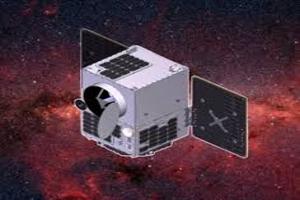
IMAGE: Minister of Earth Sciences Kiren Rijiju tweets this picture on X, 'ISRO's Solar Mission Aditya-L1 entering Halo Orbit', January 6, 2024.
Photograph: ANI PhotoIt was in 2023 that ISRO launched its highly ambitious space mission, Aditya L1, India's first dedicated space-based solar observatory designed to study the Sun.
Why L1 MattersHow important was the Aditya L1 mission, and how exciting was the data from the mission for scientists?
As far as the Aditya L1 mission is concerned, as the word L1 in the title indicates, it is about the Lagrange L1 Point.
'It is to observe the Sun continuously that you have the Aditya L1 mission.'
'It is in a position from where it can observe the Sun continuously.'
IMAGE: Minister of Earth Sciences Kiren Rijiju tweets this picture on X, 'ISRO's Solar Mission Aditya-L1 entering Halo Orbit', January 6, 2024. Photograph: ANI Photo
It was in 2023 that ISRO launched its highly ambitious space mission, Aditya L1, India's first dedicated space-based solar observatory designed to study the Sun.
Unlike the earlier NASA and ESA sun missions, Aditya L1 is positioned at the Sun-Earth Lagrange Point 1 (L1) to have an uninterrupted view of the sun without the eclipses or occultation.
With plenty of data to study, Aditya L1 is considered as a very successful space mission.
Professor R Ramesh is Senior Professor at the Indian Institute of Astrophysics and Principal Investigator for the Visible Emission Line Coronagraph (VELC) payload on the Aditya-L1 mission.
"The biggest advantage of having an observatory, a spacecraft, observing the Sun in the Lagrange L1 point is, unlike what we see on the Earth where we have this day-night cycle, the Sun rising in the morning and setting in the evening, in the Lagrange L1 point, you continuously see the Sun," Professor Ramesh tells Rediff's Shobha Warrier.
Key Points Aditya-L1 is India's first dedicated solar observatory positioned at the Sun-Earth L1 point for uninterrupted observation.
Its VELC payload captures coronal mass ejections closer to the Sun than earlier missions like SOHO.
Scientists are studying how solar eruptions affect satellites, power grids and Earth's magnetic field.
The mission also aims to solve the long-standing mystery of why the Sun's corona is millions of degrees hotter than its surface.
All mission data is shared with the global scientific community to improve space weather forecasting.
Why L1 Matters
How important was the Aditya L1 mission, and how exciting was the data from the mission for scientists?
As far as the Aditya L1 mission is concerned, as the word L1 in the title indicates, it is about the Lagrange L1 Point.
L1 is the direct line between the Sun and Earth, about 1.5 million kilometres away from the Earth toward the Sun.
The biggest advantage of having an observatory, a spacecraft, observing the Sun in the Lagrange L1 point is, unlike what we see on the Earth where we have this day-night cycle, the Sun rising in the morning and setting in the evening, in the Lagrange L1 point, you continuously see the Sun.
In short, there is no day-night cycle there.
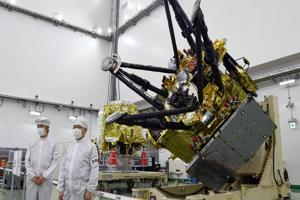
IMAGE: My Gov India shared this picture as the Indian Space Research Organisation maiden solar mission, Aditya-L1 enters the final manoeuvre to reach its destination and injected into its final orbit, January 6, 2024. Photograph: ANI Photo
Tracking Solar Storms
Because of its positioning?
Yes, that is correct. It's because of the exact positioning that you are able to observe the Sun 24 hours a day, all the 7 days a week, and all the 365 days in a year.
This type of continuous observation is very important in the study of the Sun because there are a large number of the eruptive phenomena that take place in the Sun's atmosphere, which we call as the Coronal Mass Ejections (CMEs).
The mass of Coronal Mass Ejections can be 10 to the power of 15 grams.
And it can travel at the maximum speed of 3,000 kilometres per second all the way up towards earth.
Of course, there can be CMEs with lower speeds also.
Typically, it carries an energy of approximately 10 raised to the power of 30 Ergs.
Though the Coronal Mass Ejections can take place anywhere on the surface of the Sun, near the centre of the Sun and also on the edge of the Sun.
When I say the edge of the Sun, it is the edge of the Sun visible to us.
When these Coronal Ejections occur on the Sun, the material that is thrown out from the Sun can travel in any direction from the Sun.
Those eruptions which take place near the centre of the Sun, travel straight towards the Earth because it is the Sun-Earth line direction.
If you consider the distance between the Sun and the Earth as approximately 150 million kilometres, and if you say the CME travels at the speed of 3,000 kilometres per second, you see that the fastest CME can reach the nearest space in approximately 15 hours' time.
In space we have these satellites, the geostationary satellites, geosynchronous satellites, etc. and for the satellites to function effectively, you have sunshield panels.
The CMEs are charged particle cloud which we also call as magnetic cloud.
When the charged particle cloud reaches the satellites, it can surround the satellites and create problems for the electronics of the satellites.
They may not function properly after that.
Will it completely destroy satellites?
It will not physically damage satellites, but it can damage the electronics without which the satellites cannot function.
Today, we rely so much on the satellites for TV broadcasts, mobile communication, weather forecast, etc.
IMAGE: CME: Close-up view of the Sun's corona beyond the western hemisphere of the Sun's photosphere, obtained with VELC onboard Aditya-L1.
Left and right panel images are before and after the eruption of a coronal mass ejection (CME) from the Sun, respectively.
The reduced brightness of the corona in the aftermath of the CME can be seen in the lower right quadrant of the right panel image.
The semi-circular black patch at the center of the two images are due to the occultation of the western hemisphere of the Sun's photosphere similar to a total solar eclipse. Photograph: Kind courtesy Professor R Ramesh
What happens when the CMEs reach the Earth?
You must have learnt in school that a magnet has a magnetic field line that starts from the North Pole and ends on the South Pole.
This magnetic field line is like a cocoon, a protective shield and nothing can penetrate this magnetic field lines.
Similarly, if you consider the Earth as a very big magnet, with a North Pole and a South Pole, the Arctic region and the Antarctic region, and the magnetic field line protects the Earth from the charged particles from the Sun.
But what happens in the polar regions, particularly in the North Pole where the magnetic field line starts, there is a chance for these charged particles to come inside.
It means those charged particles can travel along, along the magnetic field lines of the Earth.
The auroras are a clear indication that the charged particles from the Sun are reaching all the way up to the Earth's atmosphere. These auroras are beautiful manifestations.
But when the Coronal Mass Ejection happens, the charged particles can be more energetic and when they come inside the Earth's magnetic field lines, they can disturb the Earth's geomagnetic field.
Then all these power transformers or the underground pipelines, can get affected.
We cannot be observing the CMEs for only 10 hours a day or 8 hours a day.
That is why to study the Coronal Mass Ejections, continuous observation of the Sun is very important.
It is to observe the Sun continuously that you have the Aditya L1 mission.
It is in a position from where it can observe the Sun continuously.
IMAGE: A NASA cutaway illustration reveals the Sun's internal structure -- from the energy-generating core through the radiative and convection zones to the photosphere, chromosphere and corona -- while also highlighting dynamic features such as sunspots, solar flares, prominences and coronal holes. Photograph: Kind courtesy NASA
VELC's Big Breakthrough
Are the Sun missions from other countries also doing the same thing? Is Aditya L1's position different from the others?
Yes.
There is a mission called SOHO (Solar and Heliospheric Observatory) which was launched by ESA and NASA in 1997.
But before we talk about other missions, I have to explain something else.
We spoke about the Coronal Mass Ejections as erratic activities that take place in the corona of the Sun.
The Sun has three layers. The layer which we see when we look up at the sky is called the photosphere.
Above the photosphere, for about 2000 kilometres thickness is the chromosphere.
Above the chromosphere is corona, which we see only during a total solar eclipse.
How wide the Corona is, nobody knows. It is very vast.
So, if you want to see the Corona, you have to wait for a total solar eclipse which occurs only once or twice a year. And it can happen in any place of the world, and the totality phase will last only for 5 or 7 minutes maximum.
Now, how does a total solar eclipse occur?
When the Moon comes between the Sun and the Earth.
Though the Moon is much smaller in size compared to the Sun, when the angle subtended by the Moon and the angle subtended by the Sun are the same, a small-sized moon is able to fully cover the large-sized Sun.
It also means if we artificially cover the Sun, you can see the Corona on any given day.
That instrument is called the Visible Emission Line Coronagraph (VELC).
Visible Emission Line Coronagraph is the primary payload on Aditya L1 mission.
When you try to artificially cover the sun disc, because of various practical reasons, you will be covering a larger size.
For example, the photosphere has got a certain diameter, but you may be covering an area which is two or three times bigger than the edge of the photosphere.
Assume the Corona starts from the edge of the photosphere, and you cover three times bigger than the edge of the photosphere. It means, you are covering some portion of the Corona also from where these eruptions start.
The SOHO mission had 2.5 times bigger than the sun's size.
Naturally, you will not be able to see the edge of the photosphere. So, you will not see the corona which is very close to the edge of the photosphere.
What the Aditya L1 has done is, unlike the SOHO mission where it is 2.5 times bigger, it covered the sun.
So, with the help of the observation telescope VELC, you can see the coronal mass eruptions very close to the photosphere from where they originate.
IMAGE: ISRO shared the first-ever full disk images of the Sun in near ultraviolet wavelengths, captured by the Aditya-L1 spacecraft. The images include the first-ever full-disk representations of the Sun in wavelengths ranging from 200 to 400 nm. Photograph: ANI Photo
Solving Corona Mystery
Was it studying the CMEs the main intention of Aditya L1 Mission because the CMEs can come to the earth and they can also destroy the satellites?
Scientists are trying to understand the sun-earth connection, and this field is called space weather which refers to the changing environmental conditions in the space between the sun and the earth, driven primarily by solar activity
And we are trying to understand the reason for the disturbances because of the sun. It is now very clear that the space weather disturbances are because of the CMEs.
For example, if you consider agencies like NASA, they spend a lot of money to understand space weather, because there are a lot of satellites out there as part of various space programmes. Similarly, ISRO also has a lot of satellites in the space.
So, understanding or studying space weather is one of the main goals of the Aditya L1 Mission.
Also, at the photosphere of the sun, the temperature is approximately 6,000 degrees Kelvin whereas the temperature of the Corona is about a million degrees Kelvin.
When we are moving away from a hot body, the temperature should decrease but here the temperature increases from 6,000 to 1 million Kelvin.
This is called as the coronal heating problem, and it is long-standing mystery why the Sun's outer atmosphere, the Corona is millions of degrees hot while the visible surface below, the photosphere is much cooler.
So, this is another mystery which scientists are trying to understand.
Future Space Weather
What were you able to learn about the CMEs?
During the solar minimum period, we get only maybe one or two CMEs per day.
But during the solar maximum period, we get as many as 10 CMEs per day.
Whether all the CMEs come inside the earth's magnetic field or only a few CMEs come inside is another interesting problem.
There are around seven instruments in this mission. Using the data coming from Aditya L1, we are trying to understand what type of CMEs can come into the Earth's magnetic field, why some CMEs come, and why some CMEs do not come.
If there are 10 CMEs, will all of them come towards the Earth?
That is again a million dollar question because the CMEs can happen anywhere in the sun. It can happen at the edge of the circle, it can also happen at the centre of the circle.
But only those CMEs that are near the centre of the Sun have a higher probability of coming towards the Earth.
Then, the CMEs can be of different types. Like I said earlier, the mass of a CME is 10 to the power of 15 grams, and its speed can be 3,000 kilometres per second.
Some of the CMEs can be big CMEs that can fade away even before reaching the earth's atmosphere.
We need to understand all this. So, you need to have observations of events taking place near the sun and observations happening elsewhere in the Sun-Earth distance also.
So, we need different types of instruments with which we can get an overall picture of what is happening.
Are you also studying in what way the CMEs can affect the earth or human beings or the satellites?
As far as the Aditya-L1 mission is concerned, we are not in a position to find that out as we don't have enough database.
First thing we need to understand is, what type of CMEs are coming inside, why some CMEs are coming, why some CMEs are not coming.
Only when we have a larger statistics on all these details, we can go to the next level and answer the questions you asked.
IMAGE: Professor R Ramesh. Photograph: Kind courtesy Professor R Ramesh IMAGE: Professor R Ramesh.
How far has the study of the sun advanced globally? Are the studies of all missions shared by all the countries?
Whatever data that is obtained using either the Aditya-L1 mission or the NASA-ESA mission, is immediately shared to the international community via their respective web sites.
It was in 1972 or 1973 a that a Corona satellite mission was put in the space for the first time.
And the first space instrument was put in space around 1973. Only in 1973, we came to know about something called the CMEs. Before that, nobody was aware of the CMEs.
From 1973 to 2026, it has been 53 years of study.
Earlier, the size of the occulter in the sun mission was very, very large.
Now we have reached a stage where we are able to create an artificial eclipse kind of situation.
The point is, with each mission, we have improved to the level of creating an occulter the size of which is almost the same as that of the photosphere, which was not the case earlier.
By observing several CMEs, we are now able to understand what the mass of the CME is, what the energy of the CME is, how many CMEs take place in a day during a sunspot minimum period, during a sunspot maximum period, how many of them are coming towards the earth, etc.
With each data, our understanding is becoming better.
Probably, in another decade or so, we will be in a much better position to move on to the next level and pinpoint, this is the CME that is going to come to the earth, and if it is going to come to the earth, what type of disturbance it can cause.
We are slowly going towards an age where technology is the boss.
When I say technology is the boss, I am talking about, for example, our conversation.
It is not a landline connection of earlier days.
Your call has gone to a satellite up there and from the satellite, it is coming to me.
Imagine while we are talking, the satellite goes out of control because of a CME.
How the CMEs affect the technology is very important for the mankind. That is why we call the CMEs as a socio-economic problem.
You put some hundreds of satellites out there in space spending millions of rupees and suddenly the satellite stops working because of the CME. Then, it is an economic problem.
Coming to the social aspect, satellites are needed for weather forecast, whether there is going be an earthquake or a flood, etc.
How the technology which is in the sky can be affected by the CMEs is one of the interesting things we need to understand fully.
For the upcoming generation, it is going to be a very exciting time because what we have is a unique dataset which was not available before.
Feature Presentation: Ashish Narsale/Rediff