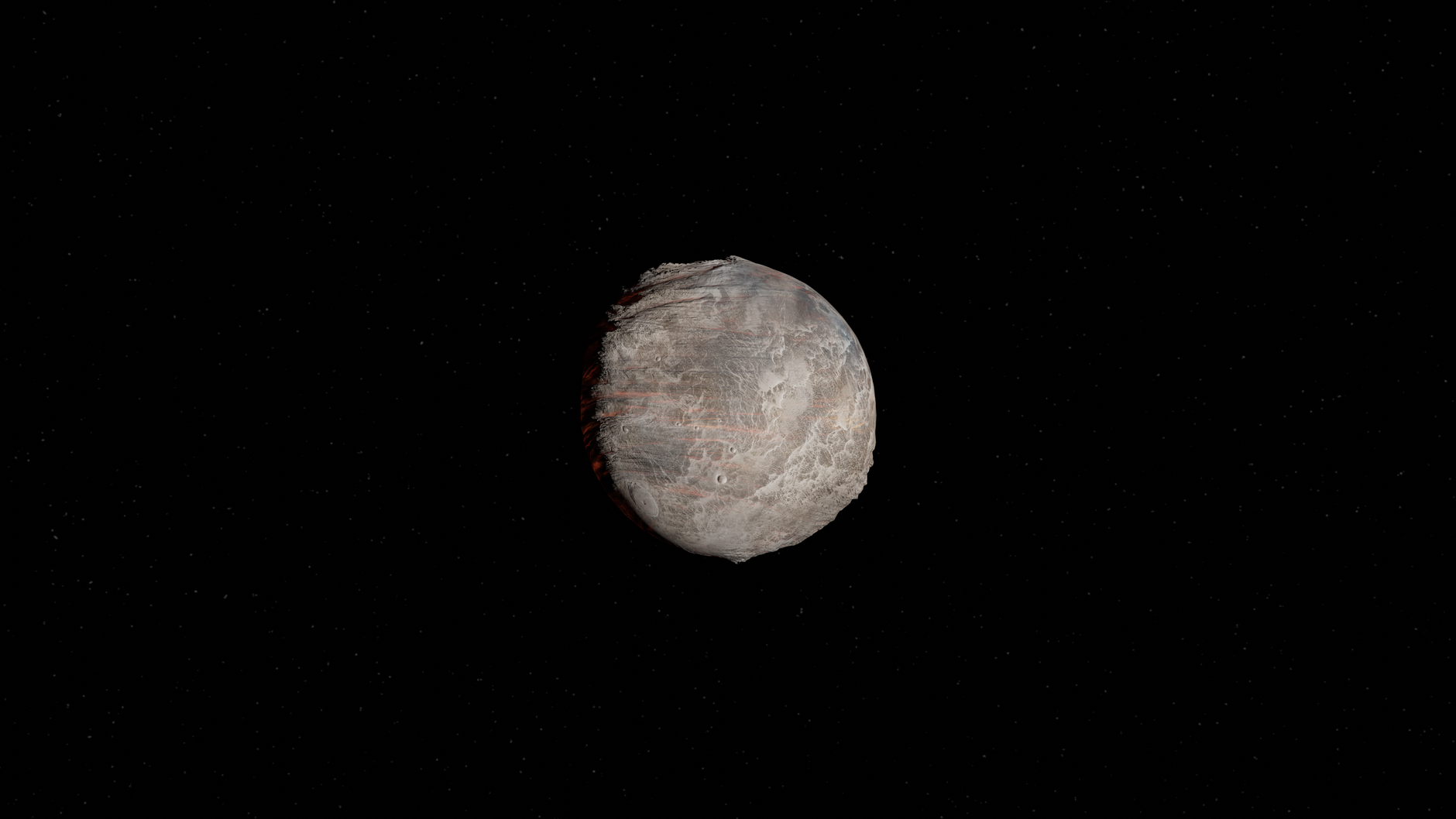
A very close neighbourThe planet is called Gliese 3378 b, and it orbits a red dwarf star, Gliese 3378, about 25 light-years away in the northern sky.
The Milky Way is around 100,000 light-years across, so a star 25 light-years off is practically on the doorstep.
Moving from 5.3 to 2.3 takes Gliese 3378 b from sitting on that fence to landing clearly on the rocky side.
Answering those will decide whether Gliese 3378 b is a promising target in the search for life or simply a tantalising near miss.
For the moment it is a close, likely rocky world sitting in the right place, which is reason enough to keep looking.
A planet just 25 light-years away, already known to sit in the narrow band where liquid water could exist, has been reassessed by astronomers led by the University of California, Irvine. Their new figure for its mass is about 2.3 times that of Earth, lighter than earlier estimates, and light enough that the world looks less like a gas-shrouded mini-Neptune and more like solid rock.
The distance and the location are the firm parts. The revised mass is a genuine measurement. The rocky nature is the reasonable inference that follows, and it is worth being clear about which is which.
A very close neighbour
The planet is called Gliese 3378 b, and it orbits a red dwarf star, Gliese 3378, about 25 light-years away in the northern sky. In cosmic terms that is next door. The Milky Way is around 100,000 light-years across, so a star 25 light-years off is practically on the doorstep.
Gliese 3378 b circles its star every 21.45 days. Around a small, cool red dwarf, an orbit that tight still lands in the habitable zone, the region where a planet receives roughly the right amount of warmth for liquid water to be possible on its surface. By the team’s reckoning the planet gets about 90 per cent of the starlight that Earth gets from the Sun, close to the middle of that comfortable range.
Why the mass matters
Mass is the number that shifted, and it matters more than it might sound. Astronomers measure it by watching the tiny wobble a planet’s gravity induces in its star, a technique called the radial velocity method. For this work the team used two specialised instruments, the Habitable-zone Planet Finder in Texas and the NEID spectrometer in Arizona.
An earlier estimate had put the planet at around 5.3 Earth masses. The refined analysis brought that down to about 2.3. That change matters because roughly five Earth masses is a rough dividing line between two kinds of world. Below it, planets tend to be rocky super-Earths. Above it, they tend to be mini-Neptunes, wrapped in thick, hazy envelopes of light gas. Moving from 5.3 to 2.3 takes Gliese 3378 b from sitting on that fence to landing clearly on the rocky side.
Likely rocky, not yet proven
This is where care is needed. A lower mass makes a rocky composition more likely, but mass on its own does not prove that a planet has a solid surface.
To be certain you also need the planet’s size, which lets you work out its density, and density is what really separates rock from gas. That size comes from watching a planet cross the face of its star, and this world was found by the wobble method rather than by such a crossing. So the rocky picture is a strong statistical bet, based on how worlds of this mass usually turn out, rather than a direct measurement of solid ground.
Habitable zone is not the same as habitable
It is also worth separating the habitable zone from actual habitability. Sitting in the zone means the planet could hold liquid water if it has a suitable atmosphere. It is a necessary condition, not a promise.
The largest open question here is whether Gliese 3378 b has an atmosphere at all. The researchers describe it as straddling the “cosmic shoreline”, the rough boundary between worlds that can keep an atmosphere and those whose air is stripped away by their star’s radiation. Red dwarfs can be fierce, especially toward planets orbiting as close in as this one, and the fate of Mars, which appears to have lost a once-thicker atmosphere, is a reminder that being the right distance from a star is not enough on its own. As one of the team put it, scaled down to the size of an apple, Earth’s life-supporting atmosphere would be no thicker than the apple’s skin.
Why 25 light-years is the real prize
The proximity is what makes this more than a statistic. Red dwarfs make up around 70 per cent of the stars in the galaxy, so understanding the planets around them is central to understanding planets at all. And a rocky, habitable-zone world only 25 light-years away is a rare thing: close enough that future observations have a genuine chance of probing it, rather than merely cataloguing it.
What to watch
The mass revision is a beginning, not a conclusion. The questions that matter now are whether the planet’s size can be pinned down so that its density and composition can be confirmed, whether it holds an atmosphere, and how active and harsh its star is. Answering those will decide whether Gliese 3378 b is a promising target in the search for life or simply a tantalising near miss. For the moment it is a close, likely rocky world sitting in the right place, which is reason enough to keep looking.