Developing unconventional oil resources requires stable surface facilities for separating highly viscous oil–water–gas mixtures.
Therefore, we investigate whether oil pad morphology can serve as a practical indicator of separation efficiency.
The results demonstrate that separation efficiency decreases with increasing water outlet pressure for all inlet conditions.
Analyzing the morphology of the three-dimensional oil pad near the weir reveals that high-efficiency cases feature a laterally continuous oil pad, whereas low-efficiency cases exhibit sidewall thinning, creating preferential water pathways.
Stable separation is successfully achieved when the height of the oil pad bottom remains below 95.4% of the weir height.
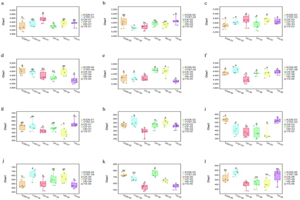
Developing unconventional oil resources requires stable surface facilities for separating highly viscous oil–water–gas mixtures. Horizontal three-phase gravity separators are widely used but their performance remains limited because separation failure is governed by residence time, bulk operating conditions, and even internal phase redistribution near the weir. Therefore, we investigate whether oil pad morphology can serve as a practical indicator of separation efficiency. Three-dimensional CFD simulations were performed for 16 operating cases by varying inlet flow rates and water outlet pressures. The phase interactions were accurately described by combining the Eulerian multiphase model with the k–ε turbulence and interfacial area concentration models. The results demonstrate that separation efficiency decreases with increasing water outlet pressure for all inlet conditions. Analyzing the morphology of the three-dimensional oil pad near the weir reveals that high-efficiency cases feature a laterally continuous oil pad, whereas low-efficiency cases exhibit sidewall thinning, creating preferential water pathways. Stable separation is successfully achieved when the height of the oil pad bottom remains below 95.4% of the weir height. Furthermore, wider pads correlate to better efficiency, and an empirical correlation based on outlet-pressure ratio and oil-pad width reproduces the CFD-derived separation efficiencies with an MAE of 2.70%.