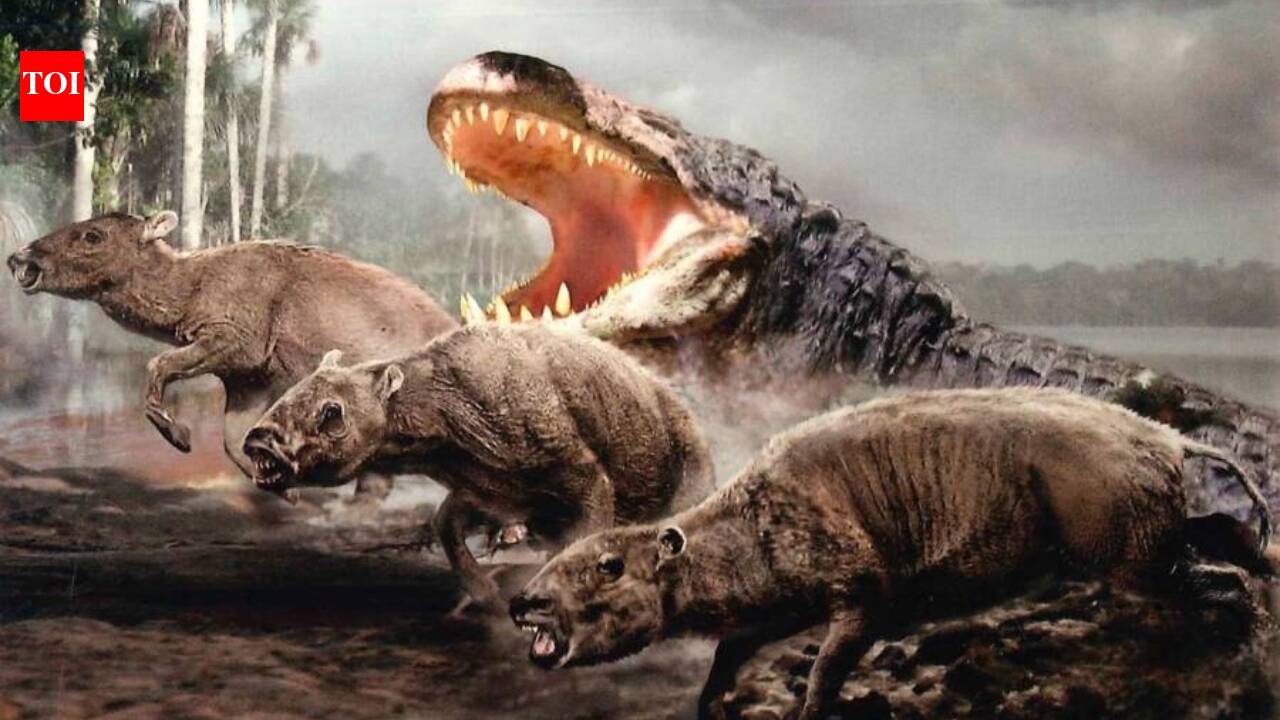
10 million years ago, giant 23-foot crocodilians ruled Miocene South America, hunted massive mammals, dominated the food chain.
Over 10 million years ago, before the Amazon turned into the tangled rainforest we think of now, much of South America looked wildly different.
Fossilized bones from ancient ungulates, hoofed mammals like astrapotheres and toxodontids, some of which tipped the scales at over a ton, showed classic crocodilian bite marks.
Just like a detective matching bite marks at a crime scene, paleontologists matched the pits, punctures, and fractures to Purussaurus's ancient jaws.
Their world faded, leaving only bones and bite marks behind.
10 million years ago, giant 23-foot crocodilians ruled Miocene South America, hunted massive mammals, dominated the food chain.
Crocodilians conquering South America? What we know
The story of Purussaurus
Why did these crocodilians dominate while other predators struggled?
How (and why) did they disappear?
Over 10 million years ago, before the Amazon turned into the tangled rainforest we think of now, much of South America looked wildly different. Picture vast wetlands and huge lakes, with environments teeming with creatures that have no match today. Giant turtles paddled through murky water. Enormous mammals lumbered along marshy banks. Massive anacondas, saber-toothed mammals, and towering, flightless "terror birds" all competed for a meal. Yet, recent fossil discoveries paint one group as the real apex predators: gigantic crocodilians that grew up to 23 feet long and weighed nearly 4,000 pounds.This insight comes from a fresh study in the Journal of Vertebrate Paleontology , where researchers dove into fossil collections from Colombia’s Middle Miocene period. They didn't just dig up old bones; they analyzed the bite and tooth marks still etched into the skeletons of long-extinct mammals. These marks tell a pretty clear story: crocodilians weren't just scavenging for leftovers. They were going after big, living prey, dominating food chains that stretched across South America’s ancient tropical wetlands between 10.5 and 16 million years ago.At the heart of this ancient drama was Purussaurus neivensis, a massive cousin of today's caimans.This reptile outclassed most of its competition in size and power, and its bite left an unmistakable signature. Fossilized bones from ancient ungulates, hoofed mammals like astrapotheres and toxodontids, some of which tipped the scales at over a ton, showed classic crocodilian bite marks. That means Purussaurus wasn’t just picking off the weak or scavenging the dead; it was taking down mammals many times larger than today's typical crocodile prey.It’s important to note that we don't have a fossil tableau of a giant crocodilian mid-attack. However, we do have something just as telling: subtle clues left in the bones. Just like a detective matching bite marks at a crime scene, paleontologists matched the pits, punctures, and fractures to Purussaurus's ancient jaws. Earlier studies added weight to these findings. Per Live Science, a 2020 paper described 46 bite marks on the leg bone of a prehistoric ground sloth from the Peruvian Amazon, showing that even young Purussaurus tried their luck with big land mammals, not just aquatic meals.What makes Purussaurus’s story so jaw-dropping (pun intended) isn’t just the size it reached (some species may have grown over 40 feet and weighed more than 8 tons); but the strength of its bite. Some estimates put its bite force at around 69,000 newtons, enough to crush even the toughest shells and bones. Fossils tell the tale: a giant turtle shell with a puncture over two feet across matches the scale of a fully grown Purussaurus in action. These weren't just overgrown reptiles lying low in the swamps. They were key players: apex hunters shaping their world as much as any giant cat or bear ever could.Turns out, the Miocene wetlands were packed with life. The abundance of large prey turned the region into a buffet, and crocodilians were perfectly designed to take advantage. Oscar Wilson, a researcher involved in the Colombian study, put it simply: the region had so much prey, even the era’s big mammalian predators couldn't keep up, and crocodilians stepped in to fill the gap.This rise to dominance also highlights just how alien the ancient Amazon was compared to today. Back then, the Pebas Mega-Wetland System spread across what is now western Amazonia, supporting an impressive menagerie of creatures: crocodilians, turtles, fish, and enormous mammals. Purussaurus sat at the absolute pinnacle.Nothing lasts forever. As South America’s geography changed — the Andes rose, rivers shifted, and the old wetlands gave way to the modern Amazon — the giants lost their hold. Their world faded, leaving only bones and bite marks behind. The disappearance of Purussaurus opens up as many questions as it answers: What finally tipped the balance? How did other species react when the apex predator vanished?All we know for sure is written in those fossil remains: a 10-million-year-old record of battles won and lost, showing us a time when the most fearsome predators weren't saber-toothed cats or monstrous birds, but massive crocodilian relatives waiting quietly at the water’s edge, ready to take on anything that dared come close!