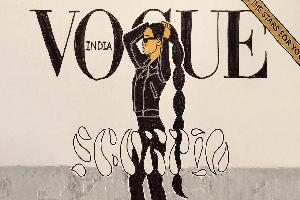
For Rakesh Boro, caretaker of Guwahati’s Bhootnath crematorium, memories of Zubeen Garg are inseparable from the quiet cremation ground.
When Zubeen da came, sometimes he would add water to dry rice and eat it.
Boro also remembers that Garg visited Bhootnath but, according to him, never the Nabagraha crematorium.
After taking Zubeen da to Sonapur, I could not stay there any longer.
At Bhootnath, where people arrive to say their final goodbyes, Zubeen Garg came looking for a friend.
For Rakesh Boro, caretaker of Guwahati’s Bhootnath crematorium, memories of Zubeen Garg are inseparable from the quiet cremation ground.
Amid funeral pyres, smoke, rituals and long stretches of silence, Boro found an unexpected friend in one of Assam’s most beloved artistes.
As September 19 approaches, Boro is still trying to make sense of a relationship he never expected to have.
“Even today, I cannot understand why he came looking for me. A person like God came looking for me. I did not realise how fortunate I was at the time,” Boro recalls.
Garg’s visits to Bhootnath were not fleeting appearances. He would spend time there, talk to Boro and, at times, sit down for a meal with him.
“I just eat and sleep. When Zubeen da came, sometimes he would add water to dry rice and eat it. We would often eat rice together from the same plate,” Boro says.
That memory still leaves him amazed.
“People would go looking for Dada or wait for him, but Dada would come looking for me,” he says.
A friendship that began elsewhere
Their connection did not begin at the crematorium. Boro says he had known Garg since 2006, when he worked as an assistant to Garg’s wife, Garima Saikia Garg, in fashion designing.
From around 2010, he also became involved in Garg’s musical events, helping arrange musical instruments on stage and handling other errands.
“Zubeen da loved me a lot. I worked with Garima bou as her assistant in fashion designing and, from 2010, I also worked on arranging musical instruments for dada’s programmes,” he recalls.
Over time, the professional association grew into a personal bond.
Garg would visit Bhootnath at night and spend considerable time talking with Boro. Their conversations ranged from songs and films to stories about life.
Rakesh Boro at the crematorium, recalling his days and memories with Zubeen da (Photo: AT)
“Zubeen da would come to Bhootnath at night and spend a lot of time talking. He would talk about songs, movies and many other things,” Boro says.
Boro also remembers that Garg visited Bhootnath but, according to him, never the Nabagraha crematorium.
“Zubeen da never visited the Navagraha crematorium. He only came to Bhootnath,” he says.
More than companionship
For Boro, Garg’s generosity extended beyond the late-night conversations.
He recalls that Garg eventually gave him Rs 50,000 to start a small shop at the crematorium, where he sold pyre wood. The shop continues to operate there.
“Zubeen da took me back from Bhootnath but I came back here again. He gave me Rs 50,000 to start my own shop. With that money, I set up my shop for pyre wood at the Bhootnath cremation ground,” Boro says.
Garg also encouraged him to help people who could not afford even small necessities.
“He taught me to help people. Even today, I give incense sticks to poor people without taking money from them,” Boro says.
It is a lesson Boro says he intends to carry forward.
Remembering the man, not the star.
Perhaps what makes Boro’s memories so intimate is that he does not speak of Garg as a star.
For him, he was simply “Dada”.
In those late-night meetings, there was no stage, no spotlight and no crowd. There were conversations, simple food and companionship.
That is why the memories remain so difficult for Boro to put into words.
“I remember the times when we ate from the same plate. It hurts a lot to remember his words,” he says.
Boro at his pyre-wood shop, which was set up with financial support from Zubeen da (Photo: AT)
Garg’s death was initially difficult for Boro to accept. He was in his village when he heard the news and immediately arranged transport to return to Guwahati.
“At first, I could not believe the news. Later, I realised that it was true. I was in the village and hired a vehicle to come to Guwahati airport. After taking Zubeen da to Sonapur, I could not stay there any longer. I had to leave and only came back after three days,” he recalls.
For Boro, the loss is not simply that of an artiste admired by millions. It is the loss of an elder brother and a friend who had touched his life in ways that had little to do with fame.
A promise to carry his ideals forward
On September 19, Boro plans to travel to Sonapur to pay his respects.
“I will go to Sonapur on September 19 and pay my respects to my elder brother. It hurts a lot to remember his words,” he says.
But for Boro, remembrance will not end at the memorial.
He says he wants to continue living by the values he learnt from Garg, particularly his concern for people who needed help.
“Zubeen da helped poor people a lot. He taught me many things. I will continue to work following his ideals,” Boro says.
At Bhootnath, where people arrive to say their final goodbyes, Zubeen Garg came looking for a friend.
For Rakesh Boro, that simple fact remains perhaps the most extraordinary memory of all.