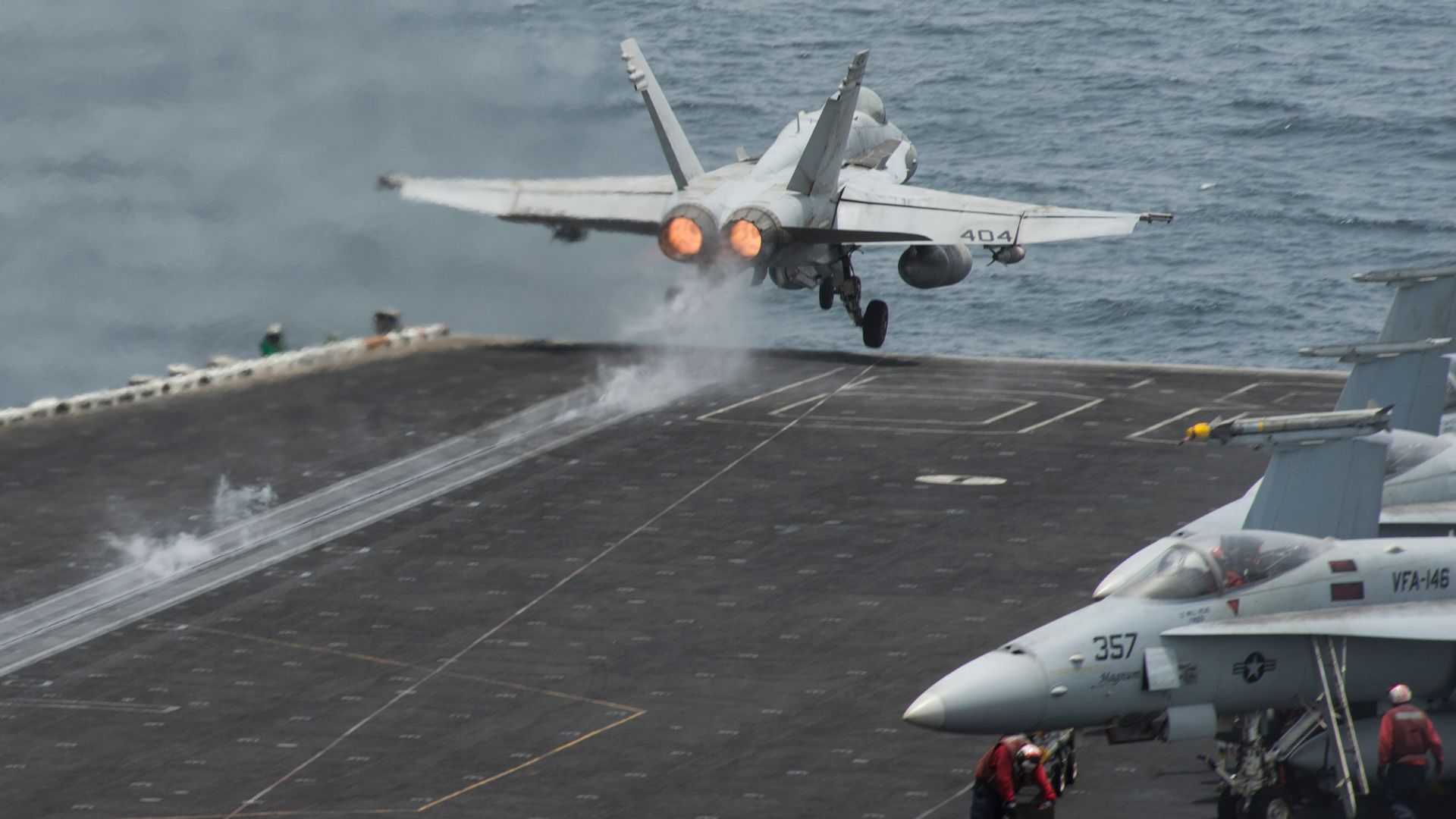
The directive calls for the Navy to develop a plan to replace the Electromagnetic Aircraft Launch System (EMALS) with traditional steam catapults on the future USS Doris Miller and subsequent carriers.
Reuters notes that Trump has criticized EMALS for years, arguing that the system is more expensive and less reliable than the steam catapults it replaced.
Why the Navy moved to electromagnetic launch Steam catapults have launched U.S. carrier aircraft for decades.
Steam catapults have the enormous advantage of being mature and extensively understood.
EMALS, meanwhile, was intended to solve several limitations of steam while giving future carriers greater flexibility in launching different aircraft.
President Donald Trump has ordered the U.S. Navy to return to steam-powered aircraft catapults on future Ford-class aircraft carriers, reversing the service’s move toward electromagnetic launch technology. The directive calls for the Navy to develop a plan to replace the Electromagnetic Aircraft Launch System (EMALS) with traditional steam catapults on the future USS Doris Miller and subsequent carriers. The Pentagon has been given 60 days to produce the replacement plan.
The decision affects a carrier that is already well into development. The Doris Miller, the fourth Ford-class carrier, is scheduled to have its keel laid by the end of 2026 and is currently planned for delivery in 2034. The first three Ford-class carriers will retain EMALS. Reuters notes that Trump has criticized EMALS for years, arguing that the system is more expensive and less reliable than the steam catapults it replaced. His latest directive is part of a broader push to change the way the Navy builds and maintains its ships. Why the Navy moved to electromagnetic launch Steam catapults have launched U.S. carrier aircraft for decades. They use high-pressure steam to drive a piston along a track, accelerating an aircraft to takeoff speed over a relatively short section of the flight deck. EMALS replaces that mechanical system with a linear electric motor. Instead of pushing an aircraft with steam pressure, the system accelerates a launch carriage using electromagnetic force.
The technology was introduced with the Ford class because it offers several advantages over steam. EMALS provides more precise control of the launch profile and can accommodate aircraft across a wider range of weights, including lighter future unmanned aircraft. It also reduces the amount of steam and fresh water a carrier needs to produce for launch operations. The transition was not easy, however. The Ford-class program faced significant problems with EMALS and its associated Advanced Arresting Gear during development and testing, fueling criticism of the technology. Why the reversal could be costly The problem is that the Navy isn’t making this decision before a new carrier is designed. It is being asked to change the propulsion and launch architecture of a ship already deep into development. The War Zone argues that this is where the decision becomes particularly risky. Its analysis points to the extensive redesign work required to accommodate steam catapults, including their machinery, piping, water requirements and integration with the carrier’s existing electrical and internal systems.
The change could therefore affect much more than the catapult itself. According to The Guardian, General Atomics, which produces EMALS, has warned that removing the system from the Doris Miller after substantial design and construction work could create major cost and schedule problems. Reports have also put the potential financial impact in the billions of dollars. Another issue is that the Navy has spent years moving away from steam technology. Returning to it means rebuilding parts of an industrial and maintenance ecosystem that has been superseded by the newer system. A technological step backward? The debate isn’t simply about old versus new technology. Steam catapults have the enormous advantage of being mature and extensively understood. EMALS, meanwhile, was intended to solve several limitations of steam while giving future carriers greater flexibility in launching different aircraft.