For decades, the Indian automotive industry largely operated as a technology importer.
By leveraging Tata Motors’ architecture, Jeep can significantly reduce development costs, increase localisation, and accelerate product launches.
For customers, the outcome could be a new generation of more accessible Jeep SUVs with stronger localisation and more competitive pricing.
Jeep building future vehicles on Tata architecture is not merely a product strategy.
It is evidence that Indian automotive engineering has matured to a point where it can serve as the foundation for a global brand.
Jeep has confirmed it will use a Tata Motors-derived platform for future products
Move is expected to help the brand develop more accessible SUVs for India
When Jeep confirmed that its future products for India would be based on a Tata Motors-developed architecture, the announcement may have sounded like a routine platform-sharing strategy. In reality, it represents something far more significant.
For decades, the Indian automotive industry largely operated as a technology importer. Global manufacturers developed vehicle platforms overseas, while Indian operations adapted them for local conditions. Now, one of the world’s most recognised SUV brands has chosen to build its next generation of products on an architecture developed by an Indian manufacturer.
That reversal alone makes this one of the most important automotive stories in recent years.
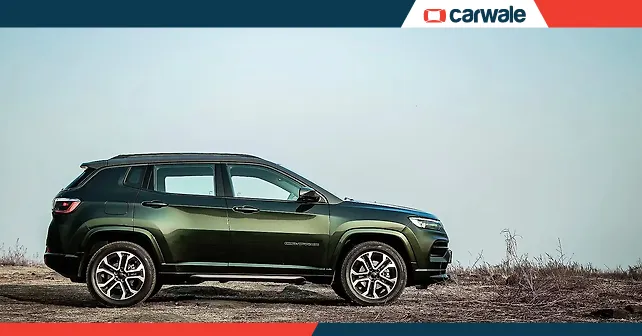
The immediate benefits for Jeep are easy to understand. The brand has struggled to achieve meaningful volumes in India despite offering globally respected products such as the Compass and Meridian. Developing all-new vehicles from the ground up is expensive, especially in a market where pricing remains critical.
By leveraging Tata Motors’ architecture, Jeep can significantly reduce development costs, increase localisation, and accelerate product launches. More importantly, it gives the company an opportunity to introduce SUVs at price points that were previously difficult to achieve.
However, the bigger winner could be Tata Motors.
Modern vehicle architectures are among the most valuable assets in the automotive industry. They require years of research, engineering expertise, and substantial investment. A platform must be capable of supporting multiple body styles, powertrains, safety technologies, and future regulatory requirements.
For a global brand such as Jeep to adopt a Tata-developed architecture effectively validates the engineering work undertaken by the Indian manufacturer.
The move also highlights how rapidly India’s automotive ecosystem has evolved. Indian manufacturers are no longer focused solely on producing cost-effective vehicles for domestic buyers. Increasingly, they are developing platforms, software, and technologies that can meet global standards.
For customers, the outcome could be a new generation of more accessible Jeep SUVs with stronger localisation and more competitive pricing. For the industry, however, the implications are much larger.
Jeep building future vehicles on Tata architecture is not merely a product strategy. It is evidence that Indian automotive engineering has matured to a point where it can serve as the foundation for a global brand. And that is why this story is far bigger than it first appears.