Unlike advanced fighter jets, ballistic missiles could be designed and manufactured domestically, making them less vulnerable to international arms restrictions.
Modern ballistic missiles travel at extremely high velocities, leaving defenders with only minutes, or sometimes seconds, to detect, track and intercept them.
The result is not simply faster missiles, but more complex attacks designed to stretch even sophisticated defence networks.
Coordinated attacks involving drones, cruise missiles and ballistic missiles further complicate the picture by forcing defenders to prioritise multiple incoming threats simultaneously.
A former print ... Read MoreFirst Published: July 22, 2026, 09:31 ISTNews explainers Why Iran’s Missiles Are Becoming Faster And Deadlier, And How They Could Change Modern WarfareDisclaimer: Comments reflect users’ views, not News18’s.
Why Iran’s Missiles Are Becoming Faster And Deadlier, And How They Could Change Modern Warfare
Published By :
,
Last Updated: July 22, 2026, 09:31 IST
Iran has been upgrading its missile arsenals despite sanctions and repeated strikes. Its latest missiles are faster and difficult for advanced air-defence systems to intercept
Rapid Read
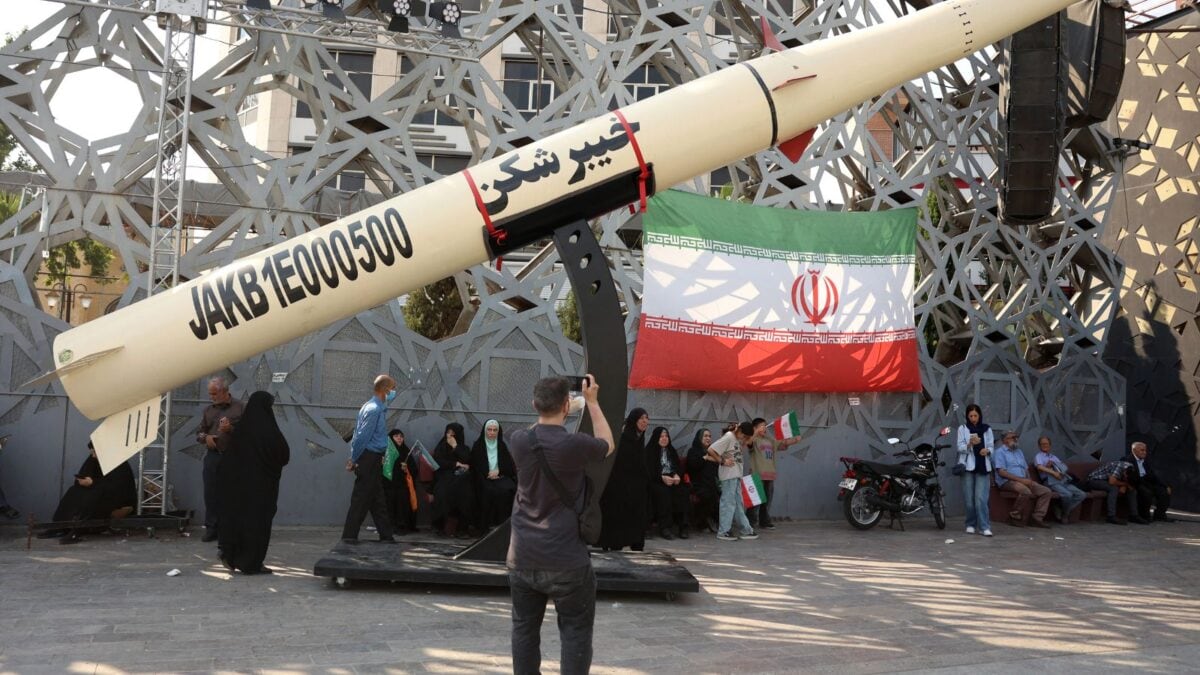
Instead of trying to match countries such as Israel or Saudi Arabia aircraft for aircraft, Iran invested heavily in missiles. Unlike advanced fighter jets, ballistic missiles could be designed and manufactured domestically, making them less vulnerable to international arms restrictions. (AFP File Photo)
When Iran launched waves of missiles at Israel and later targeted US military bases in the region, many analysts expected its missile campaign to weaken after repeated strikes on its military leadership and infrastructure. Instead, the attacks revealed that Iran’s missile programme remained operational, supported by underground facilities, dispersed manufacturing and decentralised launch capabilities.
Now, as fighting has resumed following the collapse of the ceasefire, Iran appears to be deploying a new generation of ballistic missiles that are faster, more accurate and increasingly capable of evading some of the world’s most advanced air-defence systems.
The development is raising questions about how Tehran has continued to modernise its arsenal despite years of economic sanctions, cyberattacks and military pressure, and what it signals about the future of missile warfare.
The country’s missile advances offer a glimpse into how modern warfare is changing, with offensive missile technology evolving faster than many defensive systems can adapt. For militaries around the world, including India, the conflict has become a real-world laboratory for studying the next phase of missile warfare.
Why Iran Chose Missiles Over Fighter Jets
Iran’s focus on missiles can be traced back to the Iran-Iraq War of the 1980s. During the conflict, Iraqi missile attacks exposed Iran’s limited ability to defend its cities or retaliate effectively.
Following the war, Tehran faced another challenge. International sanctions made it increasingly difficult to purchase modern combat aircraft or advanced military equipment from abroad. Much of Iran’s air force still relies on aircraft acquired before the 1979 Islamic Revolution, leaving it significantly behind many regional rivals.
Instead of trying to match countries such as Israel or Saudi Arabia aircraft for aircraft, Iran invested heavily in missiles. Unlike advanced fighter jets, ballistic missiles could be designed and manufactured domestically, making them less vulnerable to international arms restrictions.
Over the years, Iran also built an extensive network of underground missile bases– often referred to as “missile cities" — along with dispersed production facilities. This strategy makes it harder for adversaries to destroy the country’s missile programme through a single military strike, as manufacturing and storage are spread across multiple locations.
From Missiles To Drone Power
Iran had been preparing for missile and drone warfare for decades with three-pronged technique: procurement, manufacturing and location.
Rather than manufacturing complete missiles at a single site, Iran is believed to have produced them in smaller components that could be transported discreetly, smuggled if necessary, and assembled later. This decentralised approach made the programme far more difficult to detect or disrupt. Israeli officials reportedly realised the extent of this strategy after finding that Iran had largely rebuilt its ballistic missile programme following the 12-day conflict in June 2025.
Israeli assessments also suggested that Iran had significantly diversified its missile arsenal. According to The New York Times, the newer ballistic missiles follow a high, arcing trajectory into the upper atmosphere before descending under gravity at speeds several times faster than the speed of sound. Their combination of high velocity and varied flight profiles makes them considerably more challenging for air-defence systems to intercept.
Iran has built an arsenal of ballistic missiles categorised as “close- range" that can hit targets from about 30 to 190 miles away, “short- range" weapons that fly 190 to 620 miles, and “medium-range" missiles that have a maximum range of about 1,240 miles, the NYT report added.
What’s Different About Iran’s Latest Missiles?
Iran has steadily improved its missile technology over the past two decades, but recent developments represent a significant leap.
One major change is speed. Modern ballistic missiles travel at extremely high velocities, leaving defenders with only minutes, or sometimes seconds, to detect, track and intercept them.
The second advancement is manoeuvrability. Earlier ballistic missiles largely followed predictable trajectories after launch. Newer designs can make controlled adjustments during parts of their flight, making it much more difficult for defence systems to calculate exactly where they will be.
Accuracy has also improved. Advances in guidance systems allow missiles to strike much closer to intended targets than previous generations. This means fewer missiles may be needed to achieve the same military objective.
Perhaps equally important is the way Iran is increasingly combining missiles with drones. Large numbers of drones can overwhelm surveillance systems or force air-defence operators to expend interceptors before more dangerous ballistic missiles arrive. This coordinated approach complicates defensive planning and increases the chances that at least some missiles will penetrate layered defences.
The result is not simply faster missiles, but more complex attacks designed to stretch even sophisticated defence networks.
Why Iran Challenges Advanced Air Defence Systems
Modern missile-defence systems such as Israel’s Arrow, David’s Sling and Iron Dome, along with the US Patriot and THAAD systems, remain among the most capable in the world. Each is designed to intercept different types of aerial threats at different ranges and altitudes, forming what defence planners call a layered shield. However, no missile-defence system promises perfect protection.
Every interception involves detecting the launch, tracking the missile, predicting its flight path and launching an interceptor within an extremely limited timeframe. Faster missiles compress that timeline considerably.
Manoeuvring missiles make the task even harder because they can alter their trajectory, reducing the accuracy of interception calculations. Coordinated attacks involving drones, cruise missiles and ballistic missiles further complicate the picture by forcing defenders to prioritise multiple incoming threats simultaneously.
The challenge also extends to economics. Defensive interceptor missiles often cost significantly more than the attacking drones or missiles they are designed to destroy. An attacker able to launch large numbers of relatively inexpensive weapons may eventually exhaust even sophisticated defensive stockpiles.
Military analysts increasingly describe this as the continuing offence-versus-defence cycle, in which every improvement in defensive technology is eventually met by new offensive innovations.
Can Sanctions And Air Strikes Still Slow Iran’s Missile Programme?
Iran’s experience has also challenged long-held assumptions about sanctions and military pressure.
Western sanctions have undoubtedly made missile development more expensive and technologically demanding. Restrictions on electronics, specialised materials and manufacturing equipment have forced Iran to develop domestic alternatives or establish complex procurement networks. Yet sanctions have not halted the programme.
Instead, Iran has spent decades building indigenous manufacturing capabilities, reducing its dependence on foreign suppliers wherever possible. Local research institutions, universities and defence industries have gradually accumulated technical expertise that cannot easily be eliminated through economic restrictions alone.
Military strikes present similar limitations. Precision attacks may destroy production facilities, storage depots or launchers, temporarily disrupting operations. But rebuilding physical infrastructure is often easier than replacing decades of accumulated engineering knowledge and manufacturing experience.
This explains why repeated attacks on missile facilities have generally slowed, rather than stopped, Iran’s long-term missile development.
Why India Should Be Paying Attention
India has invested heavily in its own ballistic missile-defence programme and continues to strengthen air-defence capabilities with systems such as the indigenous Akash missile, the Russian-made S-400 and ongoing work on advanced interception technologies.
Iran’s evolving missile programme demonstrates that future conflicts may involve increasingly manoeuvrable, precision-guided weapons capable of compressing decision-making timelines. This places greater emphasis on faster sensors, integrated command-and-control networks and more sophisticated interception technologies.
The experience also reinforces the importance of investing in counter-hypersonic research, AI-assisted tracking systems and layered air-defence networks capable of responding to multiple threats simultaneously.
As missile technology becomes increasingly precise, manoeuvrable and difficult to intercept, the contest between offence and defence is likely to shape military strategy for years to come. The battlefield in West Asia is offering an early glimpse of that future, and its lessons are being watched far beyond the region.
News18 Newsletter Handpicked stories, in your inbox A newsletter with the best of our journalism submit
Key Questions Answered How will Iran's missile advancements impact global military strategies? Iran's advancements in missile technology, including faster speeds, heavier warheads, and underground basing, are reshaping modern warfare and challenging global military strategies. Could new missile technologies render current air defense systems obsolete? New missile technologies, particularly Iran's advancements, are challenging existing air defense systems, potentially rendering them obsolete. What role do sanctions play in slowing down missile development programs? Sanctions have made Iran's missile development more expensive and technologically demanding. Restrictions on electronics, specialized materials, and manufacturing equipment have forced Iran to develop domestic alternatives or establish complex procurement networks.
About the Author Shilpy Bisht Shilpy Bisht is a News Editor at News18, where she leads the English app operations. She writes on world affairs, health, AI, career, business, and issues affecting women and children. A former print ... Read More
First Published: July 22, 2026, 09:31 IST
News explainers Why Iran’s Missiles Are Becoming Faster And Deadlier, And How They Could Change Modern Warfare
Disclaimer: Comments reflect users’ views, not News18’s. Please keep discussions respectful and constructive. Abusive, defamatory, or illegal comments will be removed. News18 may disable any comment at its discretion. By posting, you agree to our Terms of Use and Privacy Policy Loading comments...