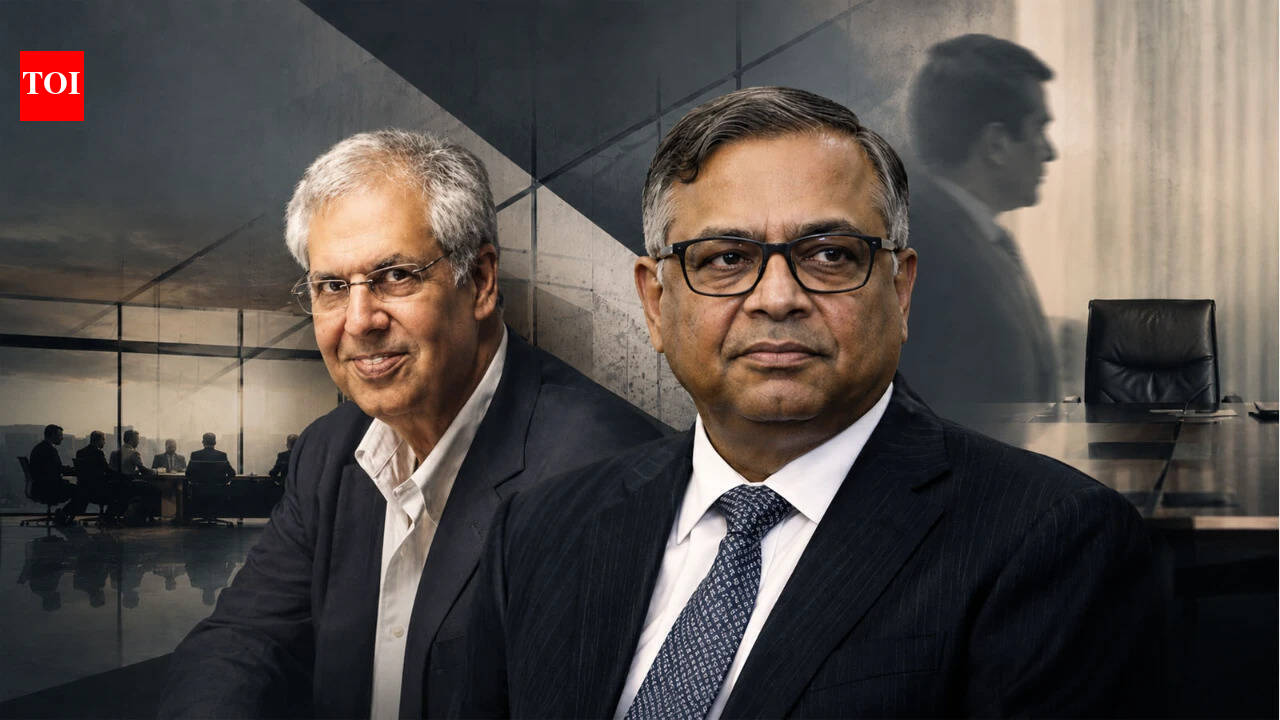
Why Chandrasekaran’s exit has revived the ghosts of the Cyrus Mistry battleJairaj SinghArun GeorgeTIMESOFINDIA.COM Updated: Aug 15, 2026, 19:45 IST ISTN Chandrasekaran’s exit as chairman of Tata Sons has reopened a question the group appeared to have settled nearly a decade ago: where does power ultimately reside in the Tata system?
Chandrasekaran took charge in 2017 in the aftermath of one of the most bruising corporate battles in Indian business history.
Cyrus Mistry’s abrupt removal as Tata Sons chairman had exposed deep differences over the relationship between the operating company and Tata Trusts, which owns a controlling stake in Tata Sons.
Chandrasekaran, a Tata veteran who had spent much of his career at TCS, was the continuity candidate, a professional manager expected to restore stability after months of public acrimony.
Why Chandrasekaran’s exit has revived the ghosts of the Cyrus Mistry battle
Jairaj SinghArun George
TIMESOFINDIA.COM Updated: Aug 15, 2026, 19:45 IST IST
N Chandrasekaran’s exit as chairman of Tata Sons has reopened a question the group appeared to have settled nearly a decade ago: where does power ultimately reside in the Tata system?
Chandrasekaran took charge in 2017 in the aftermath of one of the most bruising corporate battles in Indian business history. Cyrus Mistry’s abrupt removal as Tata Sons chairman had exposed deep differences over the relationship between the operating company and Tata Trusts, which owns a controlling stake in Tata Sons. Chandrasekaran, a Tata veteran who had spent much of his career at TCS, was the continuity candidate, a professional manager expected to restore stability after months of public acrimony.