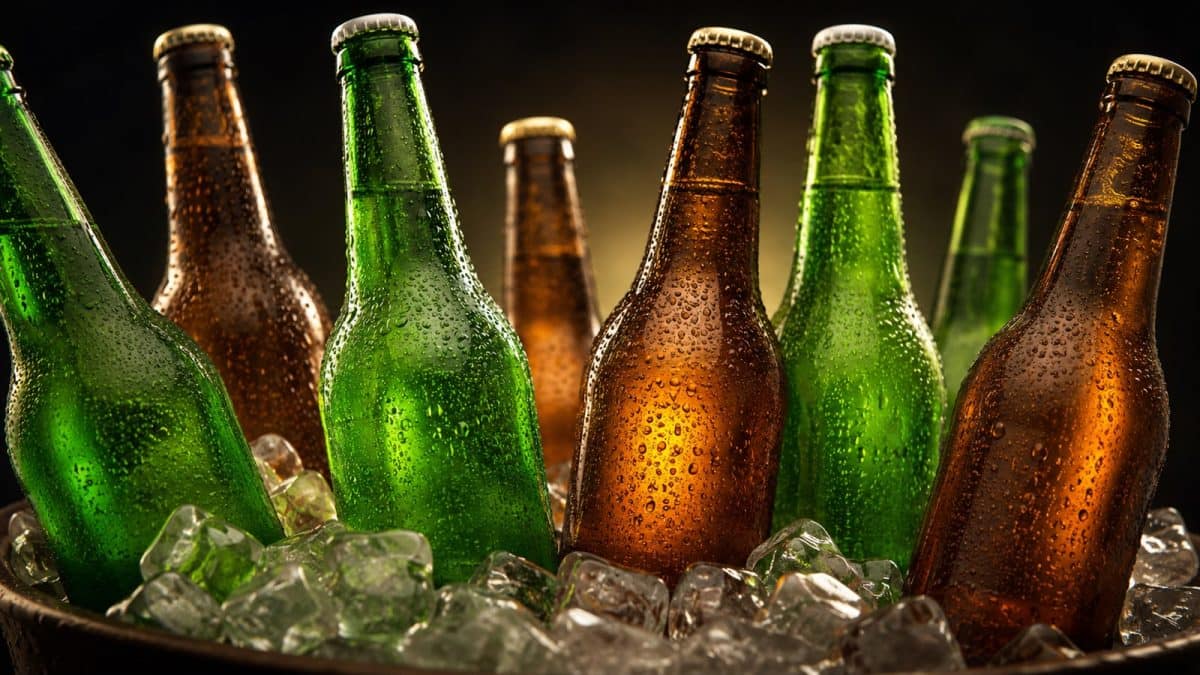
Beer is mostly sold in brown and green bottles for a reason.
Most beer bottles are either brown or green.
Why green bottles are still usedIf brown bottles offer better protection, why do so many beers come in green bottles?
Even today, many well-known brands retain green bottles for identity and tradition, despite offering less protection from light compared to brown glass.
Green bottles are often linked with heritage European beers, while clear bottles are associated with lighter, modern lagers.
Beer is mostly sold in brown and green bottles for a reason. From protecting flavour to historical quirks, here’s why bottle colour matters more than you think
Walk into any liquor store and you will notice a pattern almost instantly.
Most beer bottles are either brown or green. It is not just a branding choice or coincidence. The colour of a beer bottle plays a crucial role in protecting the drink inside, and the story behind it blends chemistry, history and clever marketing.
The science behind beer bottle colours
Beer is sensitive to light, particularly ultraviolet rays. When beer is exposed to sunlight or even strong artificial light, a chemical reaction takes place.
This reaction breaks down compounds derived from hops, the ingredient that gives beer its characteristic bitterness and aroma. The result is a compound that produces an unpleasant smell often described as “skunky”.
Advertisement
This phenomenon is known as lightstruck beer.
Brown glass is highly effective at blocking ultraviolet light, which is why it became the industry standard.
Brown bottles can filter out most of the harmful light wavelengths, helping preserve the taste and freshness of the beer,” brewers often explain.
Why green bottles are still used
If brown bottles offer better protection, why do so many beers come in green bottles?
The answer lies in history rather than science.
During the Second World War, shortages of brown glass in Europe forced breweries to use whatever was available. Green glass became a common substitute.
More from Lifestyle More from Lifestyle
Over time, several European brands continued using green bottles, and the colour became associated with premium or imported beer, especially in markets like the United States and Asia.
Even today, many well-known brands retain green bottles for identity and tradition, despite offering less protection from light compared to brown glass.
What about clear bottles
Some beers are sold in clear or transparent bottles, but these are more vulnerable to light damage.
To counter this, brewers often use specially modified hop extracts that are less sensitive to light. However, this can slightly alter the flavour profile.
Clear bottles are largely a marketing choice, allowing consumers to see the product, but they require additional formulation adjustments to maintain quality.
Advertisement
Does packaging really affect taste
The short answer is yes.
Beer stored in brown bottles is less likely to develop off-flavours caused by light exposure. This is especially important for beers that spend time on shelves or are consumed outdoors.
Cans and kegs offer even better protection, as they completely block light and limit oxygen exposure.
Packaging is not just about appearance. It directly impacts how the beer tastes when it reaches the consumer.
The role of branding and perception
While science explains the dominance of brown bottles, branding plays a major role in the continued use of green and clear glass.
Green bottles are often linked with heritage European beers, while clear bottles are associated with lighter, modern lagers.
Consumers may not always be aware of the science, but colour influences perception, quality and even buying decisions.